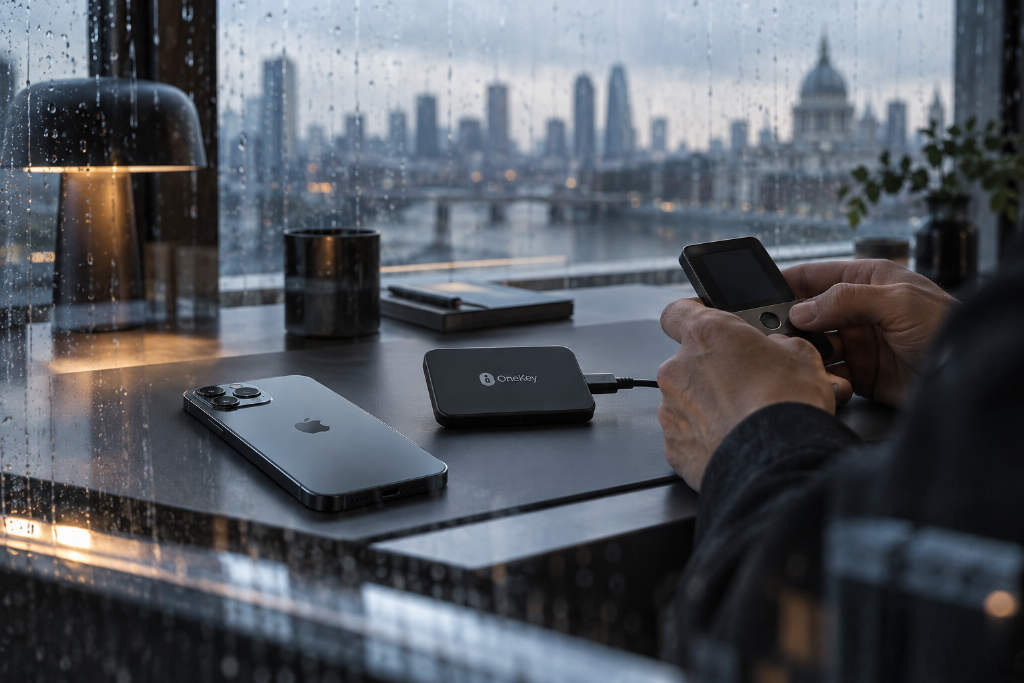
OneKey founder Yishi said in a post on X that an iPhone can be used as a cold wallet, but he only recommends doing so with an iPhone 17 or newer running iOS 27 or later. He added that the device should be replaced every one to two years. Yishi said he would not use an iPhone 16 or any earlier model as a long-term signing device for important asset transactions, and that even an iPhone 17 with iOS 27 is only the minimum setup he currently considers acceptable. For long-term storage of large amounts of funds, he said he prefers a dedicated signing device with a transparent security design, ongoing maintenance, and on-device transaction verification. He also said the firmware, supply chain, and recovery process of such devices still require more review. In his view, taking a phone offline is only a precaution, while the actual effectiveness of that precaution depends on factors including hardware, patch level, BFU/AFU state, passwords, and wallet key management.
Odaily reported that OneKey founder Yishi posted on X about how to turn an iPhone into a cold wallet.
Yishi said he recommends using an iPhone 17 or newer, running iOS 27 or later, and replacing the device every one to two years.
He added that he would not use an iPhone 16 or any earlier model as a long-term device for signing important asset transactions. Even an iPhone 17 with iOS 27, he said, is only the minimum configuration he currently finds acceptable.
For long-term custody of large amounts of funds, Yishi said he prefers a dedicated signing device. He said such a device should have a transparent security design, receive ongoing maintenance, and support transaction verification on the device itself.
He also said the firmware, supply chain, and recovery process of such devices still need more review. Taking a phone offline is only a precaution, while the real effectiveness of that precaution depends on factors such as hardware, patch level, BFU/AFU state, passwords, and wallet key management.
This article was originally published by Bit.Fan. For more cryptocurrency news and market insights, visit www.bit.fan. Disclaimer:
The market information, project data, and third-party content displayed on this platform are for industry information sharing only and do not constitute any form of investment advice or return commitment.
Cryptocurrency trading carries high risks. Users should fully assess their risk tolerance and make independent decisions. All profits, losses, and legal responsibilities are borne by the users themselves.