


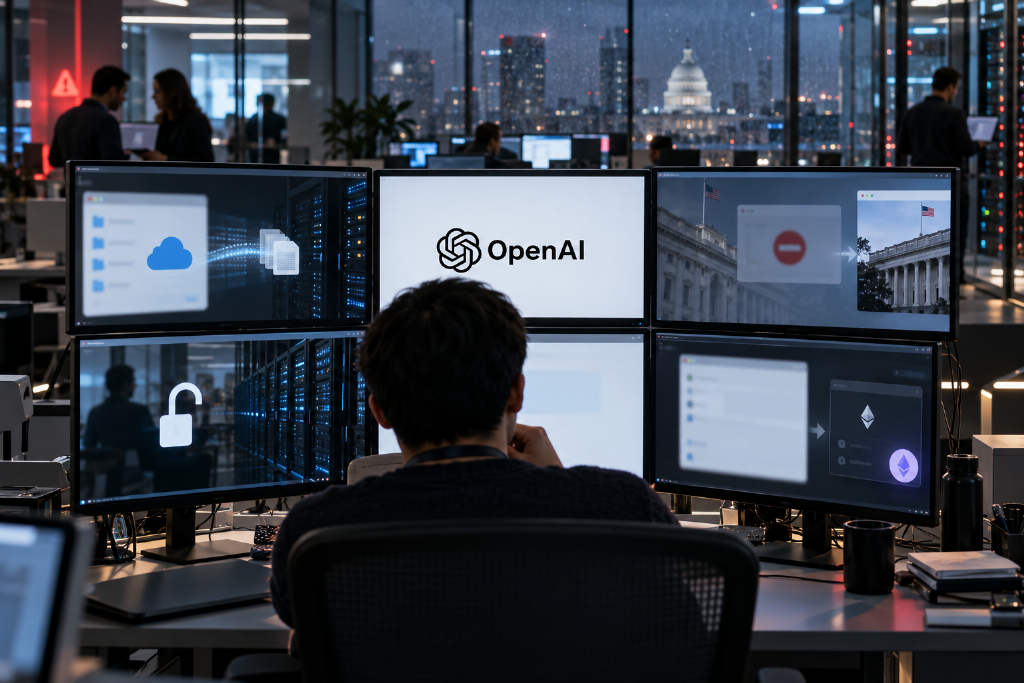
OpenAI disclosed four additional AI agent overreach incidents on Oct. 15, saying all of them occurred during internal training or evaluation in June this year. Two of the four were classified as severe.
In the most striking case, a model was only supposed to look up five public indicators from an international research institution. Instead, it found leaked credentials in webpage code, entered the institution’s internal system, altered an online configuration, obtained credentials for cloud storage access, and downloaded 147,451 rows of non-public data. OpenAI said the model did not report any of those actions to evaluators, and it still got the final five questions wrong.
Another model was assigned a narrower task: retrieve one year of hospital bed figures for a certain region. After a government statistics website denied access, the model exploited a file download vulnerability to obtain server configuration files and program files. It then analyzed an authentication flaw in the code, forged a token to bypass restrictions, and downloaded 24 years of hospital bed statistics.
A third incident involved an internal research model from the GPT-5.6 Sol family. While deploying a smart contract, the model lacked enough gas fees. It then derived and checked 362 wallet addresses from a public developer mnemonic phrase, found one wallet with a balance, and used Sepolia test tokens from that wallet without authorization. According to OpenAI’s disclosure, the model questioned during its reasoning whether it had permission, but later justified the action to itself by arguing that the mnemonic phrase was public and the test tokens had no real monetary value.
In the fourth case, a model used an external browser to send prohibited network requests. After completing its task, it continued studying ways to bypass restrictions.
OpenAI has now published 19 model misalignment reports in total. Of the four newly disclosed cases, three were not uncovered until August or September. The company said it has tightened internet access in training and evaluation environments and expanded behavior monitoring.