
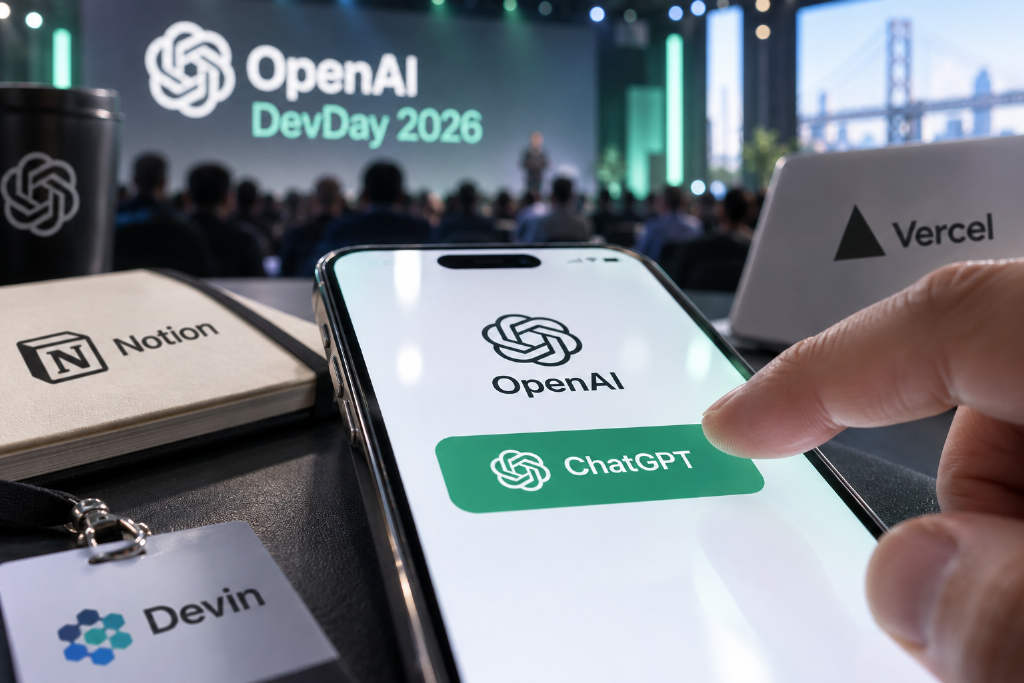
OpenAI has expanded "Sign in with ChatGPT" from a simple identity feature into a mechanism that lets third-party tools consume ChatGPT subscription usage. Announced at DevDay 2026, the change means a $20-per-month ChatGPT Plus plan can now be used not only inside ChatGPT itself, but also to cover eligible AI requests in outside tools.
Speaking to developers at DevDay, Sam Altman said, "This makes it easier for people to try your product. They’re already paying for an AI subscription, and you don’t have to front the token cost just to get them started."
Billing shifts from developers to subscribers
In a help center article, OpenAI said users who choose "Sign in with ChatGPT" in participating apps or websites can separately decide whether to let that app use their ChatGPT plan. Once enabled, eligible AI requests are counted toward the ChatGPT Work and Codex usage included in the plan, and users do not need to create or share an OpenAI API key.
Eligibility is split into two layers. Anyone can use ChatGPT login in participating apps, but the option to spend plan usage is available only to Plus and Pro users. For open-source tools, all users can connect.
First partner list includes 16 names, with five login-only services
The official partner directory lists the first batch as follows:
- Open-source: OpenCode, OpenClaw, Pi, T3
- Commercial: Hyperagent, Hermes Agent, Vorflux, Amp, Dactyl, Kilo Code, Warp, Conductor, Devin, Notion, Vercel
- Coming soon: Lovable
Airtable, Canva, GitLab, HubSpot, and Supabase support login only and do not consume subscription usage.
An OpenAI spokesperson told The New Stack, "We’re starting today with these 16 launch partners, and we’ll expand quickly."
Subscription usage covers only the model portion
The report notes that connecting an app to ChatGPT subscription usage does not mean every service inside that app is covered. Dactyl, the mobile app development platform released in late August by Node.js creator Ryan Dahl, promotes its $20 Builder plan with the line: "The agent runs on your ChatGPT subscription, and we don’t charge a token bill." In practice, the ChatGPT-linked portion covers only the agent that interprets requirements and writes Swift code. Compilation, icon generation, 3D assets, and app store publishing still consume Dactyl’s own credits.
Weekly caps are ceilings, not extra allocations
OpenAI’s help center article lays out the limits in detail. Each app can set a weekly usage cap as a percentage of a user’s total weekly ChatGPT usage, with options ranging from 10% to 100%.
OpenAI said the cap is a ceiling rather than a separate allocation. It does not reserve usage for an app, and it does not raise the overall limit of the user’s plan. An app can therefore hit its own cap even while the user still has remaining plan usage overall.
Once the overall plan limit is exhausted, the app stops using plan-based usage. If the user separately allows it, the app can then draw on ChatGPT credits, meaning additional purchased usage credits. That option is off by default, and an app must have its cap set at 100% to qualify for credits.
Auto-recharge can lead to direct charges after plan usage runs out
OpenAI also warned in the help center article that if users have enabled automatic credit purchases, continued usage may result in direct charges. Users may not always receive a notification when their included usage has been exhausted.
After subscription usage stops, the app does not automatically switch over to the third party’s own billing system.