
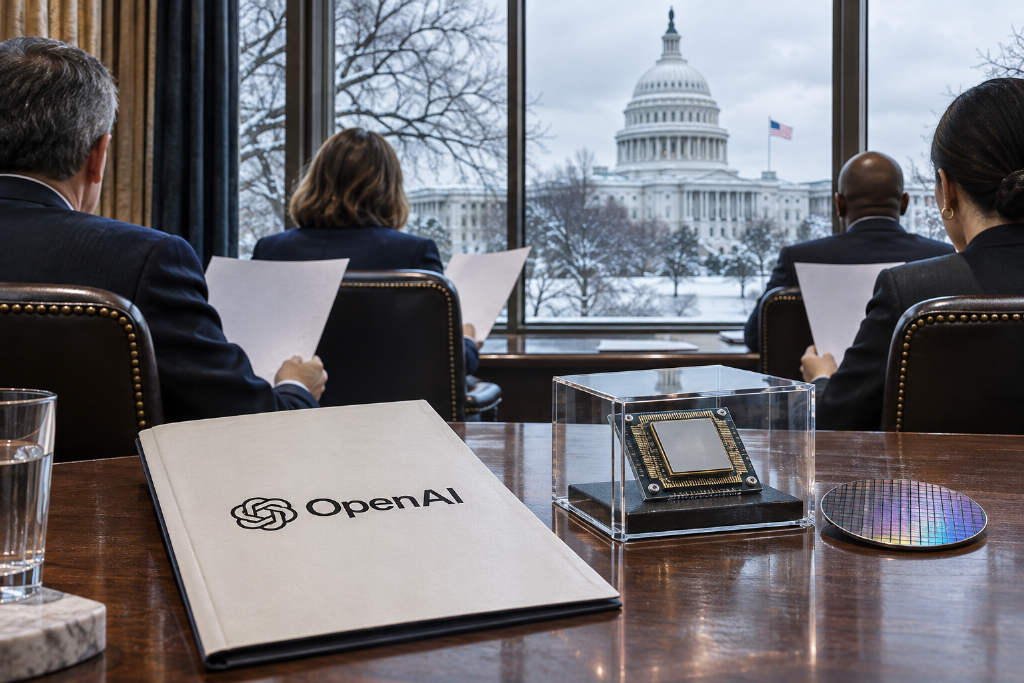
OpenAI privately told US lawmakers this week that it supports three bills aimed at restricting China’s access to advanced artificial intelligence (AI) chips and manufacturing equipment, according to a Beating AI news brief cited by ChainCatcher.
The bills call for stronger chip tracking, restrictions on chipmaking equipment supplies to China and greater congressional scrutiny of export licenses for sensitive chips. Lawmakers from both parties are seeking to include the restrictions in the year-end defense authorization bill.
OpenAI’s Relationship With Nvidia
OpenAI has previously backed chip controls on China. Last year, the company advocated limiting sales of high-end chips to China by US firms, but later stopped pressing Congress for tougher restrictions.
OpenAI executives have long worried that publicly supporting tighter chip export controls on China would anger Jensen Huang and damage the company’s relationship with Nvidia. The two companies have close ties. Nvidia supplies OpenAI with graphics processing units (GPUs) and has backed its data center construction through large financing guarantees. Huang, meanwhile, has long lobbied Washington to ease restrictions on chip sales to China.
Anthropic’s Position and Congressional Efforts
AI company Anthropic has taken a more explicit position. In September, it left a technology industry association after objecting to the association’s efforts to block a chip control bill.
Huang resigned on November 12, dealing a blow to Nvidia’s lobbying influence in Washington, according to the news brief.



