
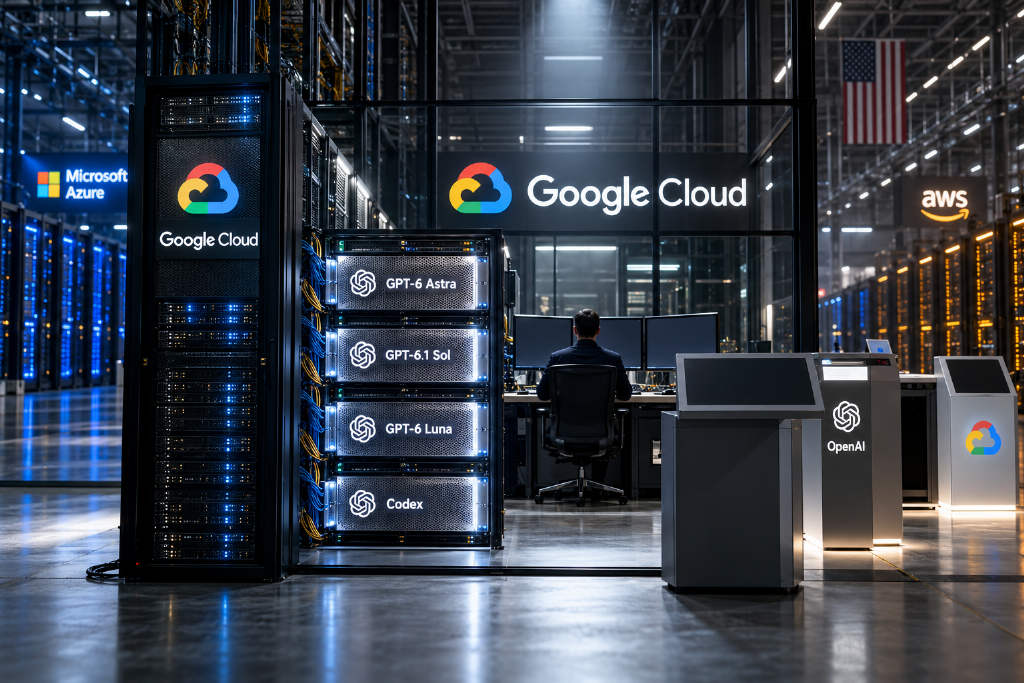
OpenAI and Google Cloud have announced a partnership that will bring GPT-6 Astra, GPT-6.1 Sol, GPT-6 Luna and Codex to Google Cloud. The first set of models has already started rolling out to selected enterprise customers, and OpenAI said broader availability is planned in the coming weeks. The models are also slated to be integrated into Google Antigravity and Gemini Agent later on.
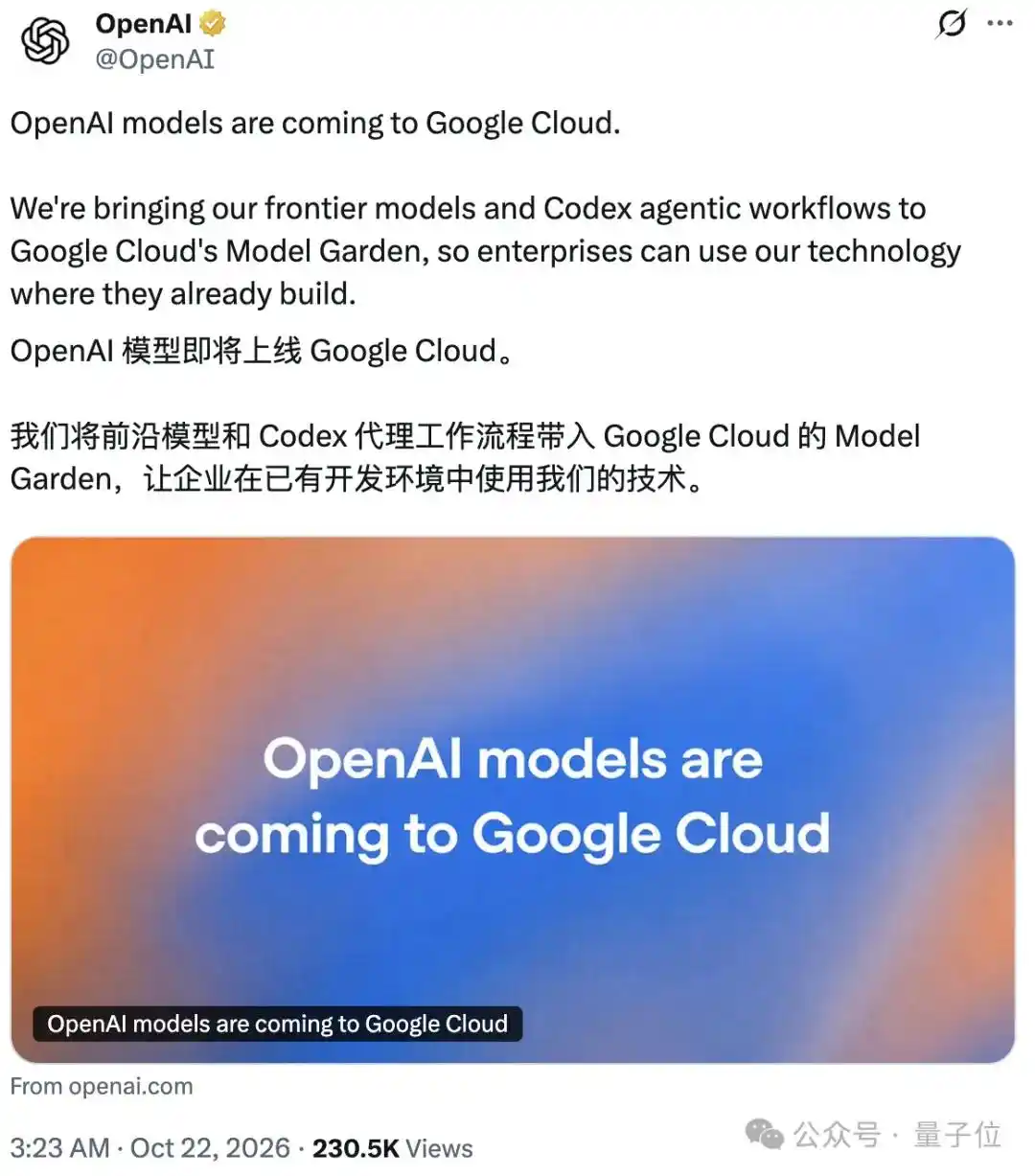
OpenAI models are entering Google Cloud’s catalog
GPT-6 Astra, GPT-6.1 Sol and GPT-6 Luna have been added to Google Cloud’s model garden and are now available in private preview for some enterprise customers. Businesses can access the models directly through Google Cloud APIs. They can also connect local Codex CLI and desktop workflows to Google’s Gemini platform, allowing Codex to run inference through Google Cloud.
OpenAI said a general availability plan will be introduced in the coming weeks.
For enterprise buyers, the partnership changes how procurement and billing work. Companies will be able to purchase OpenAI models through Google Cloud Marketplace using their existing Google Cloud accounts. Usage charges across different models can also be combined on a single Google Cloud bill and folded into cross-model Flexible Savings Plans.

That setup lets customers switch between models inside the same Google Cloud working environment without signing a new contract or opening a separate billing relationship.
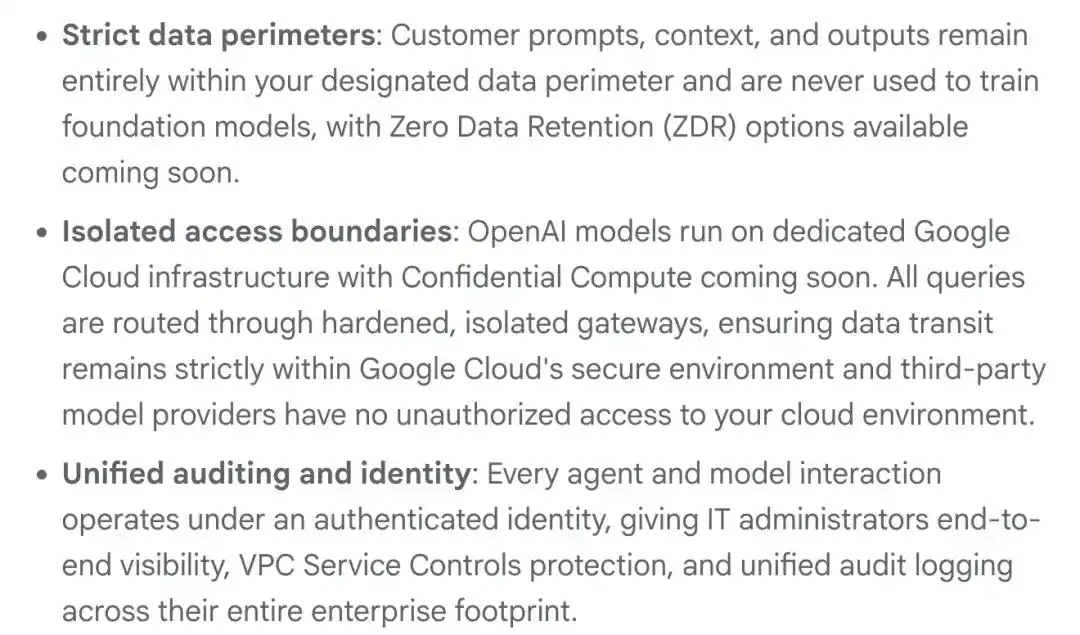
Google Cloud’s existing data governance, security and access-control systems will remain in place. Prompts, context and outputs stay within designated data boundaries, while model calls pass through isolated gateways and unified identity authentication, according to the information released by the companies.
Once OpenAI’s models are added to Google Antigravity and Gemini Agent, customers will be able to choose among models based on the task at hand.
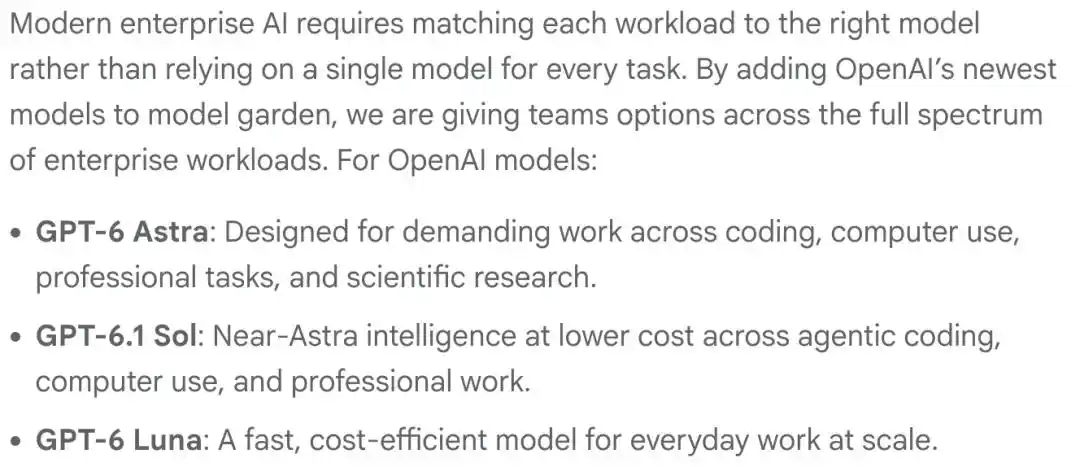
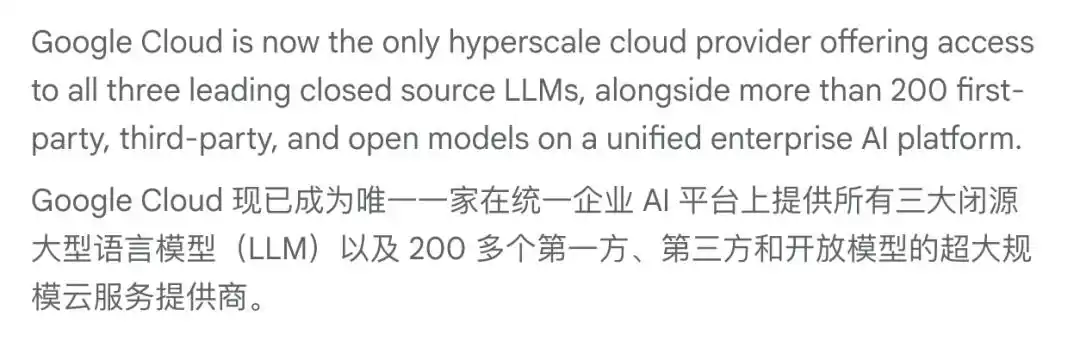
In its blog post, Google Cloud said it is now the only hyperscale cloud provider offering the three leading closed-source foundation models alongside more than 200 first-party, third-party and open-source models.
From Azure exclusivity to AWS and now Google Cloud
Before this deal, Microsoft Azure held the exclusive cloud distribution rights for OpenAI’s stateless APIs. Even when OpenAI worked with other providers, those API calls were, in principle, still required to run on Azure.
That changed on April 27 this year, when Microsoft and OpenAI revised their partnership agreement and removed the exclusivity clause. From that point on, OpenAI was free to provide products to customers through any cloud platform, while Microsoft’s license to OpenAI models and products became non-exclusive.
On April 28, GPT and Codex were added to Amazon Bedrock. AWS customers were able to use the models through their existing identity systems and enterprise controls, and the related costs could count toward existing cloud spending commitments.

Now OpenAI has moved into Google Cloud as well. From Azure-only distribution to AWS and then Google Cloud, OpenAI has expanded across the three largest U.S. cloud providers within half a year.
Microsoft still remains central to OpenAI’s cloud setup. Under the revised April agreement, Microsoft is still OpenAI’s primary cloud partner, and OpenAI products will continue to launch on Azure first.
Competition in models, cooperation in enterprise distribution
OpenAI and Google continue to compete directly in large models, search and coding agents. This partnership shows that model rivalry and enterprise distribution are no longer the same battlefield.
For OpenAI, the appeal is access to enterprise customers where they already operate. Companies buying AI models are not deciding only on benchmark rankings. They also care about where data is stored, which vendor already holds the contract, and which cloud runs their security and audit systems. By placing its models inside major cloud platforms, OpenAI can enter procurement flows that are already established.
If a company is built on Azure, OpenAI can sell there. If workloads run on AWS, the models can be offered through Bedrock. If data and operations sit on Google Cloud, GPT and Codex can now be called from Google Cloud’s own model environment. That means customers do not need to route usage through OpenAI’s standalone API platform to bring the models into daily work.
For Google Cloud, the value lies in the platform business. If customers choose Gemini, Google earns model revenue directly. If they choose GPT, Google still keeps the marketplace relationship as well as the infrastructure, governance and security layers around the transaction. As the original article notes, the harder models compete, the more likely enterprises are to switch among them by task, which raises the value of a cloud platform that acts as a common storefront.
For enterprise customers, the main benefit is operational simplicity. They do not need to move data, change cloud providers or negotiate a separate vendor contract just to assign different tasks to Gemini, GPT or Claude based on capability, latency and cost.
Reuters framed it as a broader industry shift
The original report cited Reuters as describing a wider trend: hyperscale cloud providers such as Microsoft, AWS and Google Cloud are becoming the most important commercial distribution channels for frontier model labs.
Under that structure, model companies build the products and compete on capability, while cloud providers control enterprise customer access, procurement entry points and billing systems, taking a share of each transaction.
That leaves the competitive dynamic intact at the model layer. GPT and Gemini are still expected to compete. Off the stage, though, Google Cloud is now also a sales channel for OpenAI’s products.
Public sparring between Sam Altman and Sundar Pichai came just before the deal
The original article also noted that shortly before the partnership was announced, OpenAI CEO Sam Altman argued that Google was adding AI onto older products such as search, while OpenAI was building AI-native products from the ground up.
Google CEO Sundar Pichai responded on an Alex Kantrowitz podcast, saying the Gemini app was built from scratch as an AI product. He added that, by the same logic, if everyone is now adding agents into products, then OpenAI would also be adding agents into ChatGPT.
Not long after that exchange, OpenAI’s models were brought onto Google Cloud.
Sources
- OpenAI post on X
- CNBC report published on Oct. 21, 2026
- Google Cloud official blog
- OpenAI official page
- Original Chinese article credited to Quantum Bit on WeChat



