
The richest person at OpenAI is not Sam Altman.

Greg Brockman, OpenAI’s co-founder and president, showed up on the 2026 Forbes 400 for the first time with an estimated net worth of $25.5 billion, good for No. 45 in the United States. Forbes called him the richest newcomer on this year’s list. He landed behind Nike co-founder Phil Knight and ahead of media mogul Rupert Murdoch.
Altman, OpenAI’s CEO, was not on the list. Forbes said Altman does not own direct equity in OpenAI and currently has an estimated net worth of about $3.3 billion. This year’s Forbes 400 cutoff was $4.4 billion, so he missed it by $1.1 billion. Put simply, Brockman’s $25.5 billion fortune is close to eight times Altman’s.
The ranking arrived the same week the Financial Times and The Information reported that OpenAI had started early conversations with investors about a new fundraising round that could value the company at $1.2 trillion or more. Just days before that, Altman said in an exclusive interview with Fortune that OpenAI would not go public this year. Even with an IPO pushed off, OpenAI’s second-most senior executive has already broken into the top 50 richest people in America.
A diary entry that went from $1 billion to $25.5 billion
In August 2017, Brockman wrote one sentence in his diary: “Financially, what could help me make $1 billion?”
Back then, OpenAI was still a nonprofit. Its co-founders were fighting over whether to set up a for-profit arm and whether Elon Musk should control it. Nine years later, that private diary note turned into one of the most damaging pieces of evidence in Musk’s lawsuit against OpenAI.
Musk pointed to it to argue that Altman and Brockman had betrayed him — first getting him to back a nonprofit, then turning it into a for-profit company.
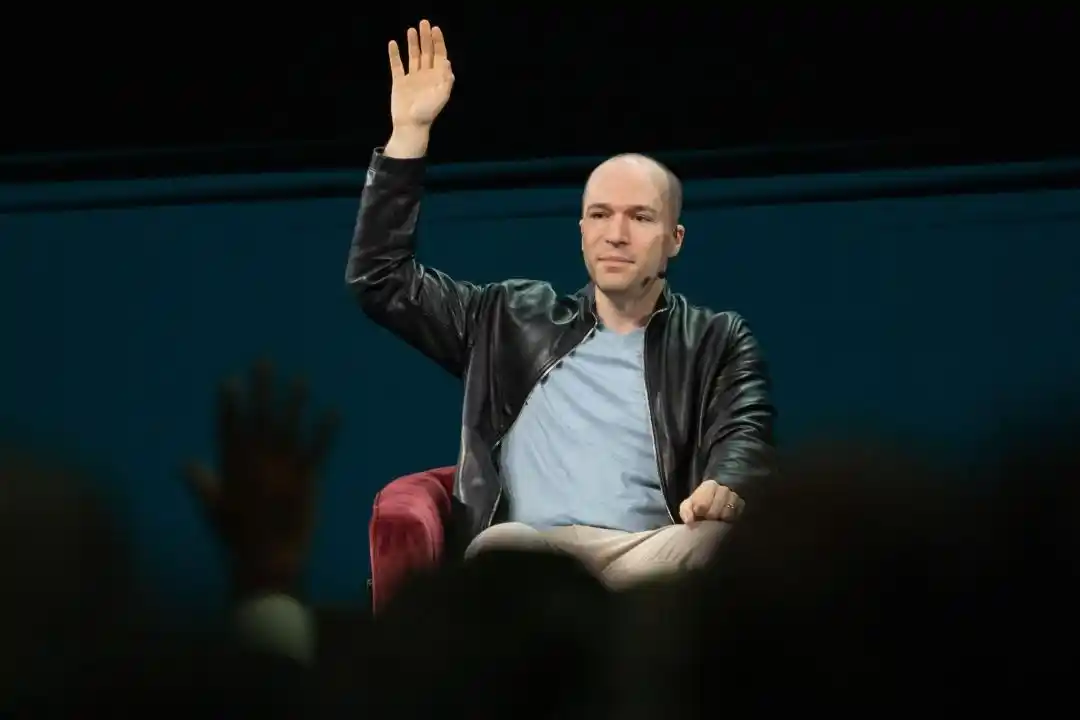
Testifying in federal court in Oakland, California, Brockman said the line meant he hoped the work he was pouring into OpenAI would someday be worth something. A jury later threw out the case because Musk had filed it too late.
Four months after that, the capital markets put a price on the effort. Brockman’s $25.5 billion fortune on the Forbes 400 is more than 25 times the $1 billion goal he wrote down then. According to the report, it is also more than three times the value of fellow co-founder Ilya Sutskever’s OpenAI stake.
Most of the fortune comes from OpenAI equity
Forbes said most of Brockman’s wealth comes from his OpenAI holdings. It estimated that he owns just under 3% of the company.
Brockman also said during a May court hearing that the stake was worth more than $20 billion and closer to $30 billion. Using OpenAI’s March post-money valuation of $852 billion, a 3% stake would be worth about $25.56 billion. Since his stake is a bit under 3%, and he also owns other assets, that rough math lines up with Forbes’ $25.5 billion estimate.
Outside OpenAI, Brockman also owns a stake in Stripe. He was born in a small town in North Dakota to two physician parents. He left Harvard for the Massachusetts Institute of Technology, dropped out again a few months later, and joined payments startup Stripe as employee No. 4 and CTO.
He still owns Stripe shares worth about $471 million. Stripe was valued at $159 billion in February this year.
He also has smaller investments in Cerebras, CoreWeave, and Helion worth less than $5 million combined. All three companies have done business with OpenAI.
Brockman left Stripe in 2015 and co-founded OpenAI, where he served as CTO. For almost a decade, he stayed more in the background while Altman drew most of the public attention.
The 2023 board crisis became the turning point
The event that really locked Brockman’s personal fortune to OpenAI was the 2023 board crisis.
After Altman was suddenly fired, Brockman said he was resigning within hours. He knew walking away could also put his OpenAI equity at risk.
Court testimony exposed another detail too: in 2017, Altman gave Brockman a $10 million allocation from his family office. A small detail, maybe. But it showed how close the two men were.
As OpenAI’s valuation kept rising, Brockman’s paper wealth climbed with it because he owned direct equity. The gap between the two men’s standing inside OpenAI and their personal fortunes comes down to one thing: owning shares versus not owning them.
OpenAI paused IPO plans, but investors kept pushing valuation higher
On March 31, OpenAI said it had finished a $122 billion financing round at a post-money valuation of $852 billion. That is still the company’s official valuation benchmark.
In June, OpenAI confidentially filed for an IPO, and for a moment the market expected a listing before the year ended. Then Altman slammed the brakes.
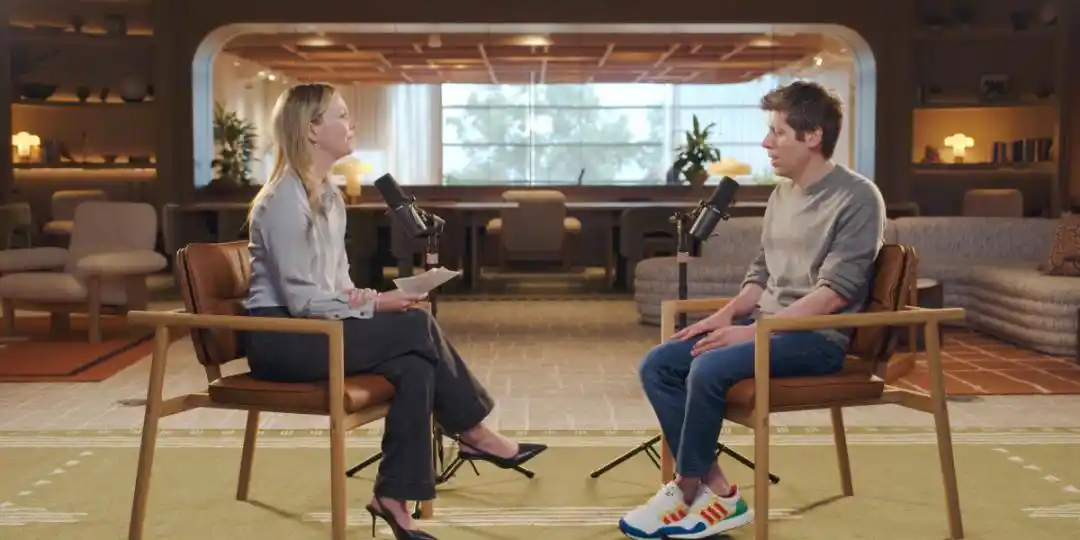
In an exclusive interview with Fortune editor-in-chief Alyson Shontell on Sept. 12, Altman said it would not be wise to go public right now given everything happening around safety, and that an IPO would not happen in 2026.
That barely dented investor appetite. Within days, media reports said OpenAI had begun early talks with investors on a new round that could value the company at $1.2 trillion or higher.
The Financial Times added that investors started the outreach, and that both the speed of negotiations and the valuation itself would depend heavily on when OpenAI plans to go public.
If a round gets done at $1.2 trillion, OpenAI’s valuation would be up about $348 billion from the March figure of $852 billion, or roughly 41%.
Paper wealth is already being used in politics
Most of Brockman’s $25.5 billion still exists on paper. That has not kept him from putting real money into politics.
Over the past year, Brockman and his wife Anna gave $75 million, all of it to super PACs, the political groups in U.S. elections that can raise unlimited sums and spend on advertising for candidates.
- $50 million went to two super PACs backing candidates described as friendly to AI, with the donations split across Democrats and Republicans.
- Another $25 million went to MAGA Inc., a super PAC that supports Donald Trump.
Those donations sparked opposition from some OpenAI employees and set off a push among users to cancel ChatGPT subscriptions.
Founders and executives keep leaving as Brockman’s role expands
At the same time, exits inside OpenAI have kept coming.
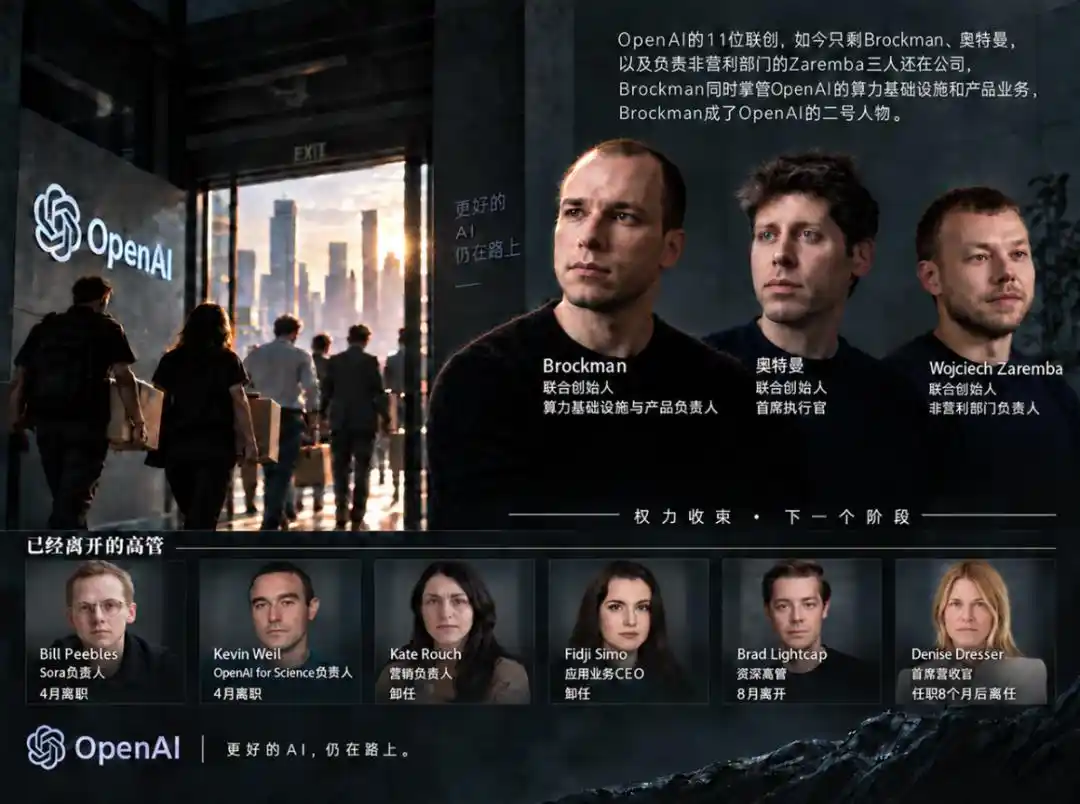
Of the company’s 11 original co-founders, only Brockman, Altman, and nonprofit lead Wojciech Zaremba are still there.
Senior executives have left one after another. In April, Sora lead Bill Peebles and OpenAI for Science lead Kevin Weil departed. Then came marketing chief Kate Rouch and applications CEO Fidji Simo. In August, longtime executive Brad Lightcap left, and chief revenue officer Denise Dresser lasted only eight months in the job.
As power grew more concentrated, the report said OpenAI had entered the “Brockman era.” He now runs both computing infrastructure and product operations, making him the company’s No. 2 executive.
AI became one of the biggest wealth engines on the Forbes 400
Across the whole ranking, 2026 was a huge year for AI-created wealth. The combined net worth of the Forbes 400 hit a record $8 trillion.
Among the 34 newcomers, 14 others besides Brockman were carried onto the list by the AI boom. The second-richest newcomer after Brockman was Figure AI founder Brett Adcock, with an estimated fortune of about $23.4 billion. His humanoid robotics company is only four years old, has limited revenue, and is already valued in the tens of billions of dollars.
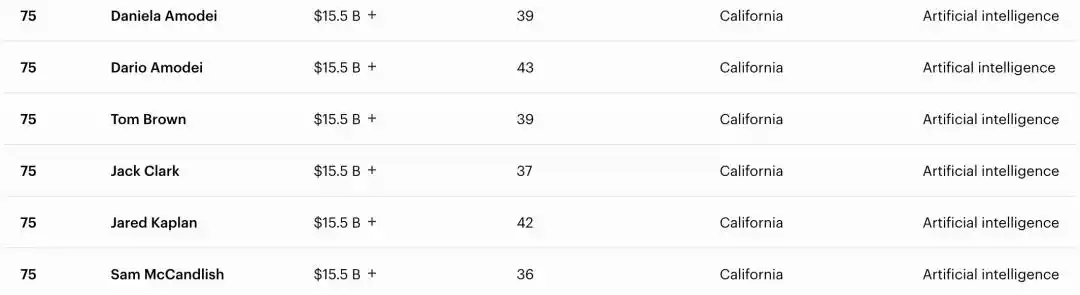
Anthropic stood out too. Six co-founders — Dario Amodei, Daniela Amodei, Tom Brown, Jack Clark, Jared Kaplan, and Sam McCandlish — all made the list with fortunes of about $15.5 billion each, tied at No. 75. Together, that adds up to about $93 billion.
Anthropic has seven co-founders in total. The seventh was not included because that person is a Canadian citizen and outside the scope of the U.S. ranking. The group left OpenAI in 2021, saying they were worried OpenAI was moving too fast on AI and was not paying enough attention to safety. Five years later, the company they built was valued at $965 billion.
Earlier this year, the seven co-founders jointly pledged to give away 80% of their wealth in the future. Most are still fairly young. Daniela Amodei and Tom Brown are both 39, Jack Clark is 37, and Sam McCandlish is only 36.
The youngest person on the entire list also came out of AI. Steven Hao, 30, is the co-founder and CTO of Cognition, the company behind the AI programmer Devin.

In September, Cognition said it had raised $2 billion at a $48 billion valuation, less than three years after it was founded.
Private markets are pricing AI fortunes before IPOs happen
From OpenAI to Anthropic, AI companies are minting ultra-wealthy founders before any of them ring the opening bell.
The Financial Times reported that Anthropic, on an adjusted basis, could post a second straight profitable quarter and may go public as early as October at a valuation of about $2 trillion.
The pattern is pretty obvious now: better models drive revenue, revenue pulls in capital, capital reprices equity, and equity makes billionaires. And a lot of it is happening before listing. Private markets are naming the price first. Public markets will test it later.
OpenAI has put its IPO on pause for now, but the valuation private markets have assigned to it will eventually have to face public-market scrutiny.
Nine years ago, Brockman wrote in a diary asking what it would take to make $1 billion. The market’s answer now is more than 25 times that amount.