
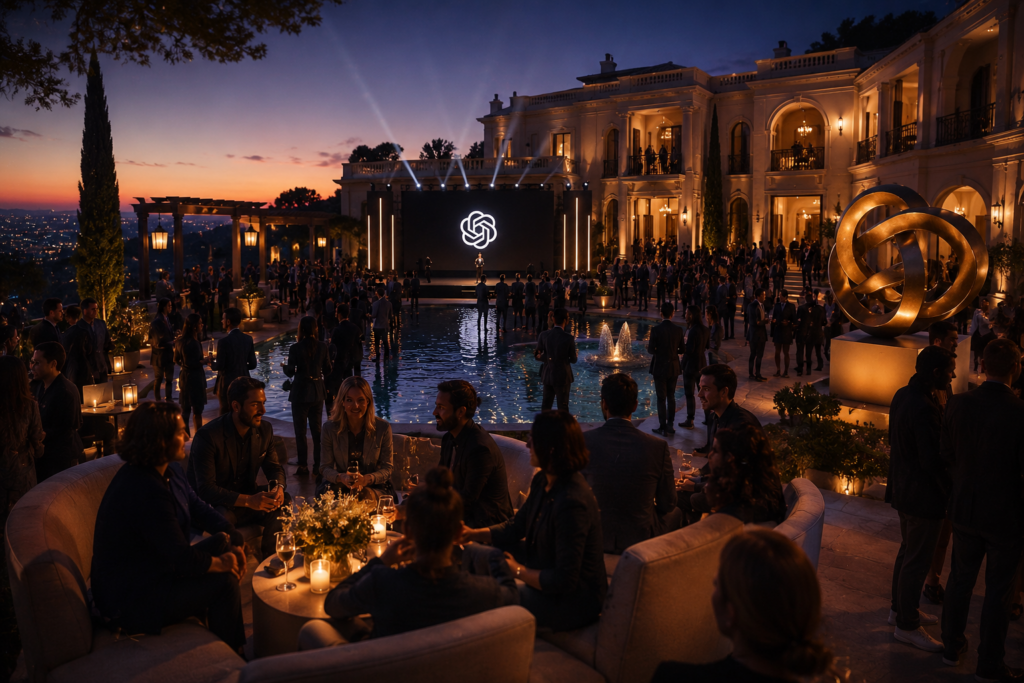
OpenAI came under fire after hosting what the report described as its first influencer retreat, inviting a small group of creators to a luxury estate in upstate New York for workshops centered on the newly launched ChatGPT Work. The trip featured a $5,000-a-night suite, curated meals and hands-on activities, but the social response was sharply negative once attendees began posting about it.
Luxury retreat posts quickly drew criticism
According to the report, OpenAI held the event last weekend under the name “Summer Club.” The itinerary included farm-to-table dinners, beekeeping experiences and instructional sessions showing creators how to get more out of OpenAI’s products.
Some attendees posted about building a website during the trip, while others shared images of a program booklet listing a painting workshop. The visuals were polished and lifestyle-driven. The reaction in comment sections was not.
Creators were pressed over the optics of the trip
One influencer, Grace, shared clips from the retreat on TikTok and Instagram. Commenters accused her of trading principles for a luxury stay, while others urged her to make a video explaining how the trip squared with concerns about the environmental impact of AI data centers.
Another influencer was asked whether she would be willing to film a GRWM-style visit to a data center. When TechCrunch reached out to a third attendee, she had already deleted the original video introducing the trip and left up only other posts that did not explicitly identify it as an OpenAI-branded event.
OpenAI said the event was educational and part of its marketing strategy
Responding to questions from TechCrunch, OpenAI spokesperson Drew Pusateri said the company works with creators as part of its marketing strategy to help people understand more practical uses of ChatGPT.
He said the retreat was education-focused, giving creators direct experience with the tools before they went back to explain them to their followers. He also said creators are an important channel through which communities come to understand the product.
Other AI companies have done similar events, but this one hit a nerve
The report noted that OpenAI is not the first AI lab to use influencer hospitality as a promotional tool. Anthropic reportedly hosted a Claude influencer dinner, and Microsoft Copilot ran an influencer trip tied to the Super Bowl back in February. Those events were public, but they did not trigger the same level of backlash described here.
One invited influencer wrote on LinkedIn that she had expected people to be interested in behind-the-scenes tips and said she had not anticipated anti-AI sentiment to be this intense. She said she did not expect the controversy at all.
Timing became a central issue in the backlash
TechCrunch also spoke with one commenter who had posted criticism under one of the retreat videos. She said many Americans view AI negatively and that public debate should be focused more on how to use the technology responsibly. In her view, influencer trips like this simply hand people another reason to resent AI, especially at a moment of wider instability, and showing off a $5,000-a-night suite was the wrong message.
The report added that OpenAI is currently preparing to finalize a $500 billion data center deal in Ohio. That made the retreat especially sensitive because the social and environmental impact of AI data centers is already a live issue.
Familiar marketing tactics met a more hostile audience
The piece framed influencer marketing as a straightforward strategy: use trusted creators to package product explanations as lifestyle content, making technical education feel less like advertising. That formula has worked across consumer categories. In AI, the same approach appears to run into a different set of anxieties.
Consumers evaluating AI are not only asking whether a product is useful. They are also weighing whether jobs will be displaced, whether data centers will consume local water and electricity, and how defense contracts may shape the use of the technology. In that environment, the report said, imagery that looks like privilege on display can easily be read as pouring fuel on an already heated debate.