
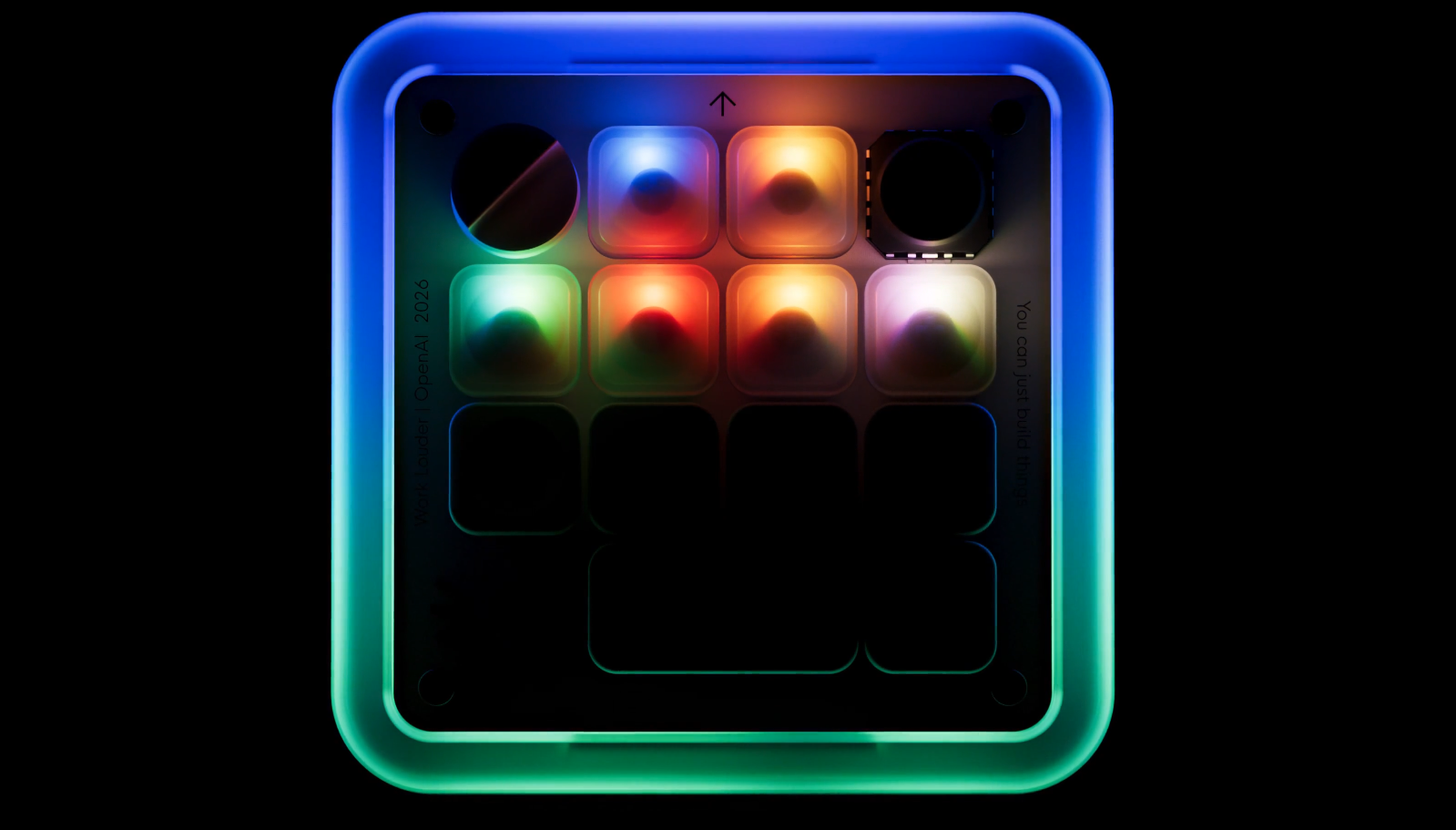
OpenAI has teased a dedicated hardware device for Codex, scheduled to be unveiled on July 15. The company posted a short video on its official X account at midnight on June 30, showing a square controller filled with physical keys and the line, “Your favorite Codex shortcuts are getting an upgrade.” The clip ends by naming Work Louder as the partner behind the device.
A physical shortcut device aimed at Codex users
The teaser points to a controller built around direct input rather than a traditional screen-based interface. Work Louder is known for mechanical keyboards and macro pads, compact standalone keypads that let users assign shortcuts and custom actions to individual buttons, knobs, or other controls. That makes the partnership a natural fit for a Codex-focused tool.
Based on the design shown in the video, the device appears similar to Work Louder’s Creator Micro 2, which includes 13 mechanical switches, a joystick, and a touch sensor. It is designed to sit beside a keyboard and operate independently. The report also notes that Figma worked with Work Louder in 2023 on a shortcut board for designers, following the same idea of turning software commands into physical controls.
Separate from the Jony Ive hardware project
The report makes a clear distinction between this Work Louder device and the separate AI hardware project OpenAI is developing with former Apple designer Jony Ive. That project is described as pocket-sized, screenless, and minimalist, with a launch expected in late 2026. Its intended role is closer to a new AI access point that could sit outside the smartphone model.
The Codex accessory sits at the other end of the spectrum. It appears to target an existing user group rather than define a new category. Instead of rethinking consumer hardware from scratch, it focuses on developers who already use Codex and want faster access to repeated commands in daily work.
OpenAI pushes deeper into developer workflows
The article frames the device as a lower-risk hardware move with a clear audience and a more controllable product scope. OpenAI has used accessories before to support its developer ecosystem, but putting its brand directly onto a mechanical input device is still a notable step. The logic is simple: hardware that becomes part of a developer’s routine may be harder to swap out than a service competing on API pricing alone.
The source also references OpenAI’s 3 million weekly active users. Against that backdrop, a Codex-specific keypad suggests the company is testing ways to extend its software presence onto the desktop itself. Full specifications and functionality remain unknown for now, with the formal reveal set for July 15.