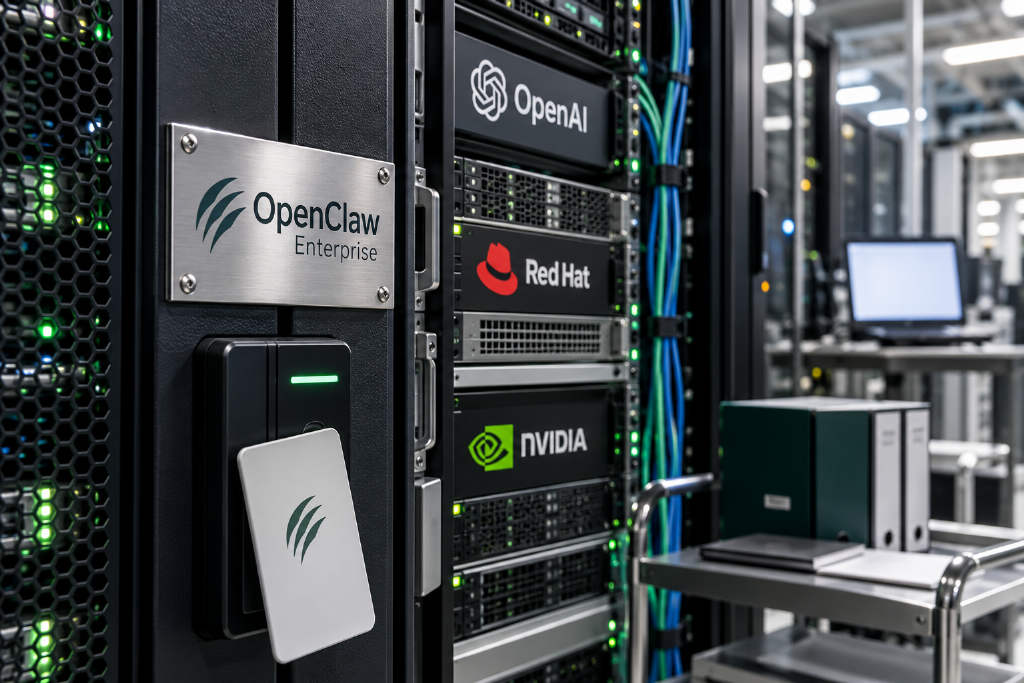
OpenClaw Foundation has released OpenClaw Enterprise, or OCE, an open-source system designed to help companies deploy and manage long-running AI agents on their own infrastructure. The project began inside OpenAI before being donated to the OpenClaw Foundation, with Red Hat and NVIDIA listed among contributors. OCE is released under the MIT license, can be self-hosted, and does not require companies to use OpenAI models or tooling.
The product is aimed at a practical problem many companies face after rolling out agents: how to manage them at scale. According to the announcement, administrators can create multiple agents from a central interface, set access controls for users and agents, and add isolation, auditing, and lifecycle management. The underlying model, agent harness, and sandbox are all replaceable.
OpenAI and Red Hat have already tested OCE internally. OpenAI’s internal agent, called Androidclaw, can read code repositories, GitHub, and logs. In the examples shared, it can locate related pull requests and attempt fixes after build failures, and it can also trace product issues, submit PRs with video evidence, and even merge them. The foundation said OCE is not yet ready for formal production use and is currently recommended only for internal pilots, with version 1.0 planned for later this year.
OpenClaw Foundation has released OpenClaw Enterprise, or OCE, a platform for companies to deploy and manage long-running AI agents on their own infrastructure.
The project started inside OpenAI and was later donated to the OpenClaw Foundation. Red Hat and NVIDIA are among the participants in its development. The code is available under the MIT license, companies can deploy it themselves, and the foundation said it will remain free.
Built for enterprise agent management
OCE is meant to address the management issues that appear after companies put agents into use. Administrators can create multiple agents from a unified setup, restrict access for different users and agents, and add isolation, auditing, and lifecycle management.
The underlying model, the agent harness, and the sandbox can all be swapped out. OCE does not require companies to tie themselves to OpenAI.
Internal testing at OpenAI and Red Hat
According to the release, OpenAI and Red Hat have already been testing OCE internally. OpenAI’s internal agent, Androidclaw, can read code repositories, GitHub, and logs.
When a build fails, Androidclaw can find the related pull request and try to fix it. When it detects a product issue, it can trace the fault, submit a PR with video evidence, and in some cases merge it directly.
Not yet in formal production
OCE has not reached the formal production stage. The foundation currently recommends it only for internal pilot programs, with version 1.0 planned for later this year.
This article was originally published by Bit.Fan. For more cryptocurrency news and market insights, visit www.bit.fan. Disclaimer:
The market information, project data, and third-party content displayed on this platform are for industry information sharing only and do not constitute any form of investment advice or return commitment.
Cryptocurrency trading carries high risks. Users should fully assess their risk tolerance and make independent decisions. All profits, losses, and legal responsibilities are borne by the users themselves.