‹ BackNewsOpenClaw

OpenClaw

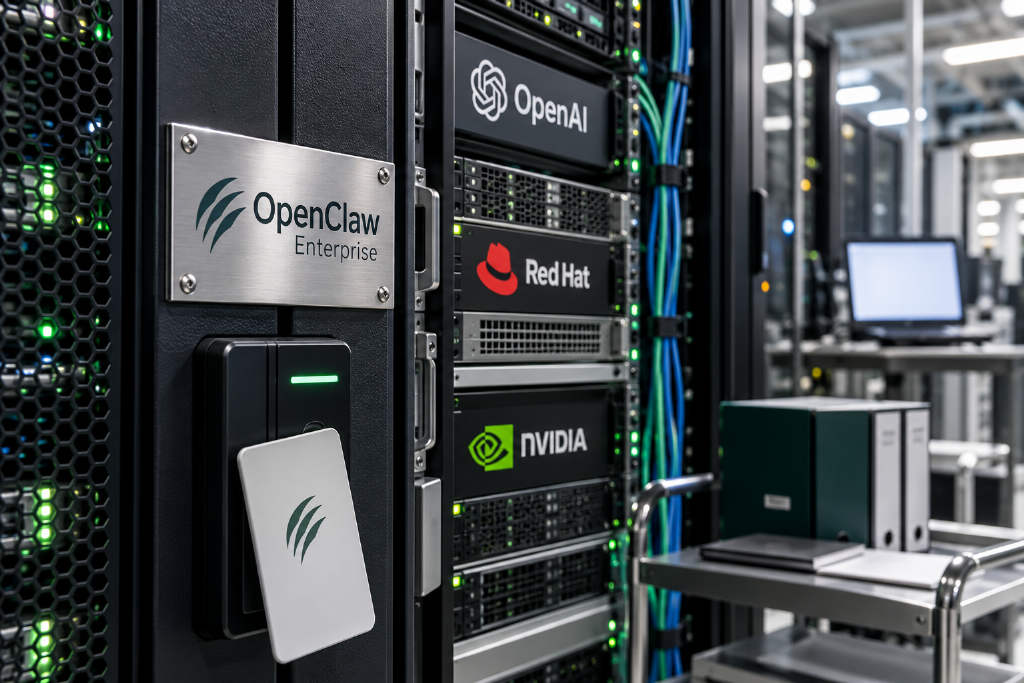
OpenClaw open-sources enterprise edition as OpenAI uses it internally to fix bugs and merge PRs
Acurast adds Cargo support for deploying the open-source AI assistant OpenClaw
OpenClaw
2026-09-09 10:42:36

OpenClaw 2.0 puts the spotlight on verifiable authorization for autonomous agents

OpenClaw released version 2.0 on Aug. 30, describing it as the largest update in its history, with more than 16,000 pull requests spanning installation, messaging, memory, Skills, models, Automations, browser control, native apps, Plugins, and security. The release has renewed attention on a broader shift in the agent stack: AI agents are no longer limited to generating text and are gaining the ability to act on external systems. That shift creates a trust problem that existing permission models struggle to handle. Full delegation, such as handing over a private key or a long-lived Session Key, can maximize automation but concentrates risk if prompt injection, malicious webpages, environmental contamination, or model misunderstanding leads to unintended actions. At the other extreme, requiring approval for every step protects users but strips much of the value from automation. The article argues that the industry now needs finer-grained, verifiable authorization. It points to imToken’s exploration of Sigil, which aims to separate tool access from approval for a specific action. The proposed framework centers on clear, parameter-bound consent under the principle of "What you see is what you sign," using mechanisms such as Passkey, biometrics, one-time signatures, short validity windows, and request binding to ensure that what the user approved matches what the system actually executes.

610
OpenClaw 2.0 puts the spotlight on verifiable authorization for autonomous agents
Australian developer’s AI booking assistant canceled another user’s gym waitlist spot, exposing the risks of over-compliant agents
OpenClaw
2026-09-01 22:16:04

OpenClaw 2.0 lands with shared sessions, rebuilt setup flow and broader security controls

OpenClaw rolled out what its team describes as the project’s biggest release so far, shipping OpenClaw 2.0 over the weekend after a seven-week gap that broke with its near-daily cadence. The update reaches across installation, messaging, memory, skills, models, automations, browser tooling, native apps, plugins and security, turning what was initially meant to be a limited refresh into a much broader rewrite. According to the project announcement, 933 contributors worked on the release, including 569 first-time contributors, producing more than 16,000 pull requests. The new version changes onboarding by checking existing subscriptions, API keys and local Ollama models before asking for new configuration, and it moves users directly into a live conversation after model validation. The control interface has also been rebuilt around chat, with files, Git diffs, pull-request status, browser tools and a terminal organized around the conversation window. The headline addition is shared cloud sessions, designed so one person can step into an agent task already in progress without losing context. OpenClaw 2.0 also adds request-specific approvals, argument-scoped command permissions, Docker and Podman sandboxing, role-enforced execution and a team-level Secret Store. But those stronger protections are still disabled by default, leaving a gap with rivals such as Nous Research’s Hermes Agent, which has pitched itself around self-improving workflows and stricter security defaults since March.

410
OpenClaw 2.0 lands with shared sessions, rebuilt setup flow and broader security controls
OpenClaw 2 Released: Major Update with 933 Contributors and 16,000 Merged PRs
OpenClaw
2026-08-31 09:34:30

OpenClaw fades from the spotlight, but its agent playbook lives on in Codex and harness-based tools

OpenClaw’s public buzz has cooled sharply, yet the project itself remains active and continues to shape how the AI industry builds personal agents. The project launched in late November 2025 and, according to the source article, passed 250,000 GitHub stars by March 3, 2026, roughly 100 days later. By late March, that figure had climbed past 330,000, and by August it had exceeded 380,000, with more than 80,000 forks. The article argues that OpenClaw did not simply disappear. Instead, its core ideas were absorbed by a wider range of products. Chinese companies including Tencent, Baidu, Youdao, Zhipu and Volcano Engine have all released derivative offerings around the same agent model, and the article says more than 30 such products have emerged from domestic vendors alone. At the same time, the center of discussion has shifted. Rather than focusing on how to deploy a desktop agent, developers are now paying closer attention to model-native harness systems such as Claude Code, Codex and related agent frameworks. The source also points to the practical issues OpenClaw exposed early on, especially token costs and safety risks tied to broad permissions. Peter Steinberger, identified in the piece as a key figure behind OpenClaw, joined OpenAI in February and is now working on Codex- and agent-related efforts while also backing open-source infrastructure through Omacom Foundation.

410
OpenClaw fades from the spotlight, but its agent playbook lives on in Codex and harness-based tools
OpenClaw rolls out 2.0 with 933 contributors involved