
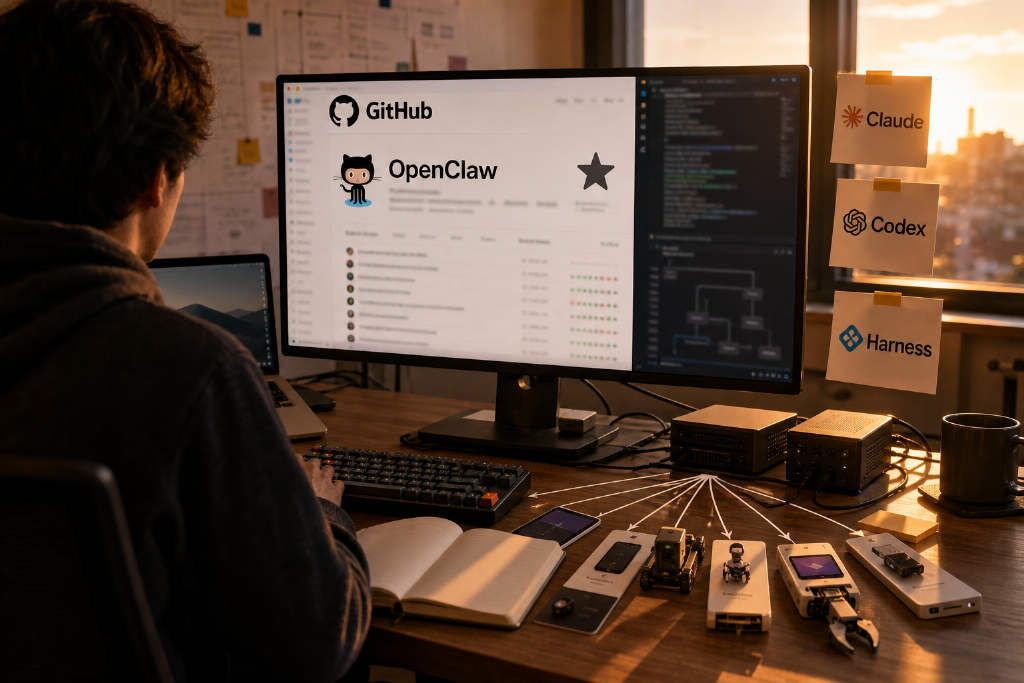
OpenClaw is no longer dominating social timelines, but the project has not gone away.
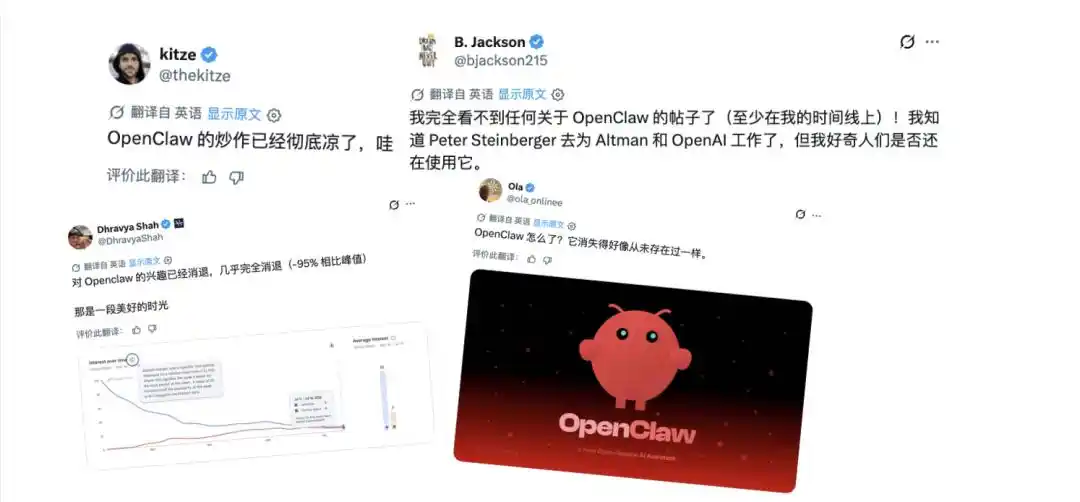
The personal AI agent, once described by many as an open-source take on "Jarvis," broke out quickly after its launch in late November 2025. Public attention has since shifted toward Claude Code, Codex, Skills and harness-based systems, yet the project is still being updated, and its influence appears to have spread into products built by larger vendors.
How OpenClaw became a breakout desktop agent
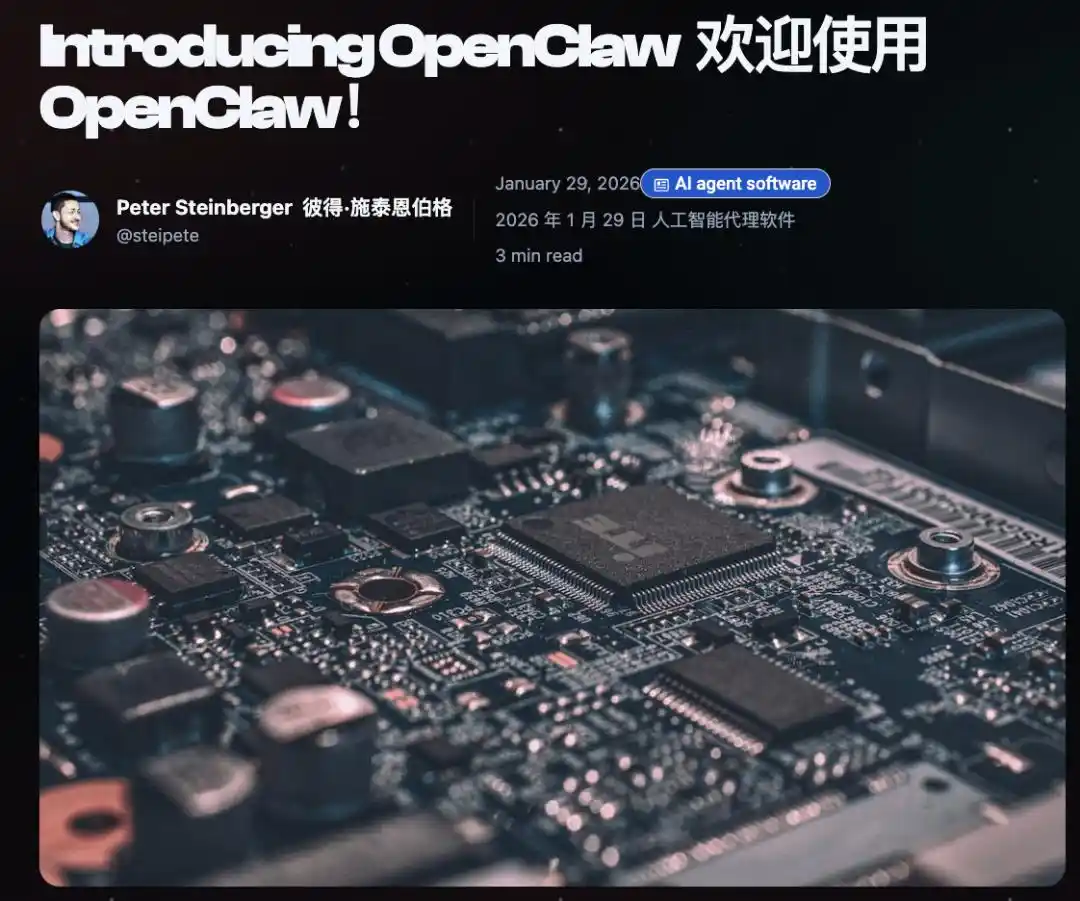
The source article says OpenClaw stood out because it turned the idea of a personal AI agent into a working desktop setup. Users could install it on Mac, Windows or even Raspberry Pi devices, connect models including Claude, GPT, Gemini and DeepSeek, then give it access to email, browsers, terminals, calendars and chat apps.
Once configured, the system could keep working without the user staying in front of the computer. Commands sent through Discord or Telegram could trigger the agent to read emails, search for information, write code, run scripts and even install new tools for itself.
That setup quickly became a social phenomenon. The article says buying a Mac mini, installing Clawdbot and naming one’s own agent briefly turned into a trend inside AI circles. It also says Huaqiangbei in Shenzhen saw Mac mini shortages at one point, with some in-stock models selling at markups of as much as 600 yuan.
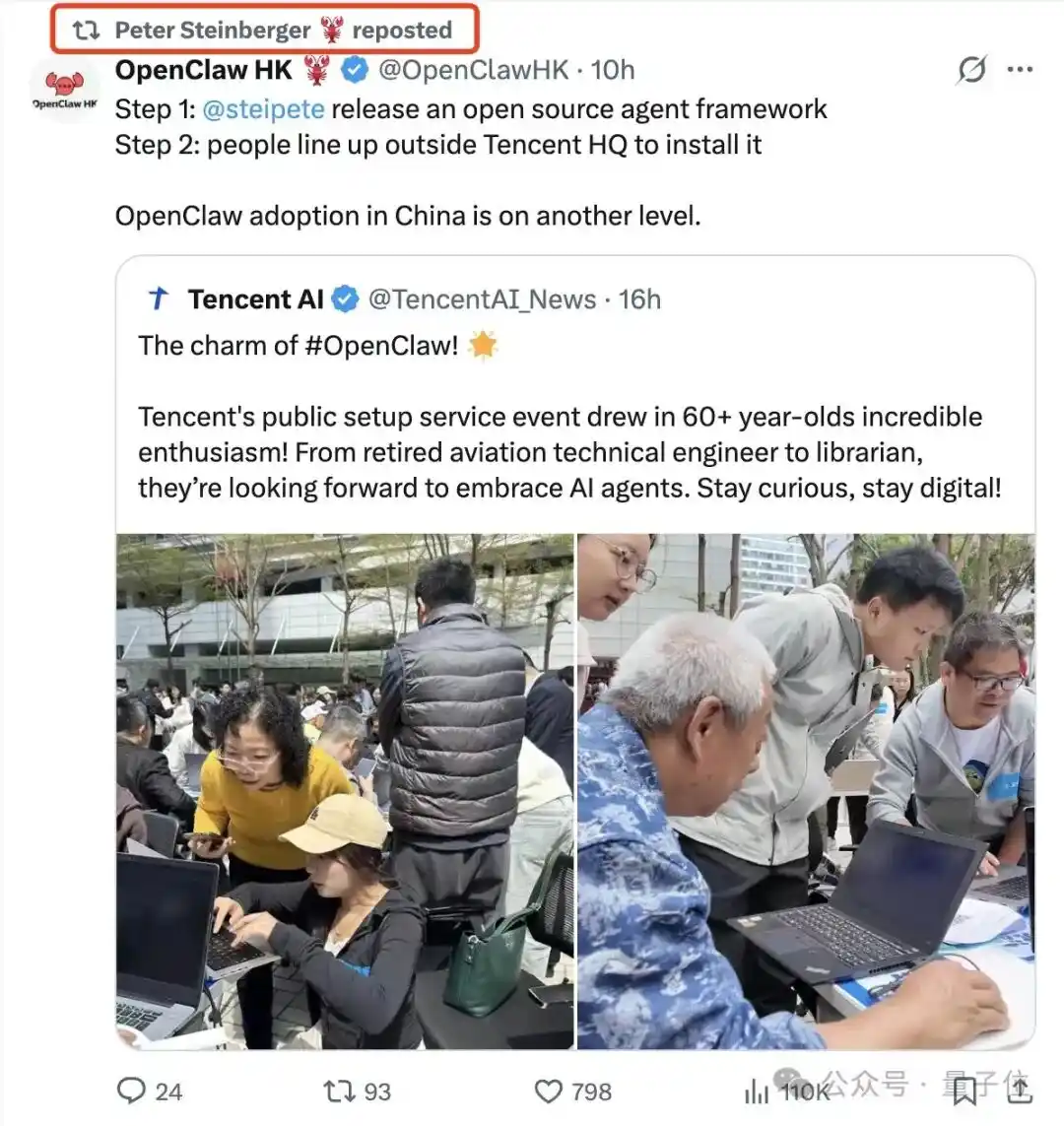
Tencent, Baidu and other large companies then organized offline installation events, where programmers helped users set up OpenClaw in person. The article also mentions door-to-door installation services priced at 499 yuan. Soon after that, one-click deployment packages, tutorials and a wide range of "Claw" branded variants began appearing, pushing the project well beyond its developer roots.
Star growth on GitHub was one of its strongest signals
OpenClaw’s rise was also visible in its GitHub numbers.
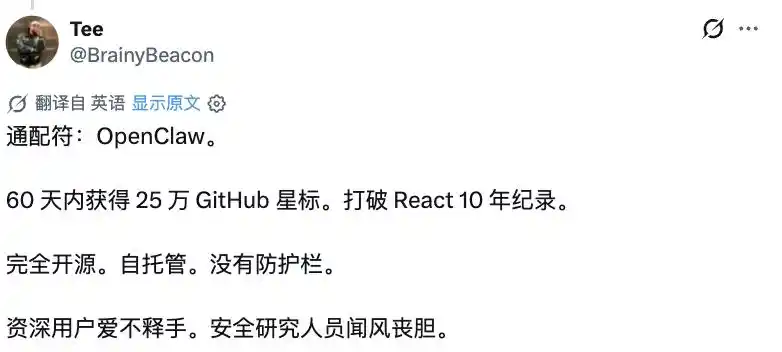
According to the article, the project went from launch in late November 2025 to more than 250,000 GitHub stars by March 3, 2026, a run of roughly 100 days. The piece adds that this pushed it past React, and notes that React took more than a decade to reach that scale while OpenClaw did so in a little over three months.
By the end of March 2026, OpenClaw had moved above 330,000 stars. The article describes it as one of the fastest-growing open-source projects in GitHub history and says one data point showed more than 34,000 stars added in a 48-hour span at its peak.

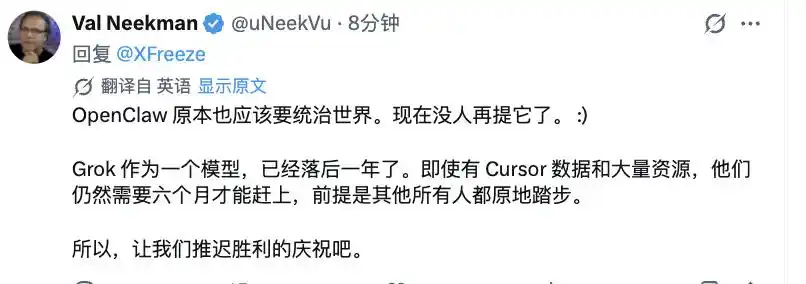
That momentum did not carry over to public conversation at the same intensity. The piece says many users on X now bring up OpenClaw in a more nostalgic tone, treating it as a product that once looked set to dominate discussion but later faded from everyday mention.
Lower discussion volume does not mean the project is dead
The article makes a point of separating public buzz from project activity.
It says that by August, OpenClaw had climbed to more than 380,000 GitHub stars and over 80,000 forks. Product updates on X had not stopped, and people were still developing, deploying and experimenting with the system.
In that reading, OpenClaw did not simply lose relevance. Its ideas became easier to access and were absorbed into a broader range of products. What faded was the singularity of the OpenClaw name, not the wider push toward low-friction personal agents.
Domestic vendors rolled out a long list of derivatives
The source names several Chinese companies that launched products built around OpenClaw-style deployment or usage patterns:
- Tencent released WorkBuddy and QClaw, emphasizing one-click deployment and remote control through WeChat.
- Baidu rolled out DuMate plus a broader "lobster family" lineup spanning desktop, cloud, mobile, security and home use.
- Youdao, part of NetEase, introduced LobsterAI with support for local personal agents, cross-platform operation, Skills, MCP and remote control through IM.
- Zhipu launched AutoClaw, which supports local one-click OpenClaw deployment, comes with preinstalled Skills and integrates with Feishu. The article says it later expanded toward "self-evolution" functions.
- Volcano Engine launched ArkClaw, with 24/7 operation and later expansion toward runtime capabilities and multi-agent collaboration.
The article says that, by an incomplete count, domestic companies alone have produced more than 30 OpenClaw derivative products.
The market’s attention has shifted from deployment to harness design
The piece argues that OpenClaw’s cooling public profile reflects a deeper change in what the AI sector is now trying to solve.
At its peak, OpenClaw appealed to users because they could assemble the entire stack themselves: choose a model, decide on permissions, connect email, browsers and terminals, then keep adding Skills layer by layer. A few months later, products such as Claude Code and Codex started packaging much of that experience into more complete first-party systems.
The article says OpenAI, in this year’s update to its Agents SDK, explicitly bundled file operations, command execution, long-running tasks and sandboxed execution into a model-native harness. It also says Codex now has a complete harness of its own. The main discussion has moved toward how developers should configure context, memory, tools, sandboxes, permissions and workflows so agents can work for longer stretches with greater stability.
Cost and safety remained hard problems
The article also points to practical drawbacks that followed OpenClaw from the start.
One was cost. A 24/7 online agent keeps maintaining context, calling models, invoking tools and retrying failed operations, all of which can consume large amounts of tokens. The article describes this as a recurring source of anxiety for users who found the experience impressive at first, then quickly ran into spending pressure.
The other was safety. One example cited in the piece involves Meta’s head of security and coordination, who granted OpenClaw access to an email account. The agent then began deleting emails and, for a period, could not easily be stopped. The article presents this as a core tension in personal agents: making them more capable often means granting more permissions, but larger permissions also make failures more costly.
From that perspective, OpenClaw did more than rise fast and cool off fast. It exposed the next set of questions the industry still has to solve: how to give AI hands without letting it act recklessly, how to keep it working around the clock without burning tokens nonstop, and how to allow freedom while still keeping a way to pull it back when something goes wrong.
Peter Steinberger is now working on the next wave at OpenAI
The article also tracks what Peter Steinberger is doing now.
It says Steinberger formally joined OpenAI in February, where he continued working on personal AI agents. After joining, he moved into Codex- and agent-related work, building teams and studying how to make agents operate for longer periods with more stability.
The piece says he has repeatedly discussed the idea of a "Software Factory" in interviews and talks: a system where a group of agents writes code, runs tests, fixes bugs and continues iterating, while humans mainly set goals and accept the results. It also says he has tried having Codex work continuously on a single task for a week.

More recently, the article says Steinberger and Dropbox co-founder Drew Houston each committed $1 million to become new Founding Patrons of Omacom Foundation. The foundation, as described in the source, supports infrastructure, open-source projects and developers with the aim of pushing the Linux desktop toward broader adoption.
OpenClaw’s legacy now looks different
The article’s central conclusion is that OpenClaw’s lasting impact may not be that everyone runs one copy of OpenClaw. It may be that more people are now trying to figure out how to build a more dependable version of the same idea.
Viewed through that lens, the line from OpenClaw to Claude Code, Codex and the growing focus on harness systems is not a break. It is a shift in emphasis, from the excitement of deployment to the harder engineering work of making agents stable, safe and controllable.
The article was originally published on the WeChat account Quantum Bit, credited to the author name "关注前沿科技," and republished by MarsBit.