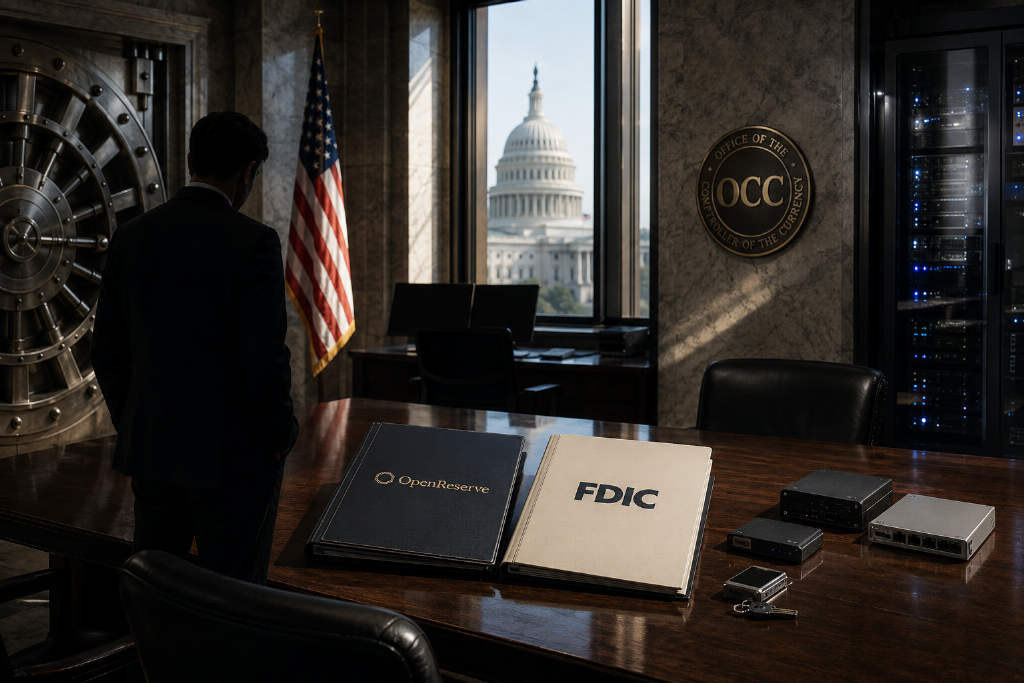
OpenReserve has received preliminary approval for a U.S. national bank charter from the Office of the Comptroller of the Currency, according to BlockBeats. The fintech-focused banking startup is also seeking Federal Deposit Insurance Corporation coverage and has already submitted its application to the FDIC. In April, the company raised $25 million in seed funding led by a16z crypto, with participation from Jump Capital, Acrew, Coinbase Ventures, Clocktower, Quona, and Middle East venture fund AAF Management. OpenReserve is led by fintech executives including MoneyLion co-founder Dee Choubey. The company says it is building a model that combines traditional banking services with blockchain infrastructure and digital asset offerings, using digital assets and technology to support round-the-clock, 24-hour operations.
OpenReserve has received preliminary approval for a U.S. national bank charter from the Office of the Comptroller of the Currency, according to BlockBeats on Sept. 3.
In April, the company closed a $25 million seed round led by a16z crypto. Investors in the round also included Jump Capital, Acrew, Coinbase Ventures, Clocktower, Quona, and Middle East venture fund AAF Management.
Leadership and business model
OpenReserve is led by fintech executives, including MoneyLion co-founder Dee Choubey. The company is focused on combining traditional banking services with blockchain infrastructure and digital asset services. It says digital assets and technology allow it to operate on a 24/7 basis.
FDIC application already filed
Alongside the preliminary OCC approval, OpenReserve is also seeking insurance from the Federal Deposit Insurance Corporation. It has already submitted an application to the FDIC.
This article was originally published by Bit.Fan. For more cryptocurrency news and market insights, visit www.bit.fan. Disclaimer:
The market information, project data, and third-party content displayed on this platform are for industry information sharing only and do not constitute any form of investment advice or return commitment.
Cryptocurrency trading carries high risks. Users should fully assess their risk tolerance and make independent decisions. All profits, losses, and legal responsibilities are borne by the users themselves.