
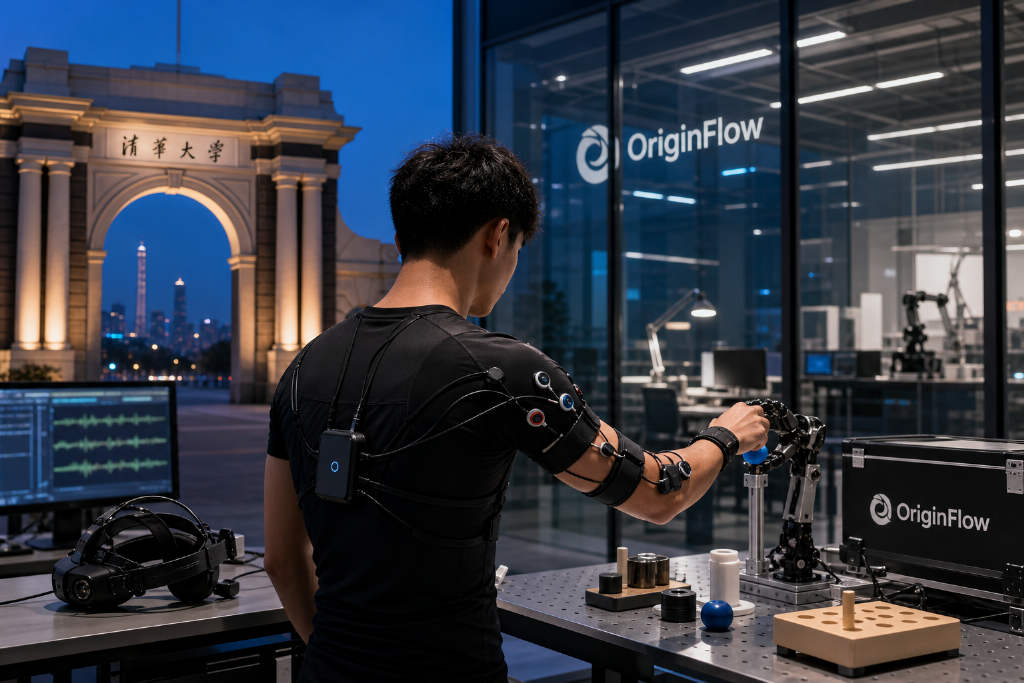
Embodied AI data collection is starting to move beyond visible motion and into the human output side of movement. One of the approaches drawing attention is surface electromyography, or sEMG, and OriginFlow is emerging as one of the most watched startups built around that direction.
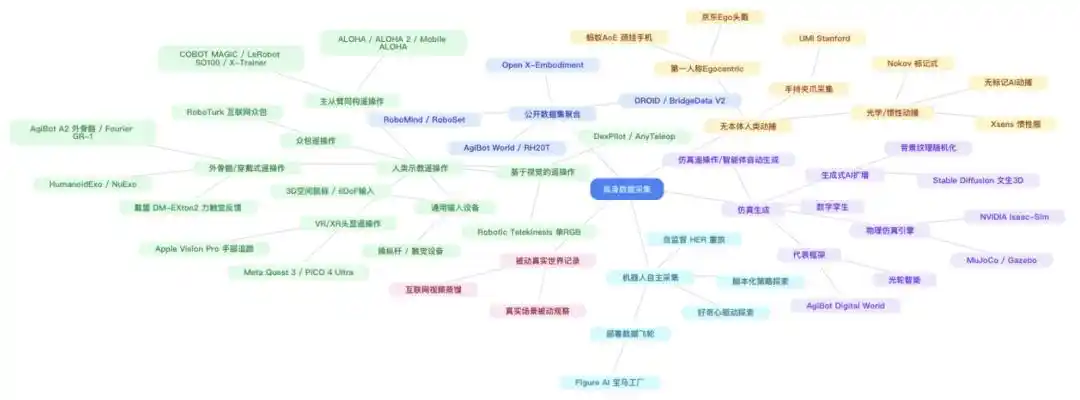
In the current embodied data stack, some of the mainstream routes include real-robot teleoperation, portable body-free collection such as UMI and Ego, synthetic simulation data, and distillation from internet video. OriginFlow, also known as Yuanche Taichu, is trying to add another input layer by recording neural-muscular responses from the body surface and turning them into part of the data used for embodied intelligence.
A Tsinghua PhD founder and more than RMB 500 million disclosed in funding
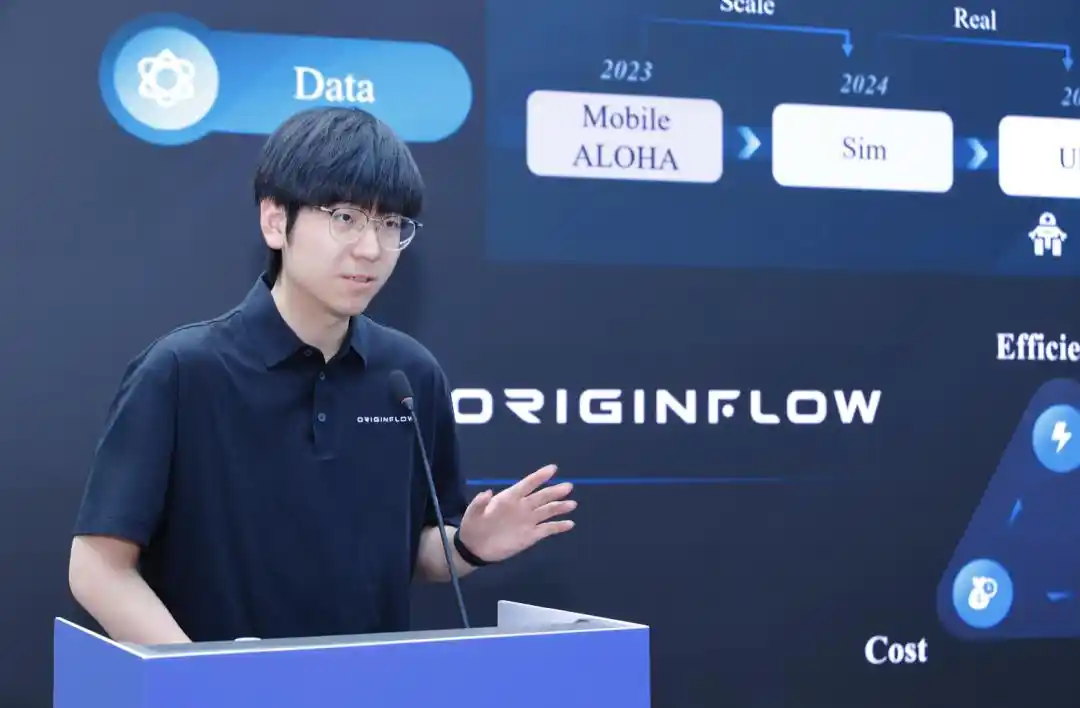
OriginFlow was founded by Qin Shentao, born in 2001 and currently a PhD student at Tsinghua University’s School of Vehicle and Mobility. He set up the company in Beijing in August last year. By May this year, OriginFlow had disclosed that it had completed an angel round, a strategic round, and a Pre-A1 round, with cumulative financing of more than RMB 500 million. Investors named in the disclosure include Lanchi, Oasis, and Monolith.
Qin said there is a missing layer between real industrial scenarios and model training: the ability to abstract unstructured, high-precision, detail-heavy physical interaction information into trainable representations. That gap is what pushed him to start a Physical AGI infrastructure company and treat sEMG as one of the entry points for embodied data capture.
His view is that, in the near term, NeuroScale is more of an incremental addition to setups such as UMI and egocentric visual capture. Still, he argues that unobtrusive data collection will become an important direction, and that new methods should evolve alongside existing ones rather than replace them outright.
What OriginFlow wants to record
The company is trying to capture the subtle physical feedback that occurs during real-world tasks. When a person tightens a screw, carries a bowl of soup steadily, or grips a soft object, the body keeps making tiny adjustments. Fingers begin tightening at a certain moment, force rises or falls, and judgments about contact, friction, weight, and stability happen in a very short span of time. People usually do not think through these steps one by one, but the body executes them anyway.
OriginFlow wants to record that layer of response as part of embodied intelligence data.
Qin traces the idea back to his undergraduate years. During that period, he led teams that won nearly every major robotics competition available to them, according to the article, and also began thinking more deeply about human-machine interaction. In his view, keyboards, mice, and voice are not the most direct interfaces between humans and machines. Human hands are the most dexterous tools, and if machines can understand the real intent behind hand movement, interaction could become much richer.
That line of thinking led him to neural interfaces. Unlike brain-computer interfaces, which often face challenges tied to invasiveness, high channel counts, and mapping to brain regions, the signals here come from peripheral motor nerves and surface electrical activity related to muscle movement.
From labs to products, with Meta as an example
sEMG was long confined to university labs. As wireless sensing, dry electrodes, and AI algorithms improved, the technology started to be used as an entry point for sensing human movement intent. The article lists applications in rehabilitation biofeedback training, sports motion analysis, occupational ergonomics and strain assessment, and discrete action control for myoelectric prosthetics.
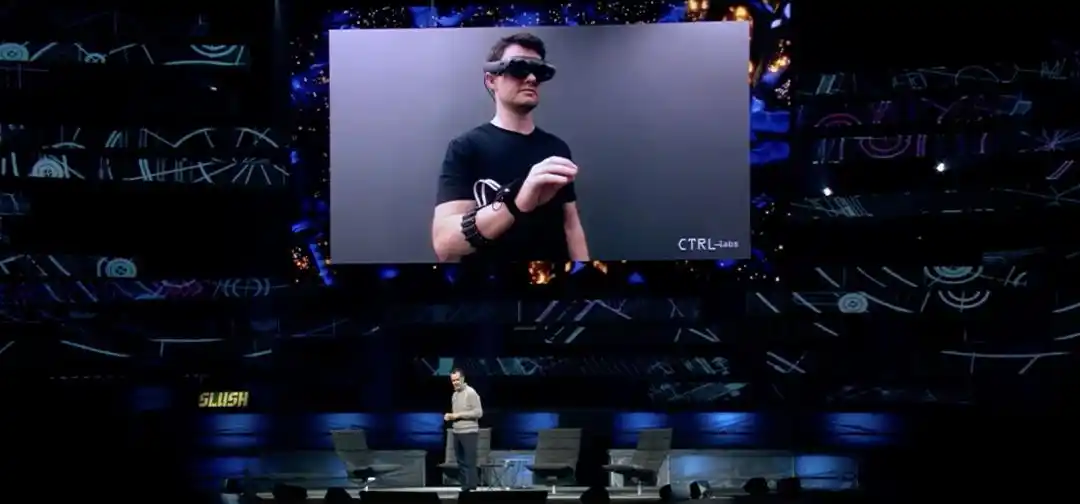
A well-known case came from Meta. In 2019, Reality Labs, Meta’s core R&D division, acquired CTRL-Labs, a non-invasive neural interface company. Before the acquisition, CTRL-Labs had already released a developer kit that included a main device about the size of a watch and a tethered component with electrodes.
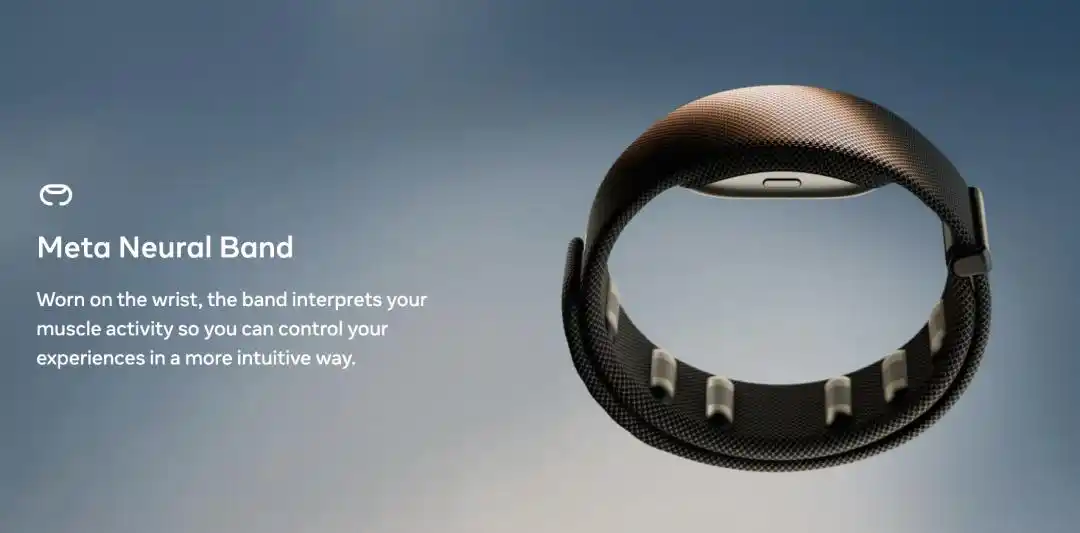
That setup used 16-channel electromyography sensors to monitor muscle electrical signals traveling from motor neurons to the fingers at the wrist, then used AI to decode those signals into digital commands such as clicks, swipes, and gestures. Two years later, Meta publicly demonstrated a neural wristband prototype called Meta Neural Band based on CTRL-Labs technology, showing how tiny neural signals could be used to control an AR interface, including typing in the air and selecting menus.
At the time, Mark Zuckerberg said the system could sense a user’s intended action even before the action had fully happened, describing the interaction style as “nearly unlimited control.” Last year, Meta’s third-generation smart glasses had already introduced a neural input wristband, allowing users to control the interface through hand actions such as imagined swipes and taps.
The article also notes that Apple Watch features such as pinch gestures for confirmation or closing windows mainly rely on optical sensors.
NeuroScale is built as a data-and-model system, not just a wristband add-on
Qin’s focus is different from Meta’s consumer interaction angle. His starting point is what Physical AGI still lacks. He argues that high-quality physical interaction data is in very short supply and has become a key bottleneck for embodied robots trying to reach the next stage.
That leads to two questions. Can sEMG serve as a new entry point to complement existing embodied data collection methods? And can a representation built from the drive side of both humans and machines avoid the material and sensor differences at specific contact surfaces, making it possible to connect muscle activation, tendon force generation, and joint motion through a shared action representation?
In 2025, while still pursuing his PhD, Qin formally launched OriginFlow with the stated goal of building a “motion foundation” for Physical AGI beyond text and video. Soon after, the team introduced its NeuroScale technology framework.
NeuroScale, as described by the company, is not just an extra sEMG wristband attached to an existing embodied data collection system. It is a full data-and-model stack that runs from signal acquisition and physical quantity reconstruction to action representation and cross-embodiment transfer. The system takes a non-invasive neural motor interface as the signal entry, fuses sEMG with first-person vision and IMU data, and uses the PULSE foundation model to reconstruct posture, contact force, and drive force in human operations. A real action sequence is then turned into what the company calls Human Tokens.
Scaling human data and transferring it across embodiments
OriginFlow says NeuroScale is centered on two long-term problems.
- One is Human Data Scale Up: continuously recording real operations and producing more high-quality physical interaction data while interfering as little as possible with natural perception and movement.
- The other is Cross-Embodiment Transfer between humans and robots: taking human motion experience, representing it, adapting it, and moving it into robots with different structures.
Under both sits a more basic issue: what form should human action take when it enters a foundation model? Text already has relatively mature token representations. Vision is moving toward patch or latent representations. Action, by contrast, still lacks a widely accepted standard representation.
OriginFlow breaks a physical operation into three linked spaces. MotionSpace describes hand posture and movement trajectory. TactileSpace describes normal force, tangential force, and contact feedback. TendonSpace describes muscle and tendon drive force as well as joint torque.

In the company’s framing, drive force creates motion, motion creates contact, and contact produces force. Together they form a physical causal chain. Human Tokens are built on top of these three classes of physical quantities.
Qin put it this way: “In form, humans can be seen as a special case in the embodiment configuration space. So transfer from human to robot is essentially a subproblem of cross-embodiment transfer.”
At a more concrete level, large-scale human data is meant to cover as broad a distribution of human actions and skills as possible. Cross-Embodiment Data, smaller in scale but spread across a diverse set of robot configurations, serves as the alignment anchor between humans and different robotic bodies. Combined, the two data types may allow a model to learn a shared action representation that is relatively decoupled from any specific embodiment, then redirect the same human movement and force information into robots with different degrees of freedom and drive mechanisms.
That is why OriginFlow is not trying to copy human operational data straight into robots. The company’s stated approach is to first identify action, drive-force, and contact relationships that can be shared across different embodiments, then perform adaptation and mapping.
Starting with a wristband: OriginKitGen 1.0 and the PULSE 0.2 demo
In practice, NeuroScale begins with a wristband called OriginKitGen 1.0. The article describes it as slightly wider than an Apple Watch strap while being smaller in overall volume and lighter in weight.
The wristband captures microvolt-level surface EMG signals from the wearer. The system uses 16 channels, carries an information stream of about 96 KB per second, and performs continuous modeling of hand movement.
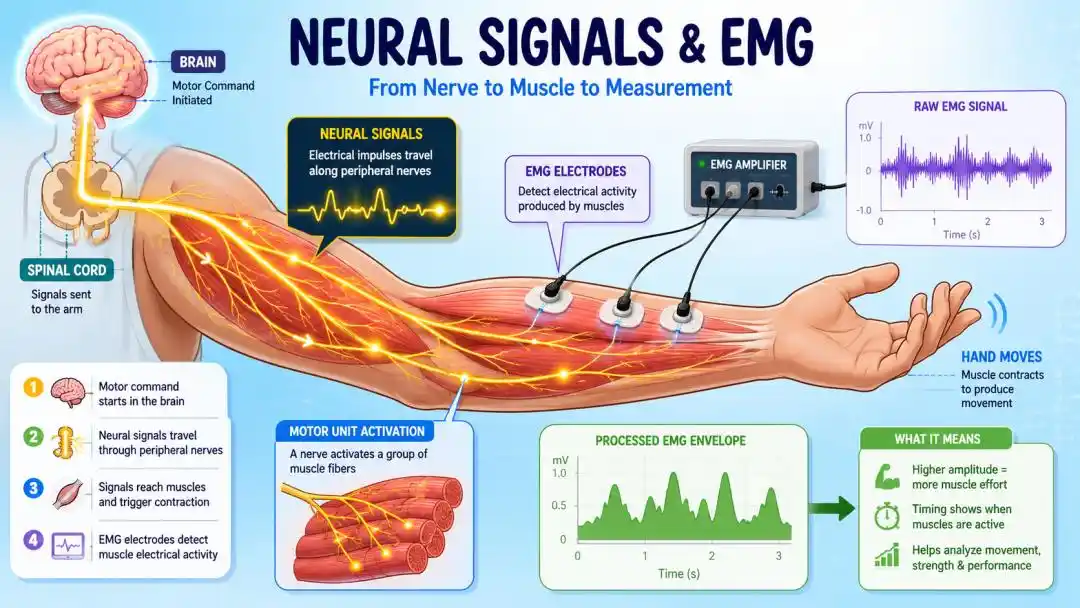
But the company says the wristband alone is not enough. On its own, it can tell that forearm muscle activity has changed, yet it is hard to determine exactly what the fingers are doing. So the signals collected by OriginKitGen 1.0 are fed into NeuroScale together with egocentric visual input and IMU data.
After alignment, calibration, and preprocessing, the raw waveforms go into PULSE, OriginFlow’s in-house foundation model. PULSE extracts clues related to hand posture, motion trajectory, contact force, and tendon drive force, corresponding to three core physical quantities in Motion Space, Tactile Space, and Tendon Space. The hardware side handles filtering, differencing, and motion artifact suppression. The model side handles neural signal encoding and strongly supervised learning. The result is gradually organized into action representations that machines can learn from: Human Tokens.
During WAIC, Qin and his team showed a demo for PULSE 0.2. In that setup, the wristband collected 16-channel sEMG signals and PULSE used them as input to continuously model hand movement and observe force changes during finger opposition.
That is different from discrete gesture recognition. PULSE is focused on continuous hand tracking and fingertip force representation. When the user performs finger opposition, the system can observe force variation in real time.
Raw signals still need infrastructure before they become training data
Reconstructing movement from neural signals does not mean the output is already ready for robot training. The raw data still has to pass through multi-device clock alignment, individual calibration, motion artifact handling, task segmentation, action and force annotation, quality screening, and cross-embodiment mapping.
To support that pipeline, OriginFlow has built what it calls a Data Infra layer covering production, processing, evaluation, and training.
Within that stack, ORACLE uses multimodal models to automate the annotation of actions, force, semantics, and task segments. CHORD, a unified all-modal foundation layer, aligns timing and representations across sEMG, vision, IMU, language, and robot state.
The data then goes through quality gates covering physical validity, task validity, label validity, model value, and real-robot evaluation. Only data that produces actual value in model training or robot tasks makes it into the final delivered dataset.
The point, as laid out in the article, is that collecting the signal is only one part of the job. The harder part is converting vast amounts of raw signal into trainable, measurable, and reusable data assets at a sufficiently low marginal cost.
From Human Data to Enhance Human
PULSE 0.2 represents only a small slice of OriginFlow’s current work, and the model itself is still an interim output. PULSE 0.3, which is under development, is exploring the relationship between tendon drive force and forward kinematics of the hand.
The wristband is also only the company’s current collection terminal, not the final product form. For any route that depends on long-term, large-scale collection, whether people can accept the device naturally will determine whether the data stream can continue. Qin said users first need to be willing to wear the device, and then willing to wear it long enough.
At the core, OriginFlow wants to continuously record human motion output in the real world while changing as little as possible about the way people naturally perceive and move, then process those signals into Physical Tokens. Only then, in the company’s view, can data collection move beyond dedicated capture factories and special workstations into daily life and real production processes.
The article says that if such a system were achieved, the “trillion-hour data” now seen as distant in embodied AI would require only about 10 days of recording across all human behavior worldwide. Qin describes that as continued data scaling. “Looking ahead, we will push the scale of all-modal Human Data from tens of millions of hours and hundreds of millions of hours toward trillions of hours,” he said.
In the team’s long-term vision, the next physical interface will become lighter, more natural, and closer to consumer hardware. People may one day wear glasses, watches, or lighter wristbands with consumer appeal, continuously model themselves during daily life, and gain convenience from their own personal models.
A three-stage roadmap
OriginFlow has laid out a three-stage development plan.
The first stage is From Human. The goal is to capture as much as possible about how humans move, then systematically distill physical-world operational experience into machine-learnable data and representations. The company says its collection framework is built around a non-invasive principle so that human action can be observed and reconstructed accurately without interfering with natural perception and movement.
The second stage is With Human. At that stage, the company plans to build a new generation of AI hardware, including robots, designed to live in daily work and life in an always-on form and bring the value of next-generation human-machine interfaces to more people.
The third stage is Enhance Human, aimed at a 10- to 30-year horizon. The article also notes that there is still a long engineering path between a finger-opposition demo in PULSE 0.2 and a trillion-hour, all-modal human data system.
Other Chinese startups are also working on sEMG collection
The article says OriginFlow is not alone in this area. Other domestic startups using sEMG to collect embodied intelligence data include BrainCo, Octopus Dynamics, SnowOrigin, Nianxiang Technology, Wujie Mailuo, and Shouyi Technology.
This article was sourced from the WeChat public account Quantum Bit, ID QbitAI, and written by Heng Yu.