
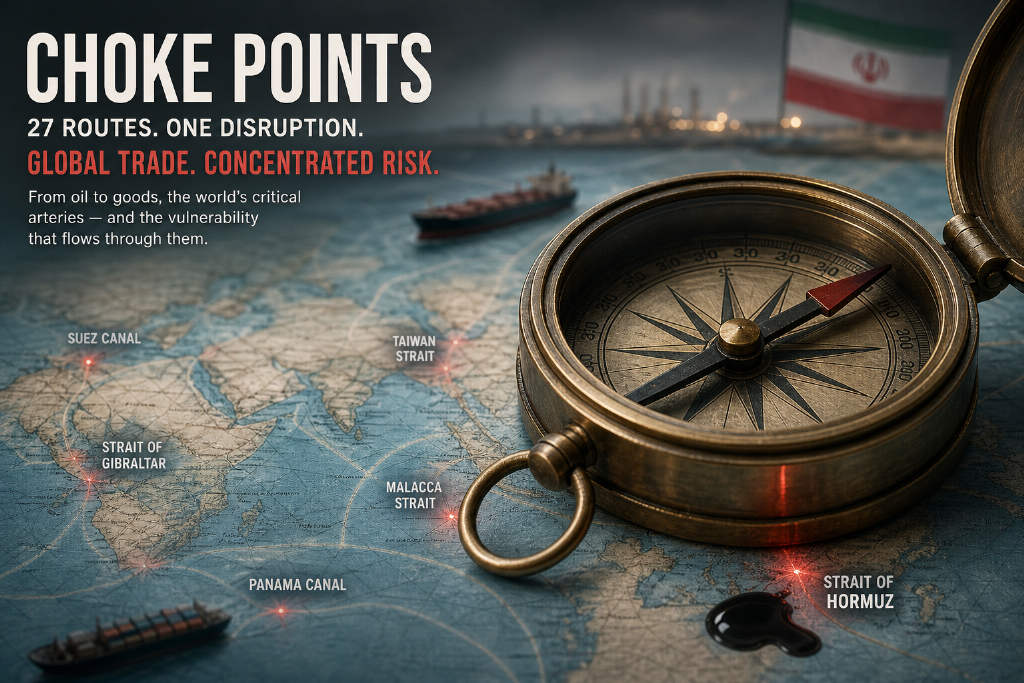
BlockBeats reported on Aug. 15 that a new Oxford Economics report found global trade is highly dependent on 27 key maritime choke points, and a severe disruption at any one of them could hit energy transport, commodity flows and the global economy.
Hormuz disruption has become a central concern
The report said the nearly six-month U.S.-Iran conflict has disrupted shipping through the Strait of Hormuz. The waterway is a core route for global energy transport, with about one-fifth of the world’s oil supply passing through it. As attack risks for commercial vessels have risen, shipping has slowed, international oil prices have moved higher, and U.S. gasoline prices have climbed above $4 per gallon, adding to inflation pressure.
Trade flows are concentrated in a handful of routes
Outside Hormuz, the report said global trade is also heavily concentrated in the Strait of Malacca, the Taiwan Strait, the Suez Canal, the Strait of Gibraltar and the Panama Canal. Asia has the world’s densest network of trade shipping lanes. The Strait of Malacca links the Indian Ocean and the Pacific Ocean and serves as a major corridor for energy and commodity transport. The Taiwan Strait, according to the report, carries about one-quarter of global trade flows.
Geopolitical conflict and climate threats are both rising
Oxford Economics warned that geopolitical conflict is one of the biggest risks facing global trade, with some countries potentially using critical shipping routes as tools in political confrontation. Climate change is also increasing shipping risks. The report cited the Panama Canal, where water levels have fallen because of drought and El Niño, limiting vessel cargo capacity and raising transport costs.
Alternative routes determine how severe the shock can be
The report said the level of risk at each choke point depends on whether alternative routes exist. The Strait of Hormuz stands out because it lacks an effective substitute. Some other routes can be bypassed, but longer detours raise fuel, labor and operating costs and push global freight rates higher. With geopolitical conflict, extreme weather and supply-chain fragility all increasing, Oxford Economics said dependence on key maritime nodes is becoming a new source of economic risk for the global trade system.