

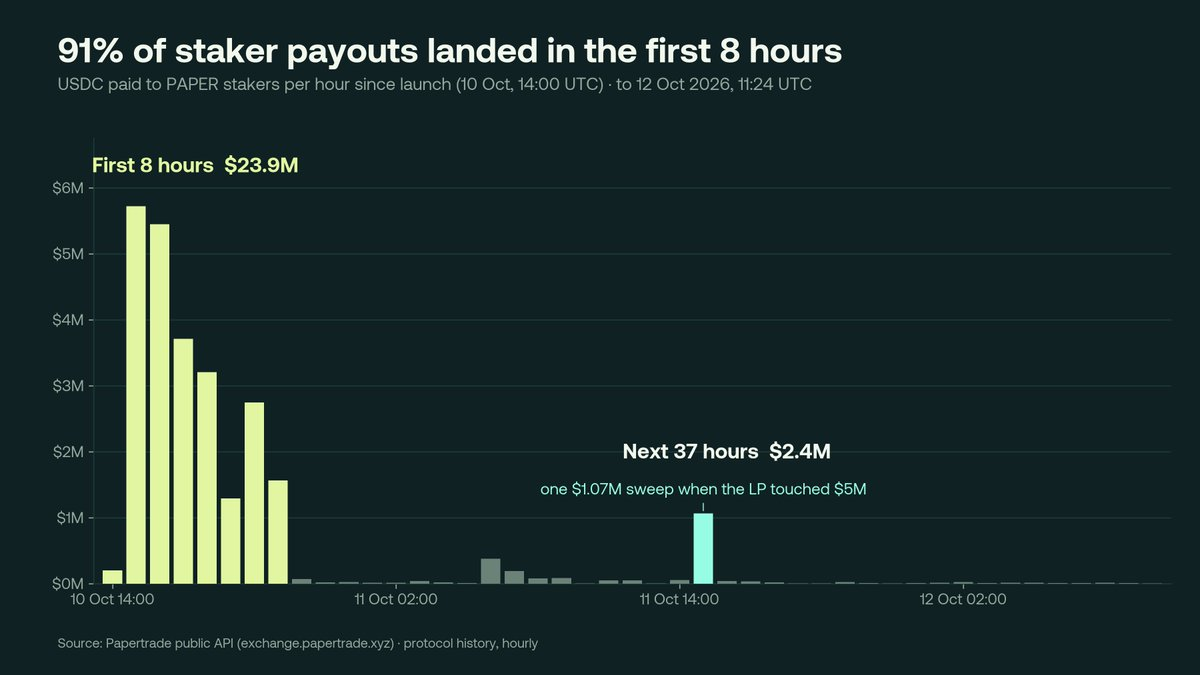
An Odaily-translated analysis reviewed the first phase of Papertrade and framed the outcome with two numbers: the protocol paid $23.9 million in staking dividends in its first eight hours after launch, then only $2.4 million over the next 37 hours.
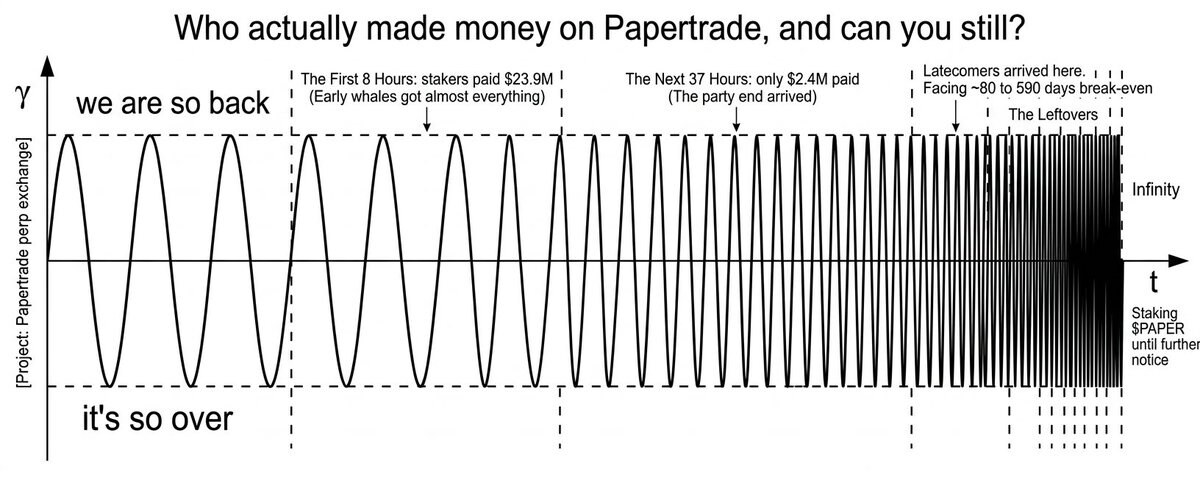
Those figures, the article argued, largely explain the game that unfolded. The central question is who actually walked away with the money and by what method, especially for traders still considering whether to mine PAPER this week.
Researchers understood the mechanism, but missed the speed
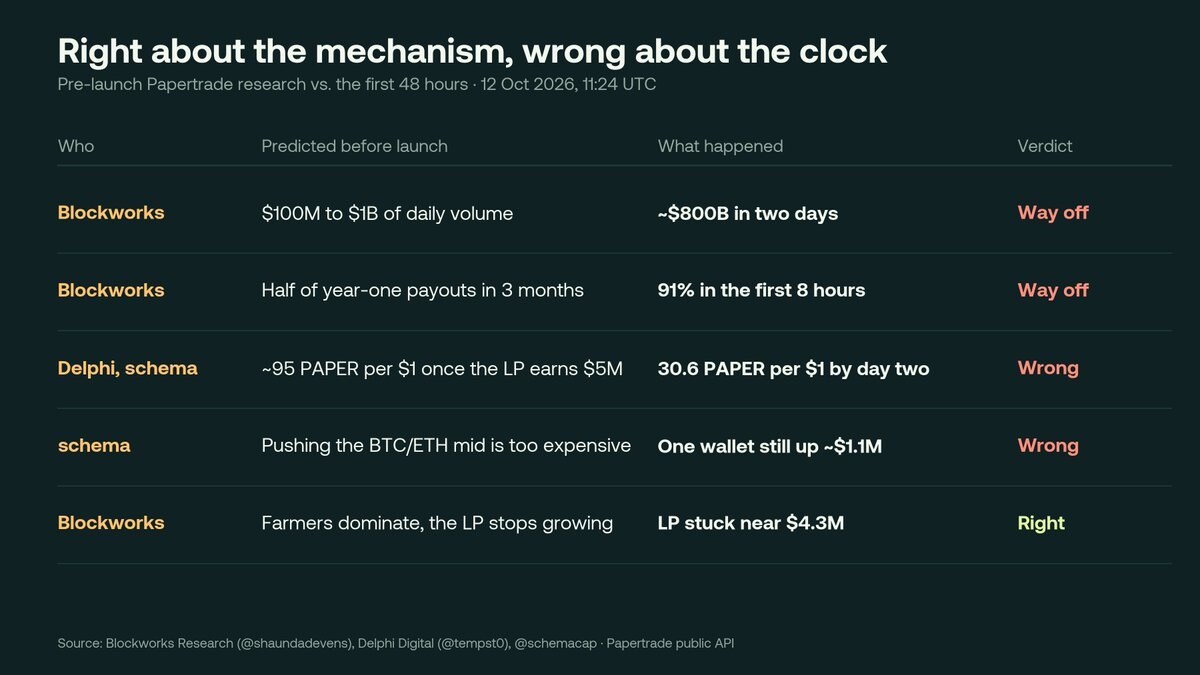
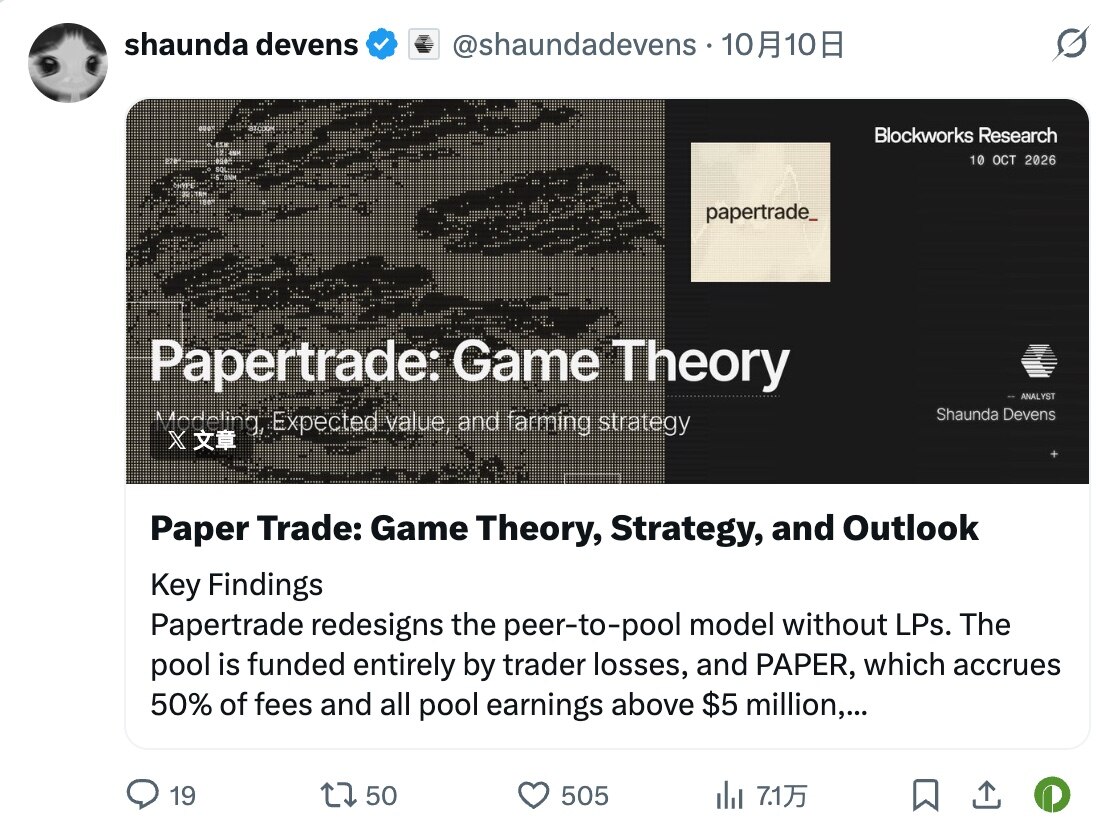
Before launch, the article said the strongest research on Papertrade came from Blockworks Research’s Shaunda Devens, Delphi Digital’s tempest, and the investment firm schema. All three, it said, explained the protocol’s mechanics clearly, but each expected the game to last for weeks.
The one warning that held up over time was less comforting. Blockworks Research had cautioned that hedged arbitrage farmers could crowd out real traders and leave the protocol’s LP function stalled. According to the article, that is exactly where Papertrade now stands.
The piece did not frame this as a case of obvious mistakes. Its point was that the mechanism evolved much faster than anyone had priced in.
Where the losses went
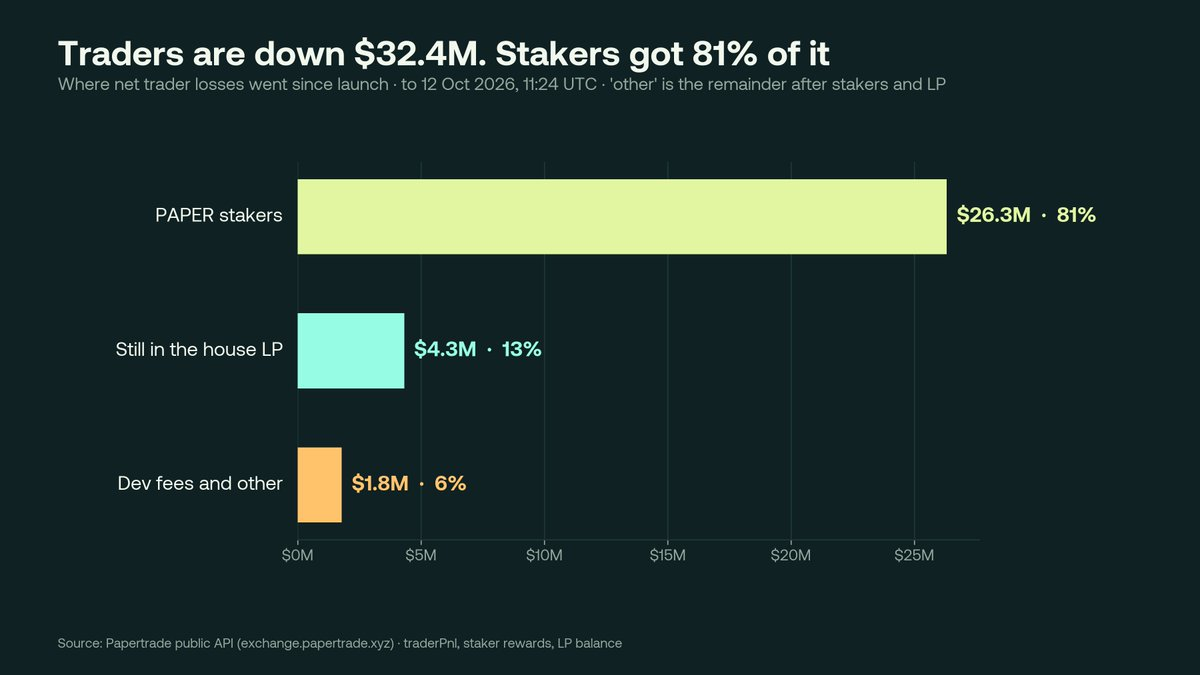
The article estimated that real traders lost a net $32.4 million on Papertrade. It broke that down as follows:
- $26.3 million went to PAPER stakers;
- $4.3 million stayed in the dealer LP pool;
- the rest went to developer fees and small residual amounts.
Most of that $26.3 million, it said, was captured by early users who had staked before roughly 22:00 UTC on the first day of launch. In practice, the article described this as a winner-take-most outcome for whales.
The reason was the protocol’s relayer design. Papertrade’s relayer prioritizes larger orders, according to the piece. That means an order worth about $75,000 could sit beyond the 3,000th place in the queue, while eight-digit orders could be matched within seconds.
Two addresses, two profit models
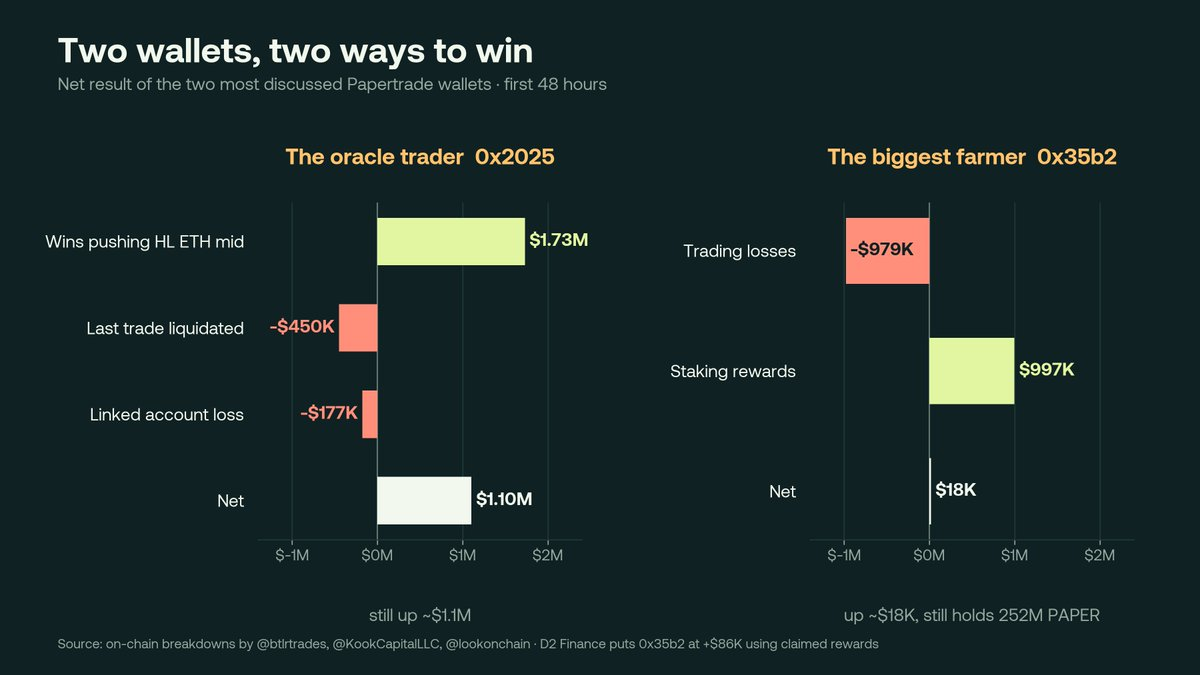
Address starting with 0x2025: predatory arbitrage
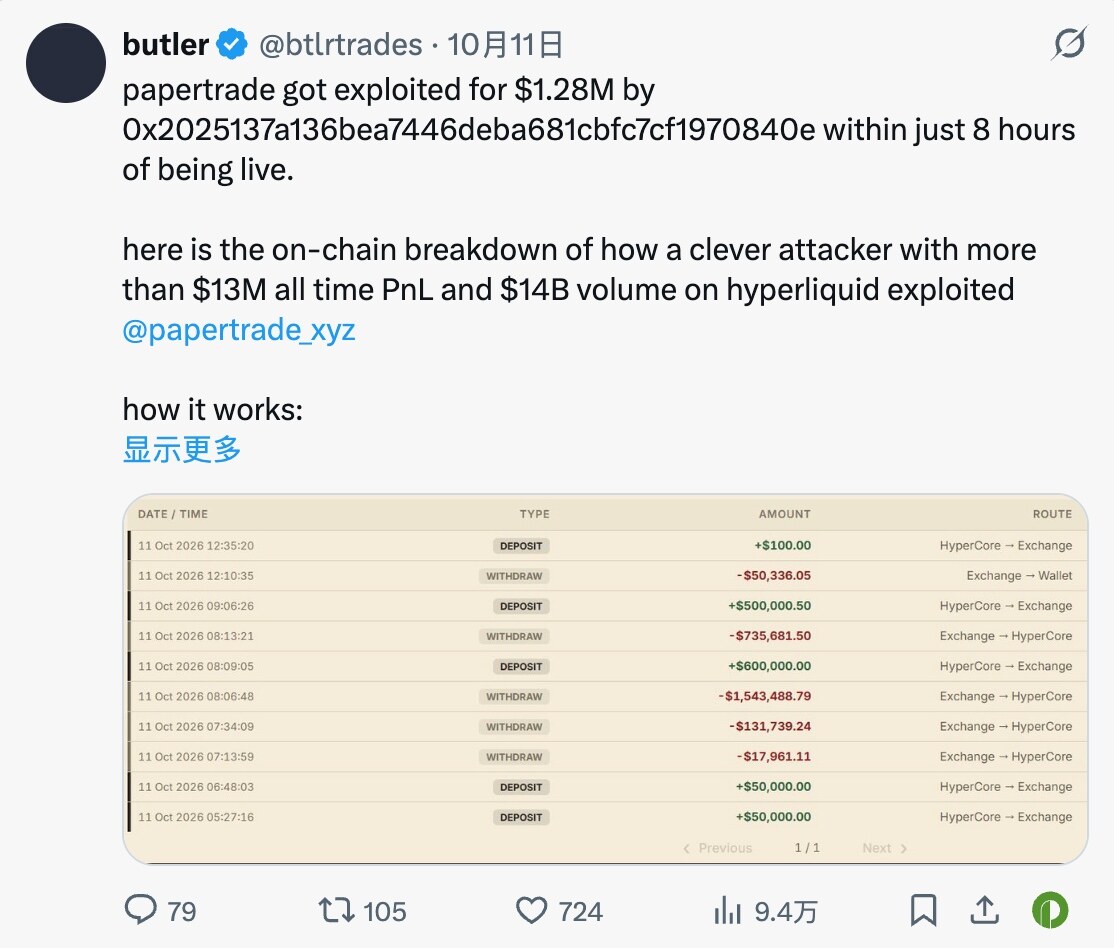
The first address highlighted in the article begins with 0x2025. Its reported strategy was to move the ETH mid-price on Hyperliquid by 10 to 20 basis points, then open a reverse position on Papertrade at roughly the $200 million size level.
Across 305 trades, the address reportedly won 296 times, with an average holding time of just 98 seconds. Even after one stuck order led to a $450,000 liquidation loss, the wallet still posted net profit of about $1.1 million.
Papertrade team members Jez and Blurr said the trader had returned most of the funds, according to the piece. Still, the article added that on-chain analysts butler and kook presented evidence suggesting otherwise.
Address starting with 0x35b2: scale-based wash volume
The second address begins with 0x35b2. Citing Lookonchain, the article said this wallet generated $10.1 billion in trading volume and lost $979,000, but recovered about $1 million in cash through staking, leaving its fiat principal roughly flat.
The more important part of the trade, the article said, was inventory. The address still held 252 million PAPER, equal to about 4% of the total staked supply. At the yield rate cited in the article, that stash could generate about $14,000 a day in passive income. On that basis, the piece called this wallet the real winner.
The dispute over staking yield
The article also pushed back on a claim from on-chain analyst onchainmonk that the Papertrade team had cut staking yield from 99% to 1%.
It said the reward formula had not changed. Stakers were entitled to surplus above $5 million in the LP pool, plus half of the 2% fee charged on profitable orders. Once the LP pool fell below $5 million, surplus-based payouts stopped automatically.
In that reading, the rule stayed the same. What changed was the state of the pool.
Can new entrants still make money?
For traders considering entry now, the article laid out a simple payback calculation.
On the cost side:
- Using direct loss-making activity to mint 1,000 PAPER would cost about $33 at the current issuance rate;
- using a hedged wash strategy — opening 100x long and short positions and closing when the move reaches about 1% — would cost about $4.50.
On the income side, the article said that since the last LP liquidation distribution, every 1,000 staked PAPER had been earning roughly $0.055 per day.
That led to two estimated payback periods:
- around 80 days for hedged farmers;
- around 590 days for users taking one-sided realized losses.
The article stressed that even these figures assume yield remains stable and no one else keeps minting new PAPER. It then said both assumptions are unrealistic.
The threshold gets harder on Oct. 17
The piece said conditions become tougher starting Oct. 17, when the dividend trigger rises from $5 million to $10 million.
At the time of writing, the dealer LP pool stood at just $4.3 million. That means the next roughly $5.7 million of trader losses would go entirely to refilling the LP base rather than to stakers. Until that pool is restored, stakers would receive only pure fee income.
The article’s own conclusion was that mining PAPER at this point is no longer a steady-income trade. It is a wager that new real gamblers will keep entering and lose enough money to push the LP pool back above the $10 million line.
If someone accepts that logic, the article said, the approach would be to hedge with 100x leverage, guard strictly against one-sided liquidation, and make sure both legs of the order are actually filled. If not, it said there is no reason to rush in.
Four indicators to watch
The article ended with four signals that could determine whether this was just the first act or the whole story:
- whether the LP pool can break above $8 million and keep rising, which the article described as a setup for the next large distribution;
- whether there is real non-mining trading volume, since only directional traders add fresh capital to the LP while hedged farmers mostly inflate supply;
- net long open interest. The article put current net long exposure at about $150 million, against an LP base below $4 million, and said a clean 2.5% rally would force profitable traders into a payout queue instead of immediate cash settlement;
- whether the payout queue can remain at zero.
The author said the same model would be used for another review after Oct. 17.



