Robinhood Cha2026-09-21 13:01:04On Robinhood Chain, tokenized stock LP profits depend heavily on pair selection and timingProviding liquidity for tokenized stocks on Robinhood Chain is not a simple yield trade, according to on-chain analysis from Blockworks Research. The data shows that fee income varies sharply by pool type and by time of day. Stock-ETH and stock-stablecoin pools generally generate enough fees to cover losses to arbitrage, while stock-stock pools are roughly breakeven on average. Stock-Meme pools, by contrast, cover only a small fraction of those costs and appear, statistically, to function more like a channel for arbitrageurs than a durable source of LP income. The report centers on LVR, or loss-versus-rebalancing, which measures the adverse-selection cost LPs face when their quotes lag behind the market and are picked off by faster traders. It also challenges the idea that the main damage happens after U.S. equities close. During regular market hours, both fees and arbitrage costs rise by about 60%, leaving the ratio largely unchanged. The real stress point is the opening window: at 9:30 a.m. Eastern Time, arbitrage cost per pool jumps to $95.08 from a pre-open baseline of about $7, while fee coverage falls to 1.05x. For LPs allocating capital on Robinhood Chain, the report points to two practical questions: what the stock token is paired against, and whether liquidity is actively managed around the open.360
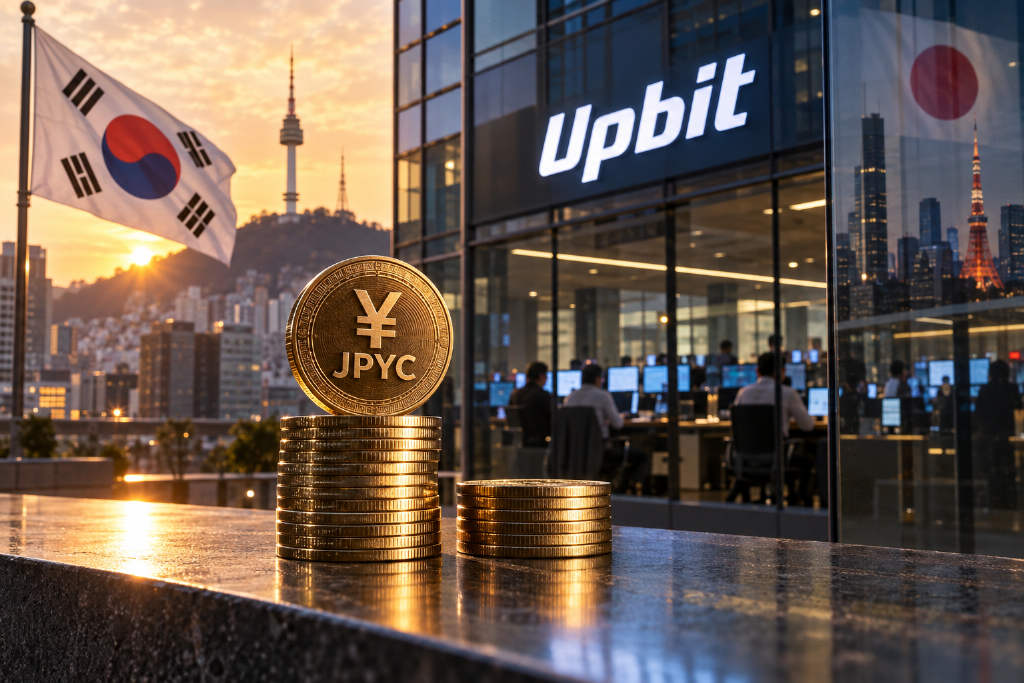
JPYC2026-09-18 09:17:25JPYC Spiked to 4.2 Yen After Listing on Upbit Before Sliding Back Near PegJPYC, a Japanese yen stablecoin regulated as an electronic payment instrument under Japan’s Payment Services Act, briefly traded far above its intended value after listing on South Korea’s Upbit on Sept. 17. The token opened at 12 won and climbed to 37.6 won within less than 90 minutes, equal to about 4.2 yen based on the day’s exchange rate of roughly 8.86 won per yen. It later fell back to 8.88 won, close to its 1 yen target. The price move came as Upbit initially allowed deposits only on Ethereum, where on-chain data cited by CoinPost showed just about 133 million JPYC, or 7% of the roughly 1.9 billion supply, was available before the listing. Upbit later added Polygon and Kaia deposits at 5:44 p.m. Taipei time, and the token retreated after peaking at 6:23 p.m. JPYC Info showed circulating supply jumped from about 1.896 billion on Sept. 16 to about 4.258 billion a day later, suggesting arbitrage activity as traders minted the token in Japan at 1 yen and sold it into the Korean market. JPYC briefly halted mint reservation requests on Ethereum and Polygon that evening before restoring both services. PayPal’s PYUSD, which also listed on Upbit the same day, saw a similar short-lived premium.480
Ethereum2026-09-15 13:04:10Bitfinex analyst says strong ETH ETF inflows may reflect arbitrage positioning, not outright bullish buyingA Bitfinex analyst said Ethereum’s recent strength against Bitcoin may be driven less by outright directional buying and more by cash-and-carry style positioning. The analyst said traders may be buying ETH exchange-traded funds as collateral while simultaneously trading CME futures to capture yield, a setup that could help explain why ETH ETFs have recently seen stronger inflows than BTC ETFs. The note also pointed to a sizable short squeeze in Ethereum last Friday, estimated at about $255 million, compared with roughly $172 million in Bitcoin short liquidations over the same period. In the analyst’s view, that dynamic matters for interpreting recent ETF demand. Until the market shows more spot buying that does not depend on short-squeeze activity, the current strength in ETH ETF flows is more likely to reflect portfolio positioning and arbitrage-related allocation than a broad capital rotation into ETH.660
Hyperliquid2026-09-15 06:09:37Hyperliquid whale sits on $275,200 paper loss in SK Hynix spread tradeA whale address beginning with 0x3893 is still holding a roughly $19.024 million paired position on Hyperliquid tied to the price gap between SK Hynix shares in South Korea and the company’s U.S.-listed ADR, according to TradingBeats. The trade is structured as a long in the Korean common-share mapping SKHX and a short in the ADR mapping SKHY, with the position built on expectations that the spread would narrow over time. That has not happened. After about 40 days, the spread has widened instead of converging, leaving the combined position with an unrealized loss of about $275,200. The SKHX long is valued at about $9.347 million, with an entry price of $1,307.1 and an unrealized loss near $446,000. The SKHY short is worth about $9.676 million, with an entry price of $179.4 and an unrealized gain of roughly $171,000. As of publication, SKHY was trading at a premium of about 41.31% to SKHX, versus an implied premium of about 37.2% when the address entered the trade. The spread has therefore widened by around 4.1 percentage points. The position has also been paying to stay open, with cumulative net funding payments of about $94,100 since inception, including around $16,100 in the past 24 hours. At current position size and dynamic rates, the portfolio is estimated to be paying about $1,106 per hour on a net basis.750
Robinhood2026-09-11 11:04:20From Robinhood case studies to ARC prep: how early participants size up opportunities on a new chainPANews published a long-form market analysis by @brucexu_eth, founder of LXDAO and ETHPanda, that reviews public Robinhood-era trading posts and uses them to map out how people try to make money in the earliest phase of a new blockchain. The piece groups the main paths into buying meme coins, providing liquidity, arbitraging price gaps, and building tools or infrastructure, then asks a simple question behind every profit screenshot: did the trader win by picking the right asset, by supplying capital, or by exploiting a market function that was still underdeveloped. The article cites public examples rather than verified averages. Those include reports of 26x and 56x meme trades, a self-reported five-day move from $1,000 to $50,000 through LP positions, and a small arbitrage test that used 200 USDT to earn about 2 USDT in a day. The author stresses that such posts should not be treated as representative returns and in some cases may be promotional. The second half shifts to ARC, which has not yet fully launched. Based on ARC’s public positioning around stablecoin finance, EVM compatibility and USDC as gas, the article argues that preparation should focus on bridging routes, liquidity access, wallet and RPC setup, and tool readiness. It highlights Jumper and LI.FI for cross-chain access, and lists public ARC materials including testnet resources, contract references, RPC and indexing options, and notes on differences from Ethereum.860
BNC42026-09-08 07:37:53BNC4 Trades at $9.6, Market Cap $5.6M, Deviates from Underlying StockOdaily market data shows BNC4 currently trading at $9.6 with a market cap of $5.6 million. The token's price has deviated significantly from its underlying stock value, likely due to the absence of underlying shares for arbitrage.830
Four.meme2026-09-08 05:37:19Crypto KOL Profits $230K by Minting BNC4 via Four.meme at After-Hours Stock PriceCrypto KOL 0xShawn minted BNC4 tokens on Four.meme at the after-hours price of the underlying stock (CEA Industries), then sold them on BNB Chain at a 7-8x premium, pocketing $230K. The platform buys real shares and mints tokens 1:1.1000
BNC42026-09-08 05:13:49BNC4 Market Cap Crashes to $2.8M, Arbitrage Users Profit Tens of Thousands of DollarsThe BSC meme token BNC4 experienced a sharp market cap swing, rising to over $20 million before crashing to $2.8 million. Multiple users disclosed arbitrage profits ranging from tens of thousands to hundreds of thousands of dollars through the BNC4 Mint mechanism on Four.meme. Trader 0xShawn shared a transaction converting 6,666 BNC4 into approximately 231,300 USDT, claiming to be one of the first to complete the transfer and invoicing process.890