
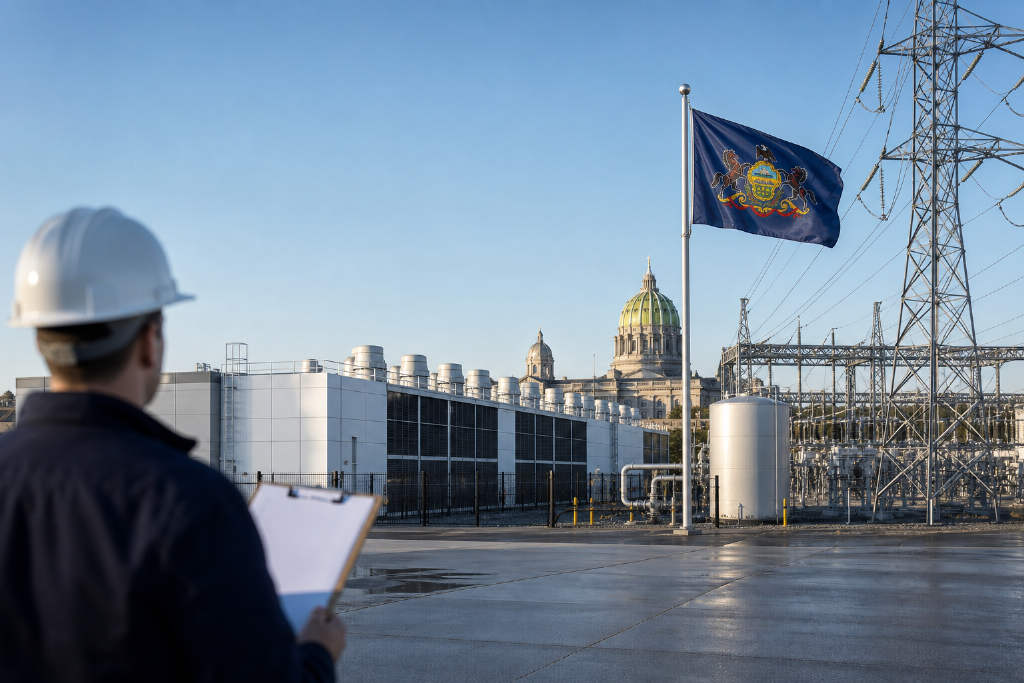
Pennsylvania Governor Josh Shapiro signed an executive order Tuesday that places new limits on large AI data centers, including measures meant to make developers pay for some of the strain their projects put on the state’s electric grid.

Executive Order 2026-05 creates new requirements for data centers with peak electricity demand above 25 megawatts. Developers seeking a streamlined state review process must agree to Pennsylvania’s environmental, energy, workforce, and community standards, and they must also secure the necessary local approvals.
In a post on X, Shapiro wrote: 「I’m putting these developers on notice and letting them know that we will not let them bully Pennsylvanians, disregard our constitutional right to clean air and pure water, and drive up our utility bills.」 He added: 「I’m using the full weight of my executive authority to block the objectionable, unwarranted projects and put the nation’s strictest set of protections in place.」
Order targets permits, transparency, and emergency power treatment
The order removes data centers from Pennsylvania’s Permit Fast Track Program and prohibits state agencies from entering into non-disclosure agreements related to data center projects.
Pennsylvania will also create a public map showing proposed facilities. Operating data centers will be required to report their annual energy and water consumption beginning in July 2027.
Shapiro’s order also directs the state’s Special Counsel for Energy Affordability to pursue utility rules that would make data centers cover certain grid costs. In some emergency situations, those facilities would also be first in line for curtailment unless they have secured enough electricity to serve their own demand.
In the executive order, Shapiro said more than 100 data centers have reportedly been proposed across Pennsylvania, but only 20 have submitted permit applications to the state Department of Environmental Protection.
He also wrote: 「From Archbald to Montgomery County to all across Pennsylvania, to your comments, texts, calls, and letters to my office, I’ve heard you loud and clear.」 Shapiro added that Pennsylvanians do not want AI data centers in their communities if those projects would raise utility costs and pollute local resources.
Backlash against AI data centers keeps spreading in the U.S.
Opposition to AI data centers has spread across the United States as more projects move forward and communities push back against rising electricity demand and environmental pressure.
In January, a Brookings analysis warned that local resistance could slow or block AI infrastructure projects. It called for binding community benefit agreements.
In March, Amazon, Google, Meta, Microsoft, OpenAI, Oracle, and xAI signed a White House pledge to pay for the new electricity generation and infrastructure needed for their data centers. The pledge came after costs rose following the start of the U.S.-led war with Iran.
Disputes over data centers have also shifted more heavily to local governments. By August, at least 37 people had been arrested this year in protests across the U.S. tied to AI data centers.