
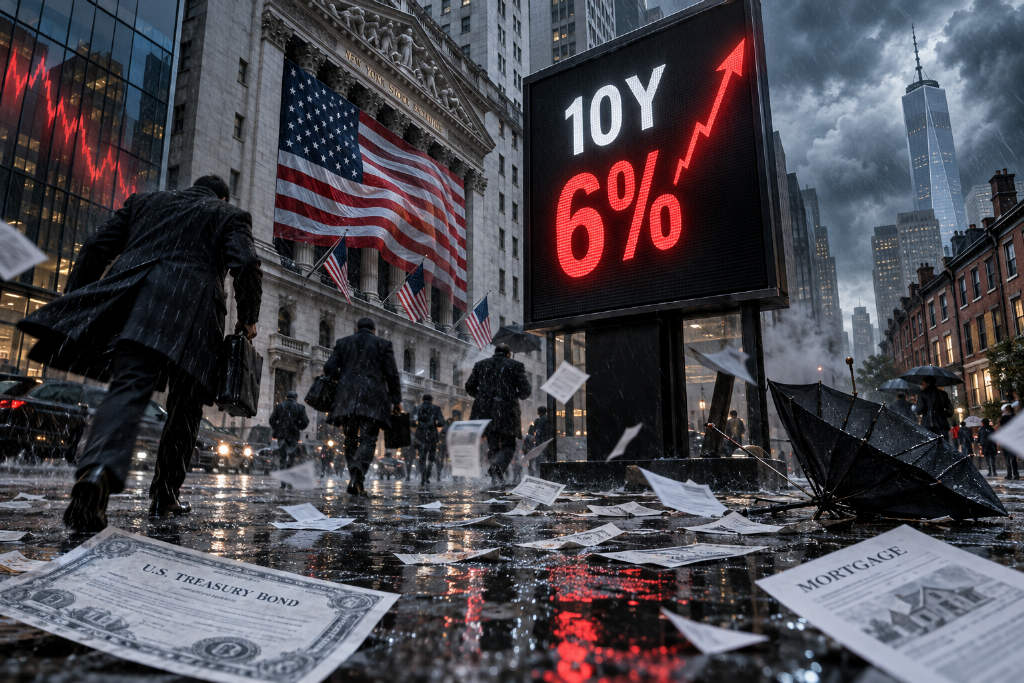
Pimco, the world’s largest bond fund, has warned that the U.S. 10-year Treasury yield could break above 6%, which would mark the first time in 26 years that the benchmark has reached that level.
In an interview with the Financial Times, Pimco Chief Investment Officer Dan Ivascyn said a sharp move higher from the current 5.29% level was "achievable." He said one key driver has been technical selling pressure after hedge funds and other leveraged investors in the $32 trillion Treasury market were forced to cut positions and stop out following weeks of losses.
Ivascyn also warned that stocks, corporate credit and other risk assets would see a "fairly meaningful decline" if the 10-year yield rises to 5.5% or above.
Higher yields are already hitting households
The jump in yields is starting to feed through to the real economy. Data showed that in the week ended Oct. 8, the average rate on a 30-year fixed mortgage in the U.S. rose to 7.4%, up 12 basis points from the previous week and the highest reading since 2023. That has added pressure on American households just weeks before a key midterm election.
Stop-loss selling is seen creating a negative loop
Ivascyn’s warning lines up with broader investor concerns that have been building in recent weeks. Several investors have argued that the Treasury market is slipping into a vicious circle: persistent selling pushes yields to fresh highs, which then forces more participants, including real estate investment trusts, to sell bonds and add to the pressure.
Ivascyn said a significant share of recent market activity was directly tied to "negative technical factors" and to stop-loss selling by "platform hedge funds and other leveraged investors." From a short-term trading perspective, he said, a move through 6% was "certainly possible."
The 10-year Treasury yield is already at its highest level since the early 2000s. The report cited inflation worries tied to Trump’s Iran war, a borrowing boom among AI companies, and expectations for strong U.S. economic growth as factors behind the move. Inflation is especially damaging for bonds because they offer investors a fixed stream of income.
Risk assets, private markets and commercial real estate face pressure
Ivascyn said a further rise in Treasury yields would put more strain on risk assets. U.S. stock indexes remain near record highs, but the effect of higher yields is already starting to show up for weaker corporate borrowers.
This month, borrowing costs for bonds issued by the lowest-rated companies rose to 17%, the highest level since May 2020. The report said the move reflects both higher Treasury yields and wider risk premiums demanded by investors.
Outside public markets, Ivascyn said higher Treasury yields could set off problems in private markets "in slow motion," with commercial real estate looking especially vulnerable. He said the sector still contains "a lot of still-fragile capital structures and weak fundamentals."
Higher yields may also contain themselves
Ivascyn also pointed to a balancing force. As yields rise, investors may shift more assets into Treasuries to lock in higher returns, which he described as a factor that could limit how much further yields move up.
He said strong demand at this week’s auctions for 10-year and 30-year Treasuries offered an early sign of that pattern.
Pimco sees opportunities outside the U.S.
On overseas markets, Ivascyn said there are alternatives that look more attractive. He said Pimco is "not as concerned as some are" about the U.S. ability to sustain current deficit levels over the long term, but added that investors do not need to hold only U.S. bonds.
He cited the appeal of Australian "high-quality credit" and said that while the U.K. faces "its own challenges," its bond yields remain above those in the U.S. Canada and Germany, especially on a dollar-hedged basis, also offer "very attractive yields and better starting fiscal positions," he said.