

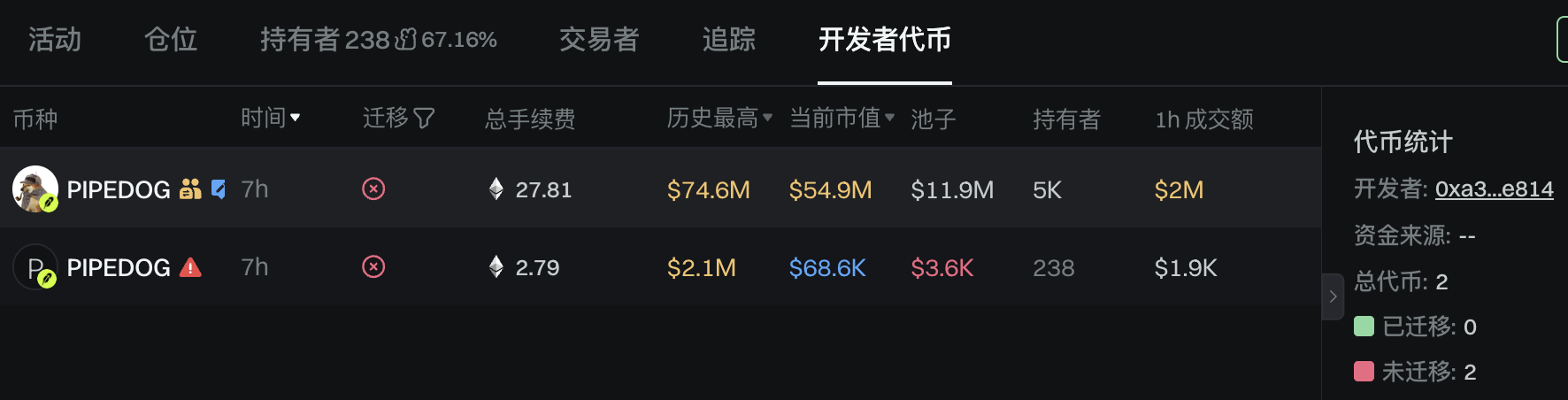
PIPEDOG on Robinhood Chain has drawn scrutiny after onchain records showed the same developer launching two tokens with the same name in quick succession. According to Foresight News, the first PIPEDOG was deployed, had liquidity added, then saw that liquidity-related position pulled within minutes. A second PIPEDOG with the same name, ticker and total supply was then issued. The first token faded quickly, while the second climbed to a peak market capitalization of $74.6 million.

Two same-name tokens appeared within 17 minutes
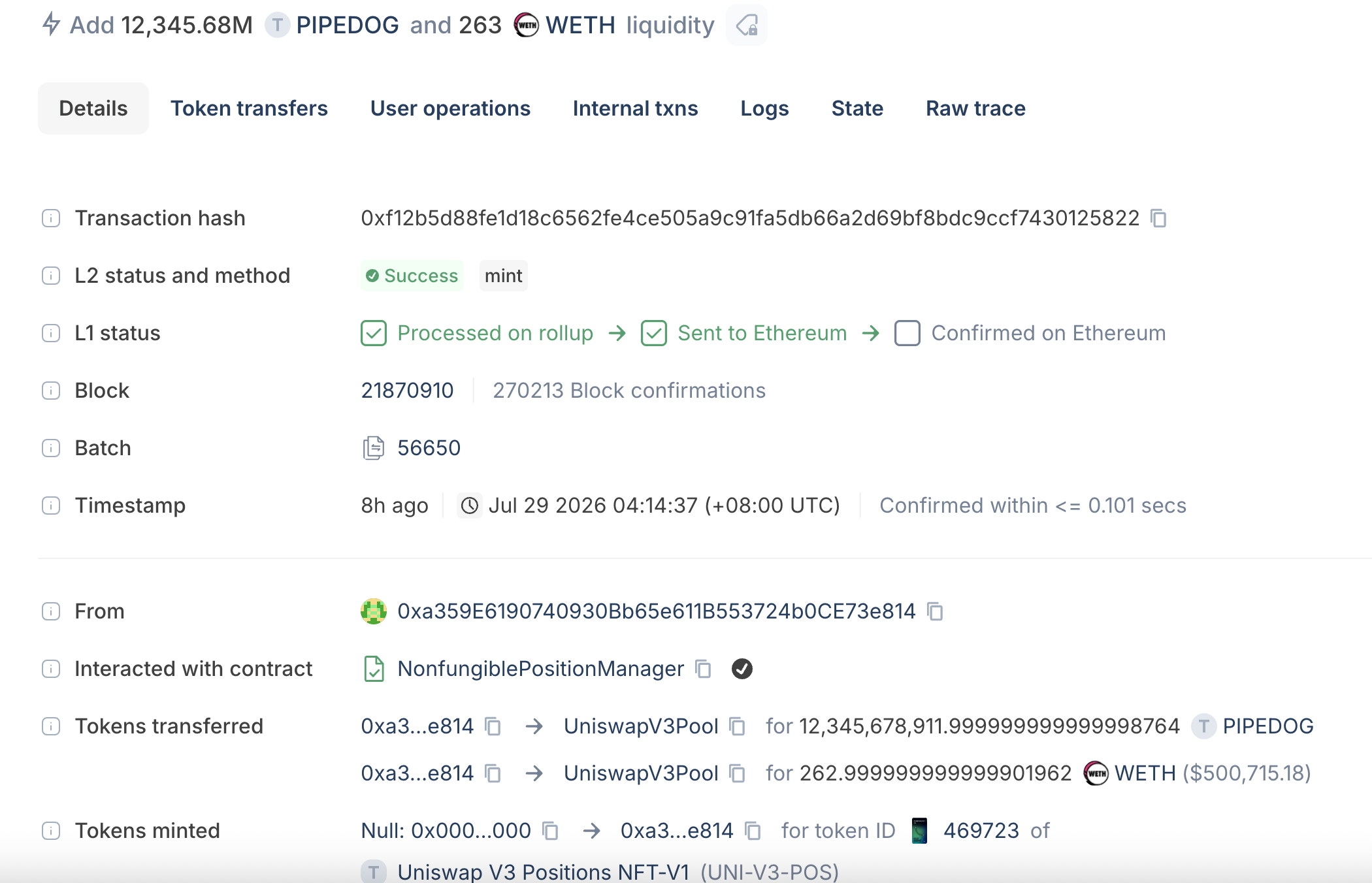
The first PIPEDOG contract was 0x030e...9560. Onchain data showed it was deployed by address 0xa359...e814 at 04:12 on July 28. About two minutes later, the developer used nearly the full token supply and about 263 WETH to create a Uniswap liquidity position.
At 04:21, the first PIPEDOG reached a market capitalization of $2.11 million. Three minutes later, the developer called the Uniswap position manager contract through multicall and used WETH's withdraw function to remove the related liquidity. GMGN market data showed that within the next two minutes, the token's market capitalization fell sharply to roughly $9,000. It has since edged back to about $68,000.
At 04:29, the same developer address deployed a second PIPEDOG, contract 0x5cb6...d8a6. The two launches were separated by about 17 minutes. From the first pool creation to the withdrawal-related action, less than 10 minutes had passed.
Onchain records confirm that both tokens came from the same deployment address and show the order of pool creation, liquidity removal and the second issuance. What remains unclear is why the developer abandoned the first version. What is clear is that the original token was not maintained, and capital and market attention shifted quickly to the second contract.

The second PIPEDOG later reached a peak market capitalization of $74.6 million. At the time of writing, it stood at about $55 million.
Bundled trades and clustered holdings stood out in the second token
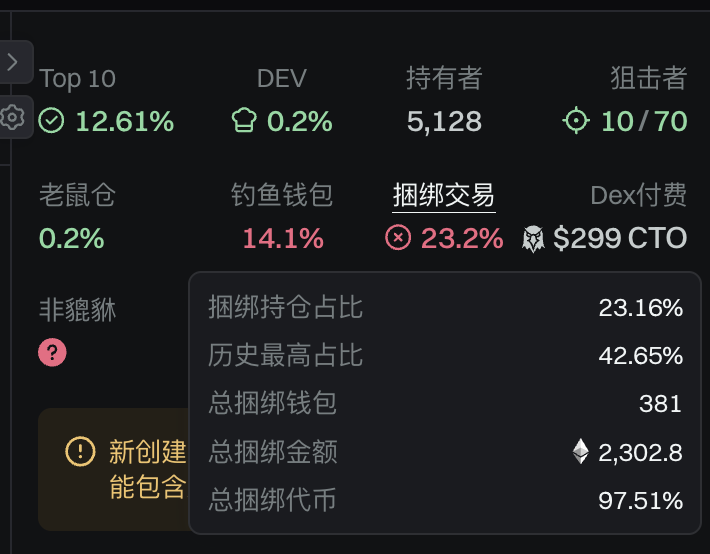
The concerns around the second PIPEDOG were not limited to price action. GMGN showed bundled holdings at 23.16%, with a historical peak of 42.65%. Wallets identified by the platform as related to bundled trading still held close to one-quarter of the token supply.
That ratio does not by itself prove that those wallets were controlled by the developer. It does, however, raise the question of whether the token supply was actually dispersed among independent holders.
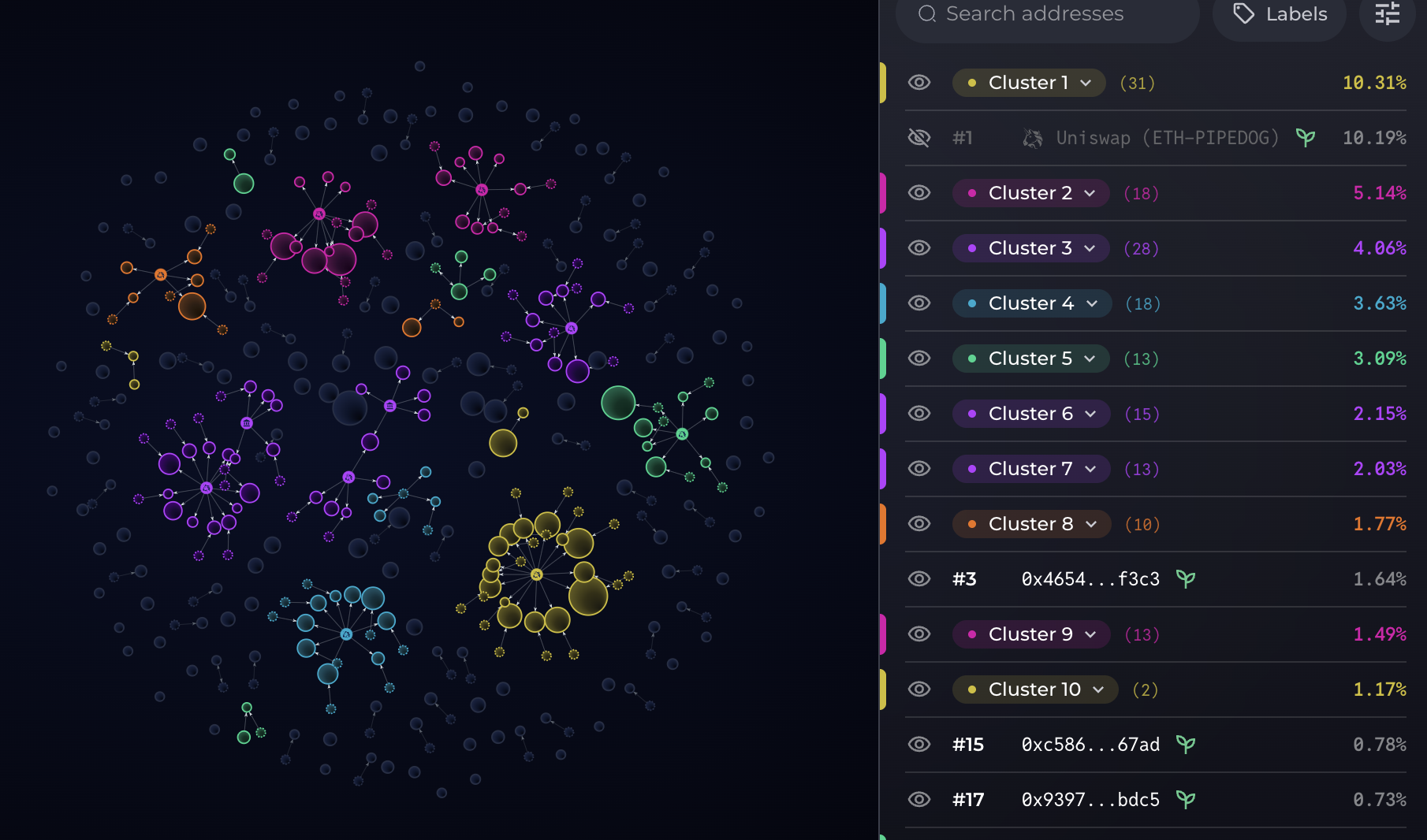
Bubblemaps offered another set of signals. After excluding the Uniswap pool holding about 10.19% of the token supply, the top eight holder groups all appeared as clusters. Those clusters contained 31, 18, 28, 18, 13, 15, 13 and 10 addresses, for a total of 146 addresses. Based on the holding ratios shown in the screenshot, those eight clusters together controlled about 32% of total supply.
The first PIPEDOG showed similar traits
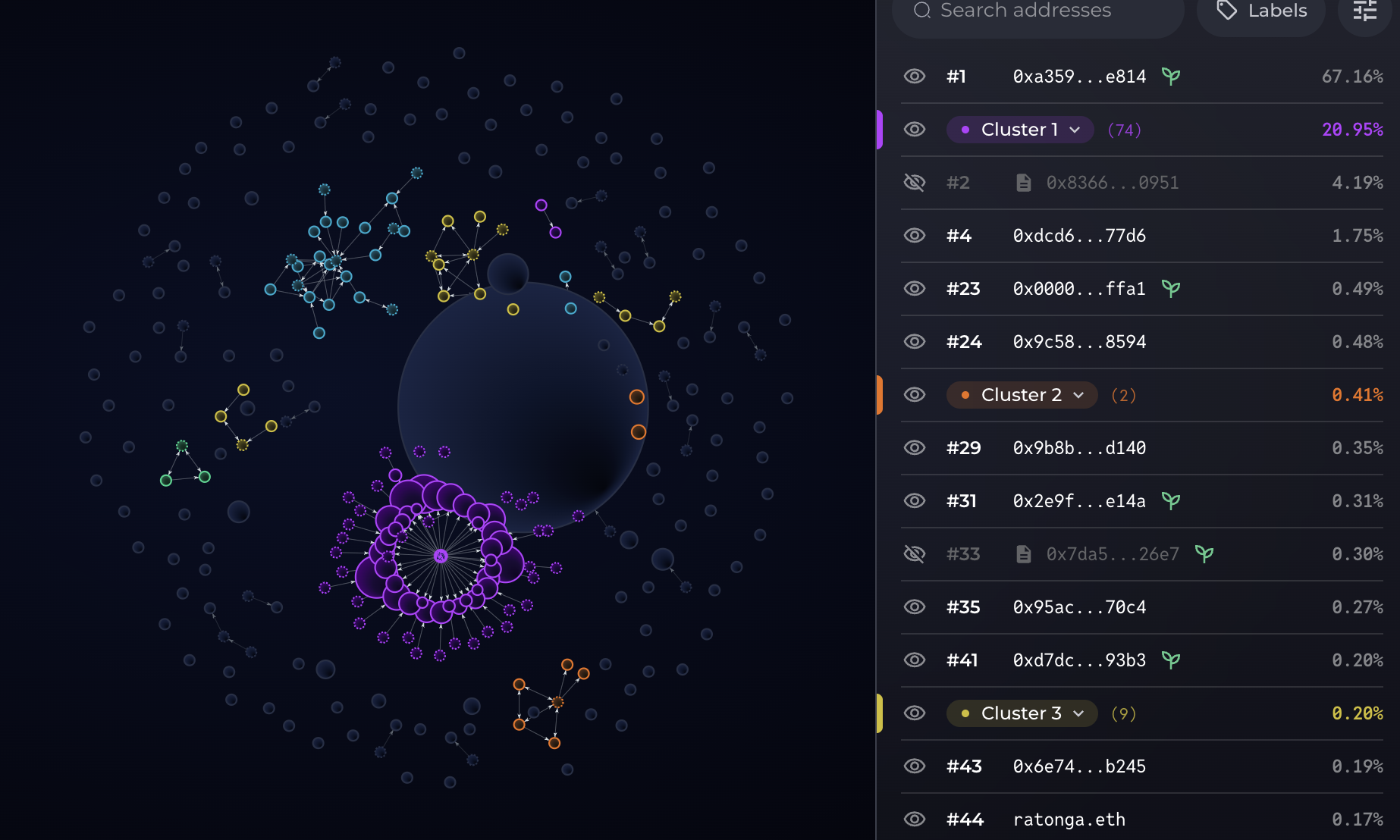
The first PIPEDOG also displayed concentrated ownership patterns. GMGN showed bundled holdings at 16.5%. Bubblemaps data showed the largest holder address owned 67.16% of the token supply, while the second-largest holder entity was a cluster of 76 addresses that together accounted for 21.09% of supply.
That suggests both issuances featured elevated bundled holdings and clustered token ownership, rather than the second token being an isolated case. Even so, determining whether the wallets were controlled by the same party would require more evidence, including funding sources, timing of operations and sell paths.
Locked liquidity did not remove token distribution risk
After the second token went live, the project said on Twitter that liquidity worth 1358.83 ETH had been "permanently locked" and included an onchain transaction calling the lock method.
That step may reduce the risk of the project removing the corresponding liquidity position without warning. But locked liquidity and dispersed token ownership are separate issues. An LP position being locked does not mean clustered wallets cannot sell tokens, nor does it show that wallets involved in early bundled buying are independent from one another.
Based on the evidence currently available, PIPEDOG showed elevated holder linkage during its launch phase and an unusual record in which the same developer abandoned one contract and reissued a token with the same name shortly after. There is still not enough evidence to classify it as a scheme controlled by a single operator, but the issuance process and ownership structure already present several warning signs.