


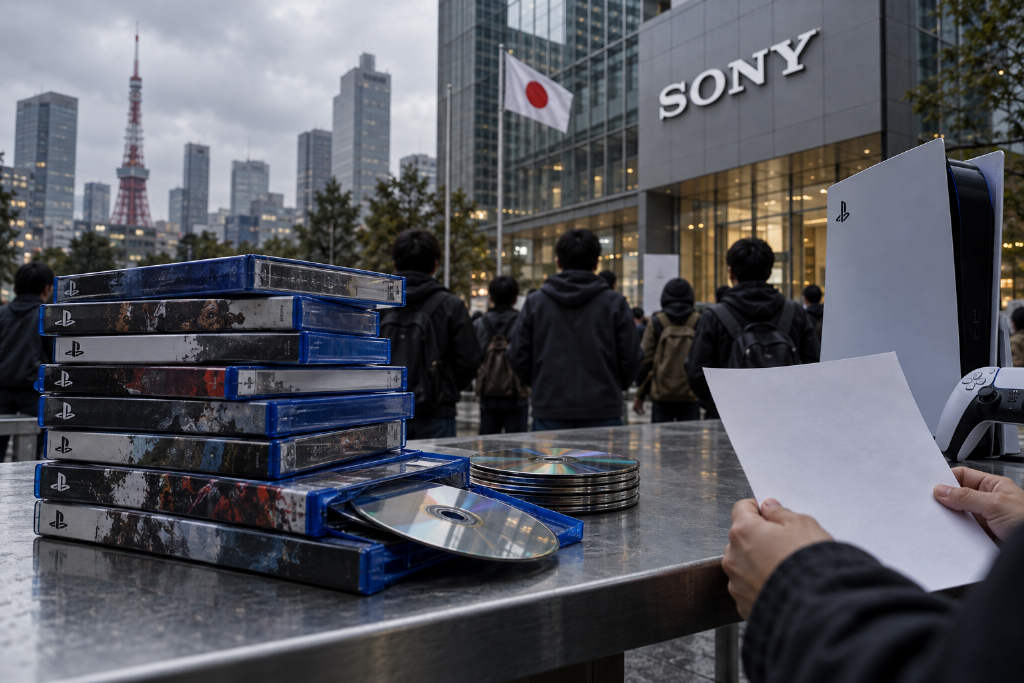
PlayStation founder Ken Kutaragi has pushed back on the anger over Sony’s plan to stop producing physical game discs in 2028, saying the attachment many players feel toward discs as proof of ownership is a “mentality issue.”
Speaking at the Game Republic New Horizons event, Kutaragi said he understands why physical media has become a stand-in for ownership. Still, he argued that consumers do not apply the same standard to other connected devices.
“I understand that physical discs have become a metaphor for ‘owning’ games. I really understand that mentality,” Kutaragi said. “But nobody thinks [physical media] is necessary for a networked device like a smartphone, for example, because people feel that they will keep their content. So it’s a mentality.”
According to Video Games Chronicle, he also said: “I really understand [why some people are upset]. But I don’t think it’s economically reasonable. Maybe it’s a mentality issue.”
Backlash grows around Sony’s 2028 disc plan
The remarks come as criticism of Sony’s decision continues to spread. Former PlayStation executive Shawn Layden called the move a “heavily spreadsheeted decision” and said it damaged the company’s reputation. At the same time, the “Don’t Kill the Disc” petition has gathered more than 385,000 signatures.
Kutaragi retired from PlayStation in 2007 and is widely known as the architect of the first three generations of the console. Two more generations have been released since his departure. He is now CEO of the Japanese companies Ascent Robotics and Cyber AI Entertainment.
Publishers, not players, are driving the shift, says Robert Bowling
Robert Bowling, a former creative strategist at Infinity Ward, told Decrypt that publishers are the “only ones ever pushing” to cut physical game discs. In his view, the reason is straightforward: removing discs can improve profit margins by lowering production costs and can also weaken the game resale business led by companies such as GameStop.
Bowling, now studio head at //18.bravo, told Decrypt that the dispute reflects a deeper split inside the game business. “It speaks to the divide that has formed in our industry between those who see games as just a software product,” he said, “and those who see them as something more like art, entertainment, collectibles, and a lifestyle.”
Sony’s court argument on digital purchases
According to court filings cited in the report, Sony has argued in court that no reasonable consumer believes they own the digital games they buy through the PlayStation Store. Instead, Sony says those purchases amount to a revocable license.
That legal position has kept the ownership debate alive well beyond the question of discs. The report notes that Sony has said consumers do not own the games they bought, while parts of the crypto industry argue that blockchain-based systems could address that problem.
Social media has changed how players respond
Game industry veteran Chris Heatherly told Decrypt that corporate executives are used to “issuing decrees” from their offices and “hiding behind their PR teams,” but that approach no longer works in the social media era. He said Sony was not “in dialogue” with its audience and misread how the decision would be received.
“I think it’s insult upon injury for gamers who feel used and abused by these console makers in general,” Heatherly told Decrypt. “If you look at Steam, people buy way more games than they play because they like to collect games. What is that other than owning them? You’re not playing them at all!”
Heatherly also said that wanting to “own” online multiplayer games is not “an entirely rational coherent thought process,” because publishers usually control the servers anyway. Even so, he said there is room for a middle-ground model.
“I think there are models for ownership worth talking about, but not fake financialized ownership like web3,” he told Decrypt. “I think people would be happy with local forever and peer-to-peer [online services], frankly.”