

On Aug. 3, POAP co-founder Isabel said the digital collectibles project would stop pursuing further development after operating for more than five years.
The announcement sent many early users back into their wallets, where badges from Ethereum conferences, hackathons, community meetups and online events were still sitting in place. Some came from conferences that no longer exist. Some were tied to projects that have gone quiet. Others marked industry moments such as Ethereum’s Merge. The badges can still be viewed and displayed. The team that made them has decided to move on.
POAP was not an abandoned or unloved product. It grew from an experiment inside the Ethereum community into one of crypto’s most recognizable proofs of participation, and later showed up in brand campaigns, concerts and major industry events.
It was also not the first internet product to try turning memory and commemoration into a business. More than a decade earlier, a startup called GetGlue let millions of users check in to television shows, movies and books and collect digital stickers, only for those records to vanish once its servers shut down. POAP rebuilt that idea with blockchain rails and ran into a very similar endpoint.
Started at ETHDenver in 2019
In February 2019, thousands of developers gathered in Colorado for ETHDenver. Crypto markets were still in a slump, bitcoin had fallen sharply from the previous bull-market peak, and “NFT” was not yet a mainstream term.
At that hackathon, Patricio Worthalter and other early POAP members first tried issuing ERC-721 digital badges to participants. POAP stands for Proof of Attendance Protocol. Attendees could claim an on-chain badge showing they had appeared at a specific place and time.
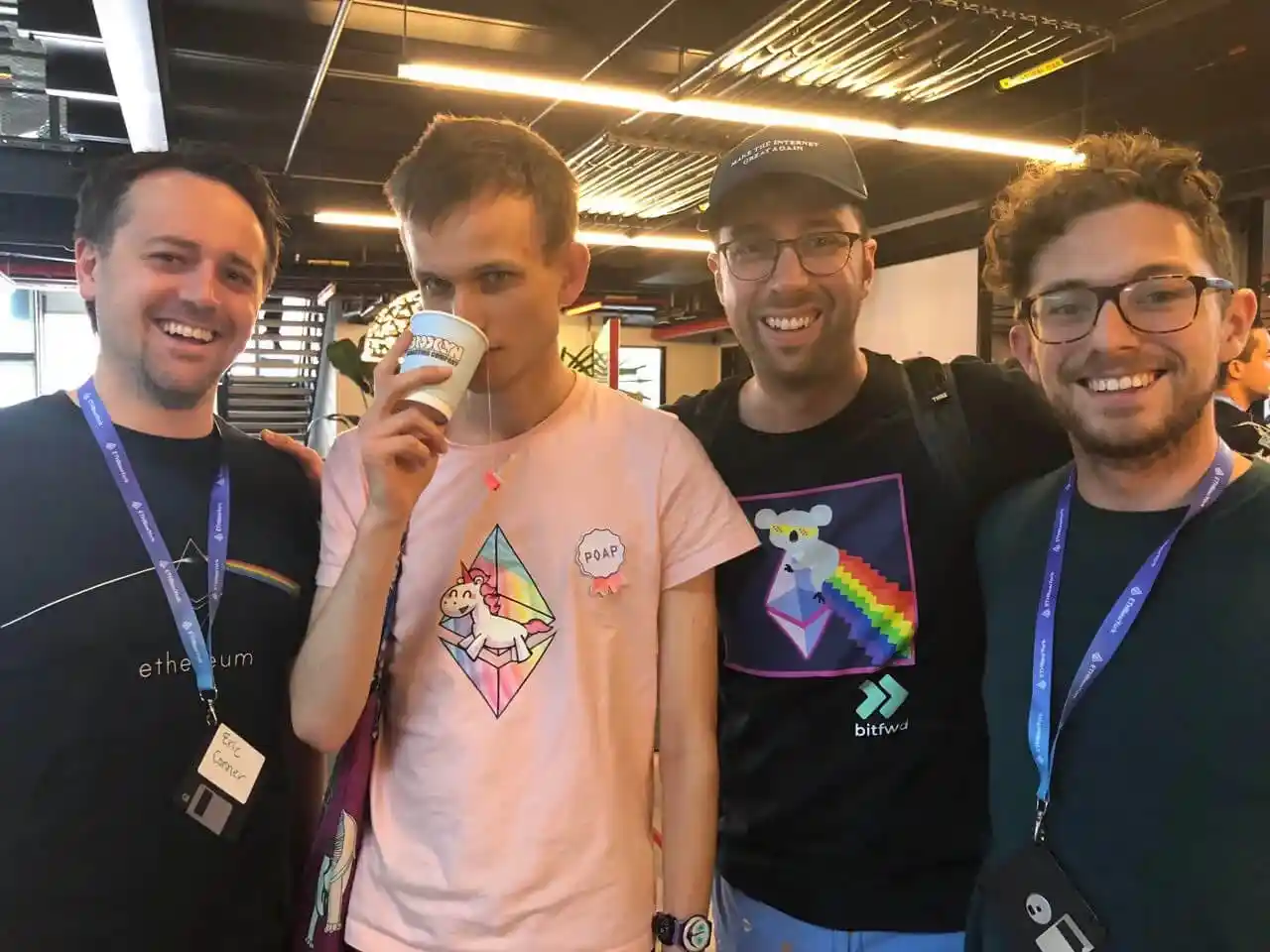
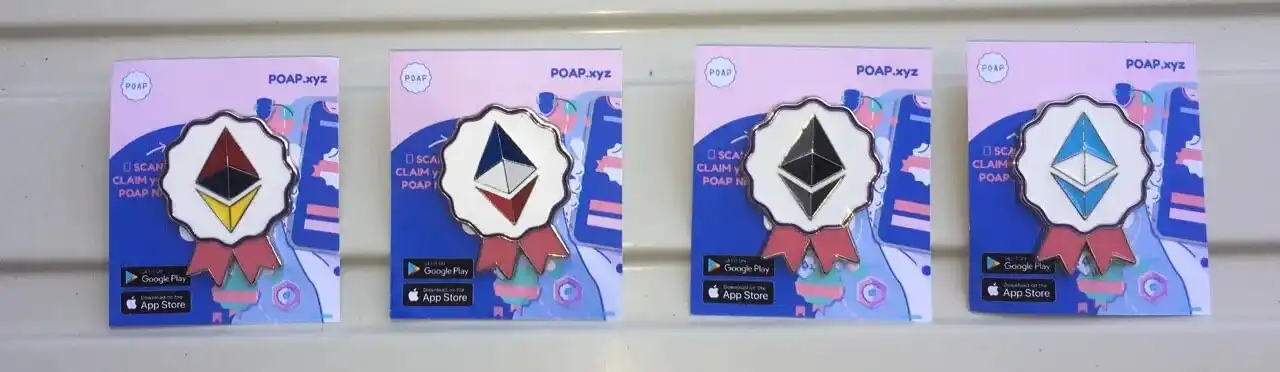
Within a year, pink rosette badges with QR codes had become a familiar sight at some Ethereum events. Participants scanned the code and claimed a POAP to their Ethereum address. Being able to show records from events such as EthCC in Paris, Devcon in Osaka, DappCon in Berlin or ETHDenver in Denver became a signal of activity inside the crypto scene.
By March 2020, POAP had appeared at more than 100 events and about 7,000 badges had been claimed. It then moved beyond an internal Ethereum-community experiment and became one of the sector’s best-known digital participation credentials.
At its core, POAP tapped into an old habit. Travelers keep postcards, tickets and magnets. Sports fans save game tickets. Concertgoers hold onto wristbands. Conference attendees keep badges and pins. These objects are usually not valuable because of price. They matter because they carry a memory of where someone was, who they were with and how that moment felt.
POAP turned the emotional weight of tickets and conference badges into an on-chain credential held directly by the user.
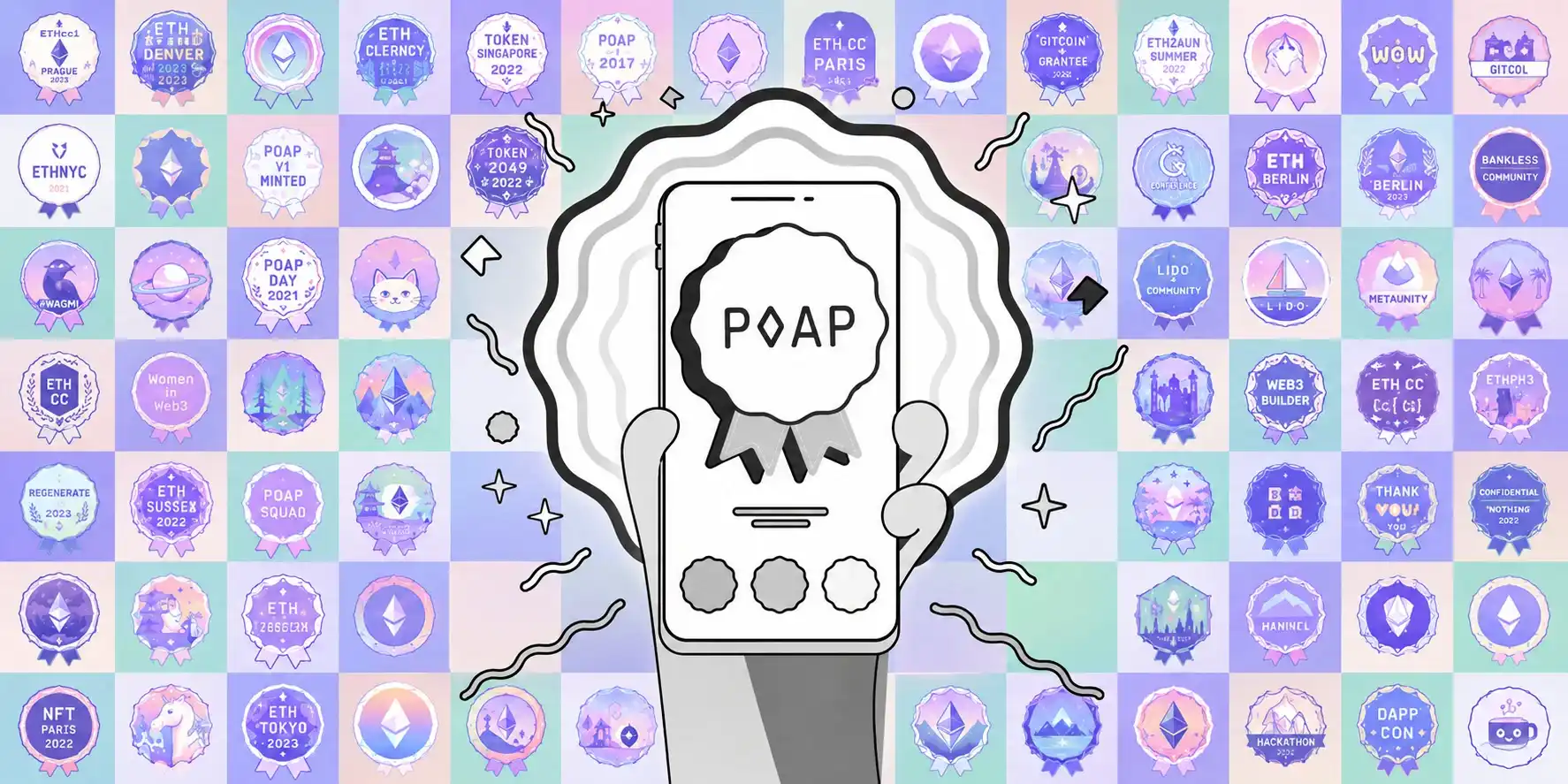
By the 2022 Metaverse Fashion Week, POAP had become a draw in its own right. People entering the venue would ask whether a POAP was available. Even when an event itself was not especially compelling, a POAP claim could still create a line.
Brands also began using the format. Adidas issued limited POAPs to some users, who later received priority access to buy the “Into the Metaverse” NFT. Estée Lauder built a virtual space in Decentraland inspired by its Advanced Night Repair product, where visitors could unlock a POAP and claim an NFT wearable.
POAP’s high-water mark came in September 2022, when Ethereum completed its historic shift from proof-of-work to proof-of-stake. More than 41,000 people watched the official Merge viewing party, and participants placed more than 366,000 pixels on a collaborative POAP canvas. Mint details for a Merge drawing party commemorative POAP were then revealed during the livestream.
A one-time historical event had been turned into a digital badge that could remain in a wallet over the long term. For a project built around ritual, community and shared memory, it was almost the ideal use case.
From cultural experiment to company
As the NFT market heated up, POAP shifted from a hackathon-born cultural experiment and volunteer effort into a formal company. POAP Inc. was registered in the U.S. in September 2021. Four months later, it announced a $10 million seed round co-led by Archetype and Sapphire Sport.
POAP did not describe itself simply as an event badge platform. The team’s idea was that the conferences, courses, communities and projects a person had joined could form a kind of social graph, becoming a digital identity that did not depend on a legal name, nationality or identification number.
Because each badge and its holder address could be checked on-chain, communities and project teams could use POAP ownership to identify specific users and grant access to raffles, event tickets, exclusive content, whitelist spots or NFT and token airdrops.
That possibility made POAP much more attractive. For project teams, issuing a POAP to attendees created a low-cost way to track early users and community members, then reward them later based on that record. For users, claiming a free badge cost almost nothing while potentially opening the door to future events, airdrops or proof of early involvement.
That also meant people were not collecting POAPs for the same reason. Some wanted to preserve an experience and treat the badge as part of their community identity. Others were simply betting on future rewards. That dual character helped POAP spread quickly through crypto circles, but it also created a long-running tension.
Once a badge could be linked to an airdrop or some other economic benefit, public claim links started attracting users who had not actually attended the event, and people could use multiple wallets to claim in bulk. As airdrop farming, Sybil attacks and reward arbitrage became familiar problems across crypto, POAP’s position became more awkward.
For projects handing out rewards, a POAP that could be claimed cheaply and collected at scale became less useful as a reliable signal of contribution or user quality. And if projects stopped assigning benefits based on POAP ownership, users who were there mainly for those possible rewards had little reason to stay.
That left POAP in a difficult loop. The more a product meant to record genuine experience was pulled into crypto’s incentive systems, the more it risked losing the very thing that made it valuable.
A Web2 version had already lived and died
Before blockchains and NFTs, the Web2 era had already produced a close parallel. It also tried to turn everyday experiences into collectible digital badges.
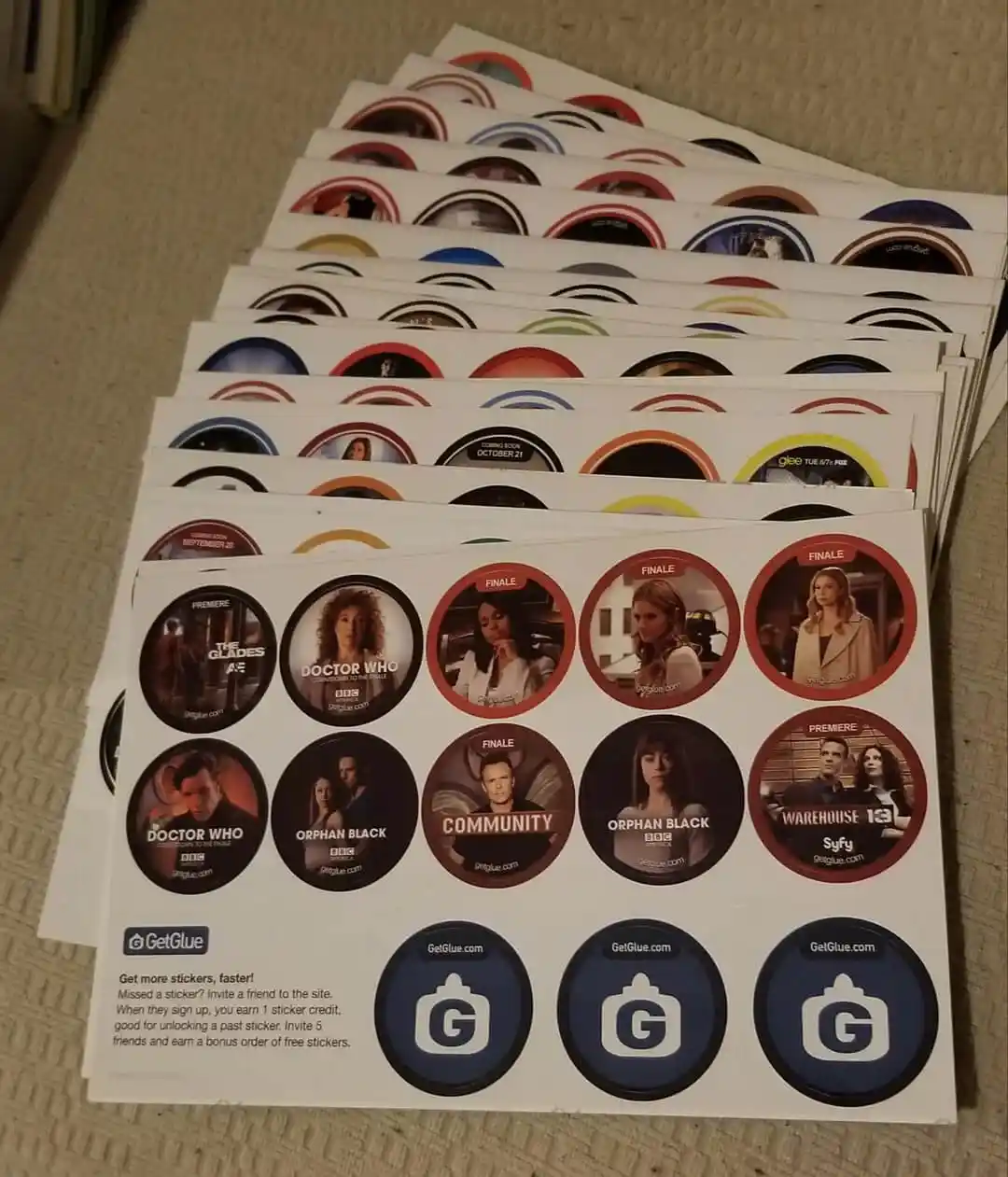
In August 2010, a viewer of the hit HBO series True Blood could sit in front of the television, open the then-new GetGlue app and check in to the episode they were watching. A digital sticker designed by HBO would appear on the user’s profile seconds later.
If the user kept checking in, posted comments or completed hidden tasks with undisclosed rules, rarer stickers such as “Truebie” could be unlocked. After collecting enough of them, users could ask GetGlue to mail physical versions to their homes for free, then stick them on a laptop, bookshelf or wall.
GetGlue started as a browser plug-in offering social recommendations based on web content. It later moved toward “entertainment check-ins.” Users could tell friends what TV show they were watching, what book they were reading, what music they were hearing, even what they were drinking or thinking about. Each check-in built points, unlocked stickers and synced to Twitter or Facebook.
Focused on social interaction for TV audiences, GetGlue grew quickly in 2010. Early that year it had about 30,000 users. By October, that had climbed past 650,000, with more than 10 million monthly check-ins and ratings.
In early 2012, GetGlue raised $12 million with backing from Union Square Ventures, RRE Ventures and Time Warner Investments, bringing total funding to about $24 million. Its user base had reached 2 million, and cumulative check-ins topped 100 million.
The company also built partnerships with dozens of major media groups. HBO, Showtime, PBS, Universal Pictures, Warner Bros. and Random House were among the film, television and publishing brands issuing stickers and discounts tied to hundreds of programs. Fox, NBC, HBO and DirecTV also integrated GetGlue data and features into their own websites and apps.
On paper, the business case looked clean. Users expressed interest and promoted shows by checking in. Broadcasters gained data on whether viewers were watching live, on demand or via DVR. GetGlue could aim for revenue through brand partnerships, member rewards, commerce referrals and advertising. It looked close to a complete consumer internet success story.
The problem was that users cared about the shows, movies and books, not the act of checking in. GetGlue itself concluded that stickers were not enough to support the business on their own, and by 2012 it no longer treated them as the center of the product. Instead, it tried to turn check-in records into a rebuilt electronic program guide that could recommend what to watch later.
In 2012, competitor Viggle said it planned to acquire GetGlue for $25 million in cash and stock, but the deal later collapsed. In 2013, GetGlue was acquired by TV app company i.TV. Early in 2014, it was renamed tvtag, its interface switched from blue to red, and check-ins, stickers and live discussion remained. Less than a year later, users received a farewell email saying tvtag and its companion apps would shut down on Jan. 1, 2015.
When the servers went dark, GetGlue users lost their check-in history, discussions and social graph with them. The physical stickers once attached to laptops, notebooks and walls may also have been damaged, peeled off or discarded over time.
More than a decade later, POAP retold that digital-memorabilia story with blockchain infrastructure, but the underlying commercial problem was not very different. The key distinction is that when POAP reached its endpoint, the badges already sitting in wallets stayed alive as on-chain records.
Emotional value does not automatically become revenue
POAP and GetGlue resembled each other because both faced the same product structure. What users actually cared about were the events, shows and communities behind the memorabilia. The platform supplied an added record after the experience had already happened.
GetGlue users loved True Blood, the Oscars or a novel. POAP users valued an Ethereum conference, a hackathon, a concert or a community gathering. Stickers and badges could deepen memory, but they were rarely the main reason anyone showed up or tuned in.
Products like that can become popular. They are much harder to make people pay for.
For POAP collectors, the strongest part of the format was that badges were free, easy to get and felt like gifts. Small communities, schools and open-source projects were willing to issue them, but often lacked a continuing software budget. Large brands could pay, yet were more likely to treat POAP as part of a one-off marketing campaign instead of a must-have long-term subscription tool.
That created a mismatch between product value, users and payers.
POAP also carried a tension GetGlue never had to manage. It was born during the NFT era, but it kept trying to stay away from NFT speculation.
At the 2021-2022 NFT peak, the most effective distribution tactics often revolved around price appreciation, airdrop expectations and secondary-market trading. Projects issued tokens or NFTs, used scarcity and wealth effects to expand the community quickly, and then translated trading fees, royalties or token appreciation into revenue.
POAP did not want to take that route. It stressed that badges represented shared experience, not speculative assets. A POAP should be issued only when an event was genuinely worth commemorating. If users were claiming a badge only for a future airdrop or trading value, the record itself would lose meaning.
That restraint protected the brand and narrowed its room to monetize.
In her farewell, Isabel said crypto’s funding cycles and distribution mechanics made it difficult for POAP to build a sustainable company without eroding its original spirit. Put differently, the part of POAP that carried the most value ran directly against the monetization methods that were most established in crypto at the time.
POAP’s shutdown does not prove that digital memorabilia lack meaning. The millions of badges still sitting in user wallets already show that the project created real cultural value. What it did not show is an automatic path from cultural value to business value.
POAP preserved a record of many people’s past. It did not find a future that could sustain itself.