
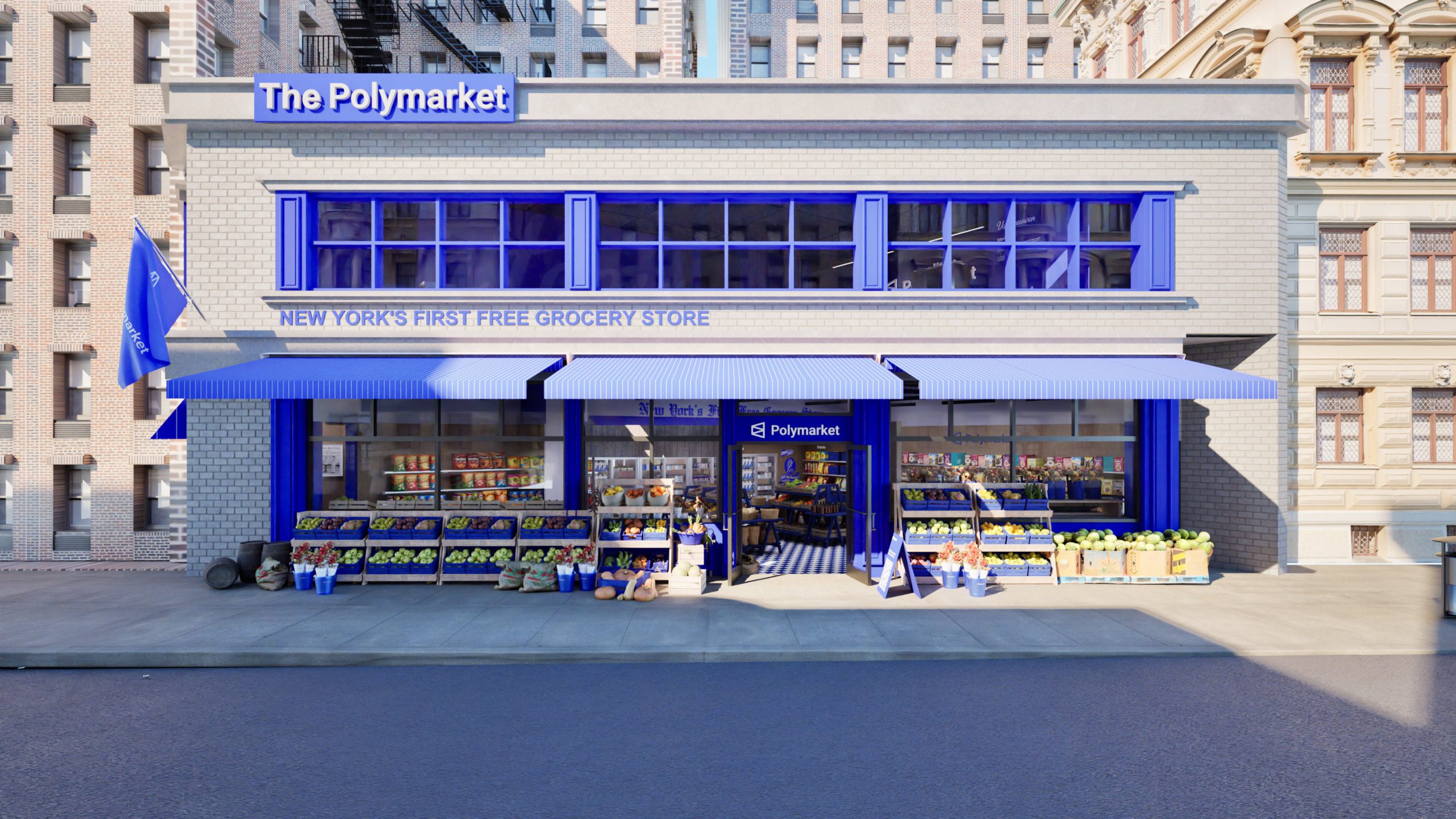
Kalshi and Polymarket have taken their prediction market rivalry into the streets of New York, using free groceries and food incentives to attract new users. One platform offered $50 food credits, while the other announced a free grocery store, turning an abstract financial product into something tied to everyday household spending.
Kalshi brings a $50 grocery incentive to West Side Market
According to the source material, on February 3 Kalshi ran an offline promotion at West Side Market, located at 84 Third Avenue in New York, where some users who registered online could receive $50 in free food benefits. The setup resembled a pop-up campaign linked to a local supermarket. The pitch was simple, and that was the point: draw people in with free groceries, then introduce them to prediction markets.
Kalshi’s stated focus was on contracts that feel close to daily life. The source cited examples such as whether New York City gas prices would rise above $3.3 this year, a type of market designed to feel more familiar than purely political or macro trades. Instead of presenting forecasting as a niche financial activity, the campaign framed it around fuel bills and grocery costs.
Polymarket pairs a free store launch with a $1 million donation
On the same day, February 3, Polymarket said it had spent months preparing to open its first physical free grocery store in New York on February 12. The company said the store would be fully stocked and that visitors could take items without paying. Promotional materials used AI-generated images of tomatoes, eggplants, and watermelon, echoing the user-acquisition tactics often seen in the early days of delivery apps.
Polymarket also said it would donate $1 million to the Food Bank For New York City to address rising food and living costs. In the source material, that move was presented as an attempt to connect public concerns over affordability with the branding of a prediction market platform.
Why $50 still matters in New York grocery shopping
The report also highlighted why these promotions may resonate. In New York, $50 is enough to catch attention, but it does not stretch very far. At Manhattan supermarkets, a 12-count carton of eggs costs about $6 to $8, a pound of chicken breast is about $9, and a loaf of bread can cost $5. Add basic vegetables such as frozen broccoli, and that budget may only cover two to three days of food for one person.
For a more comfortable weekly grocery routine, the source said supermarket spending in New York would usually need to reach at least $150 per week. That pricing backdrop helps explain why free eggs, produce, and food credits became the centerpiece of this competition for attention.