The Trading Dilemma in Prediction Markets: Why 90% of Novices Lose Money
During the World Cup, Polymarket saw surging trading demand, with the single championship market exceeding $3 billion in cumulative volume. Behind this seemingly impressive data, a large number of trial-type novices are falling into emotional trading traps: they chase odds drops on impulse and wake up to zero balances—this is the everyday reality for 90% of Polymarket newcomers. While experienced players base decisions on all-night screen time, injury data, schedule pressure, odds changes, and market sentiment, most amateurs only place orders based on momentary excitement, lacking stable strategies and reliable signals, thereby amplifying losses.
PPP's Solution: Signal Monitoring and Address Analysis
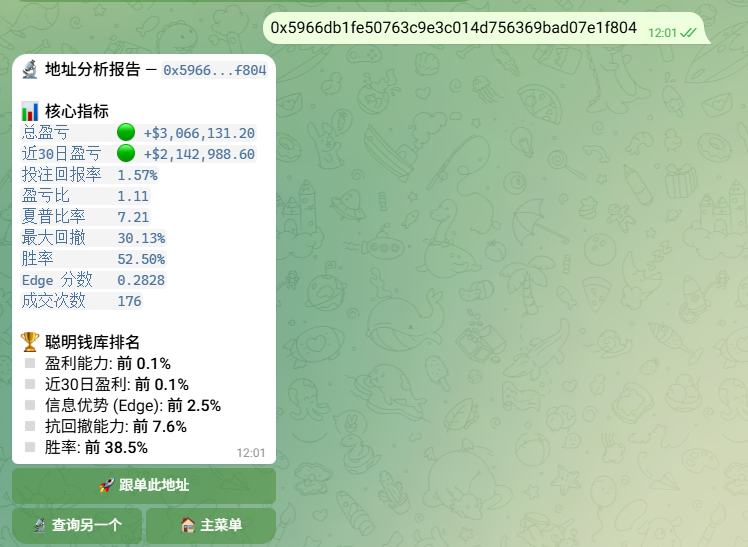
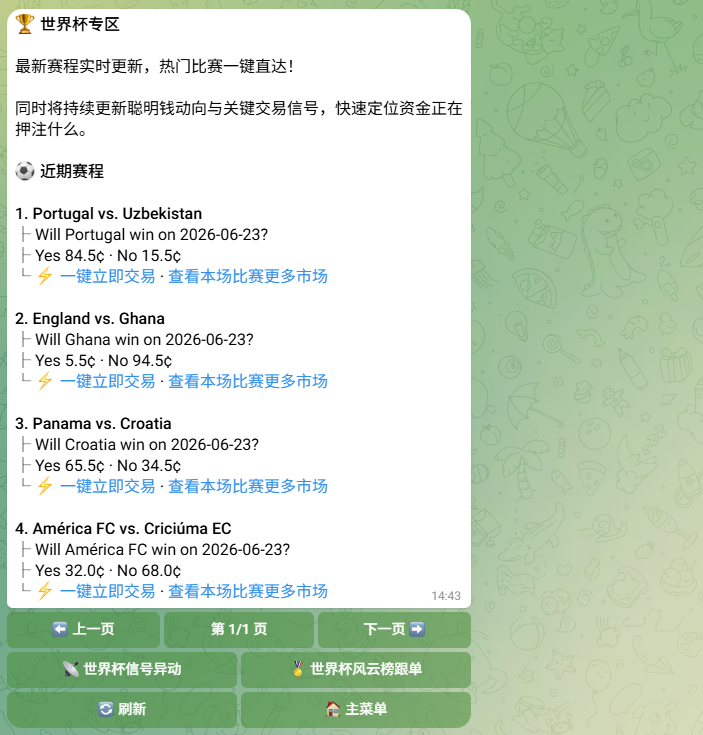
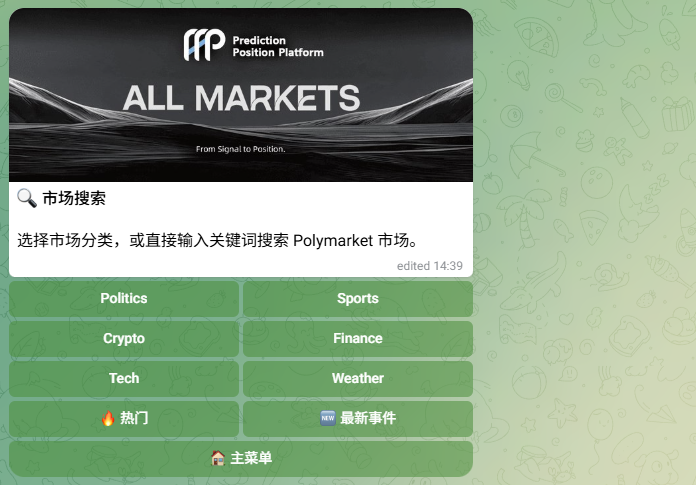
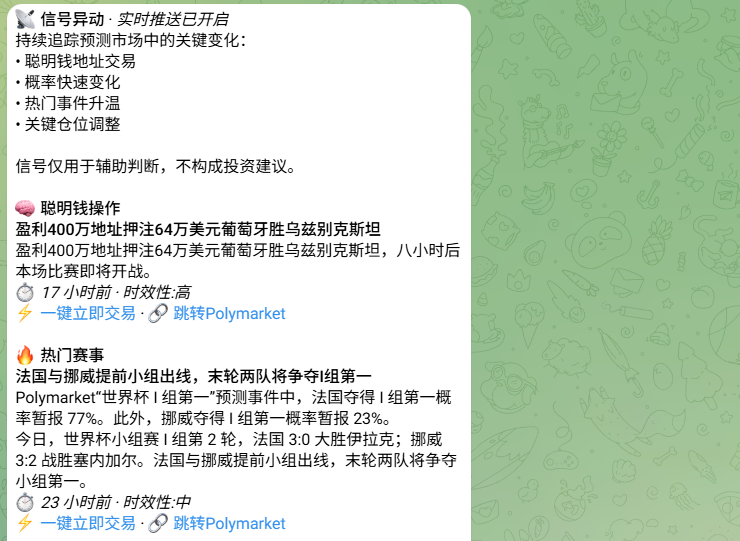
The core value of the PPP tool lies in solving users' problems of 'incomplete visibility, slow response, and execution lag.' Its World Cup Zone integrates upcoming matches and hot topics, allowing users to jump directly to relevant prediction markets without repeated refreshing. More critically, the 'Signal Monitoring' function lets users input an address for model-based analysis of historical trading performance (total P&L, win rate, Sharpe ratio, maximum drawdown, etc.) and compare it with PPP's internal smart money database to quickly identify potential opportunities. However, high-profit addresses are not always worth copying—some gains may come from extreme positions or single-shot events. PPP builds its own address database, modeling indicators such as returns, win rate, drawdown, activity, and market participation quality, supplemented by manual review to eliminate accidental profits and non-replicable extreme trades.
Strategy Marketplace vs. Trading Leaderboard: From Long-Term Tracking to Short-Term Capture
PPP's 'Strategy Marketplace' module presents strategy accounts that have been filtered through multiple dimensions, suitable for long-term observation. Users can view deep parameters like position holding cycles and market participation quality, and configure copy amounts, maximum position ratios, and automatic take-profit. In contrast, the 'Trading Leaderboard' focuses on addresses that have recently demonstrated outstanding performance—during the World Cup, major political events, or macro data releases, some addresses may hit multiple consecutive markets, making them valuable for short-term focus rather than long-term following. The leaderboard tags each address (e.g., 'Late-Entry Specialist') and provides data on 30-day P&L, Sharpe ratio, maximum drawdown, and win rate, helping users assess return stability and style compatibility.
Non-Custodial Copy Trading and Fund Security: Balancing Efficiency and Control
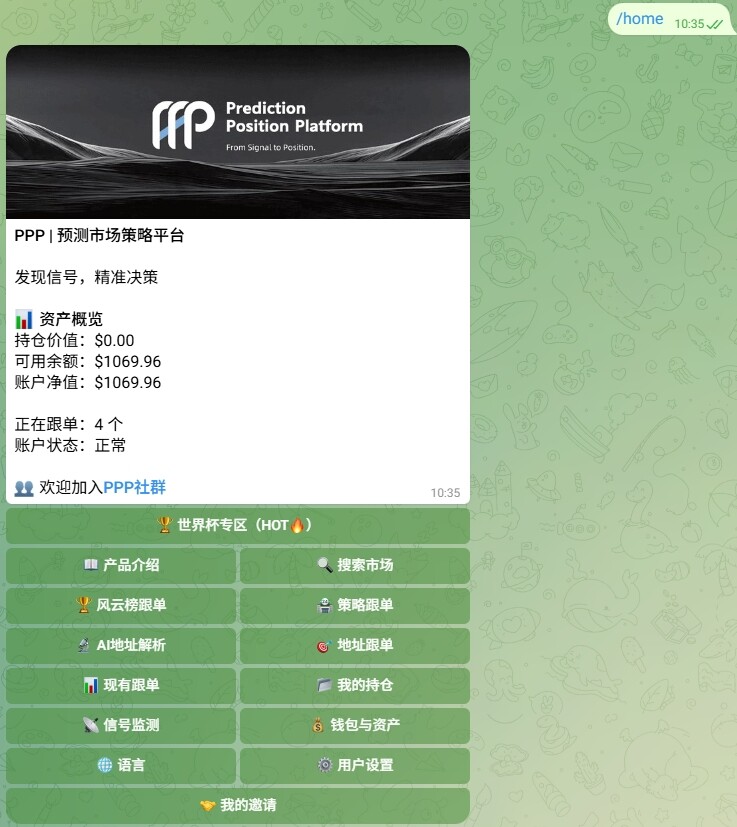
PPP supports user-defined custom address addition and provides a unified position management interface to avoid confusion when copying multiple addresses. Users can view historical positions and P&L data to evaluate the actual performance of different strategies. In terms of fund security, PPP adopts a non-custodial wallet model: the platform does not hold user assets or request private keys/seed phrases, only offering address monitoring, signal aggregation, copy execution, and notification push services. This design clearly separates trading efficiency from asset control, building trust for ongoing copy trading. Facing the daily changes in hot markets and active addresses, PPP continuously filters for stable-performing addresses, helping users efficiently switch between community chats, block explorers, and trading pages—allowing them to borrow wisdom from prediction market experts with minimal tuition costs.