
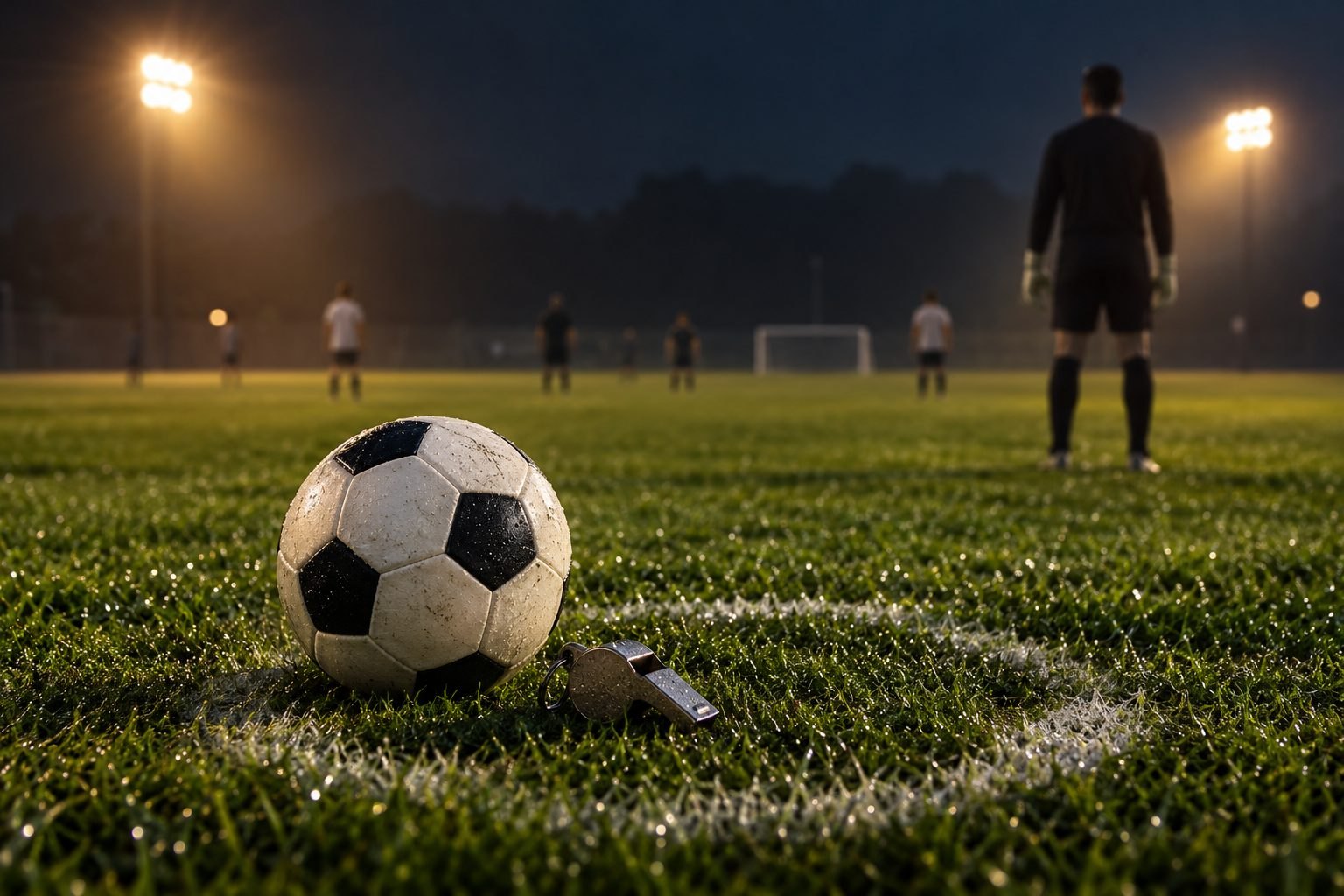
A dropped ball restarts play when the referee stops it and no other restart is required. Inside the penalty area it goes to the defending goalkeeper; outside it, to one player chosen by possession or, failing that, by last touch. All other players must stay at least 4 m away until it touches the ground.
Who the dropped ball is for
Here are the rules for who receives the dropped ball.
| Where the ball was when play stopped | Dropped for |
|---|---|
| Inside the penalty area | The defending team's goalkeeper |
| Outside the penalty area | One player of the team that has or would have retained or gained possession (including from the restart if the ball would have gone out of play), if the referee can determine that |
| Outside the penalty area, possession cannot be determined | One player of the team that last touched the ball |
Inside the penalty area, the ball is dropped for the defending goalkeeper. Outside it, the referee first judges whether one team has or would have retained or gained possession, including from the restart that would have followed if the ball had gone out of play.
If the referee can determine that, the ball is dropped for one player of that team. If not, it is dropped for one player of the team that last touched it.
Where the dropped ball is taken
A dropped ball is taken where the ball was when play was stopped, unless the ball hit a match official or an outside agent; in that case it is taken where the contact happened.
A ball touching a match official is also one of the situations that can lead to a dropped ball, though not every such touch does.
How the restart works
All other players from both teams must remain at least 4 m from the ball until it is in play. The ball is in play once it touches the ground.
The ball is dropped again if it touches a player before it touches the ground, or if it touches the ground and then leaves the field of play without touching a player.
What happens if it goes straight into a goal
If a dropped ball enters a goal without touching at least two players, play restarts with a goal kick if it went into the opponents' goal, or with a corner kick if it went into the team's own goal.
FAQ
Who gets the ball at a dropped ball?
That depends on where the ball was when play stopped. Inside the penalty area, it is dropped for the defending goalkeeper. Outside it, it is dropped for one player of the team that has or would have retained or gained possession, including from the restart if the ball would have gone out of play, if the referee can determine that; otherwise, for one player of the team that last touched it.
How far away do players have to stand?
All other players from both teams must stay at least 4 m from the ball until it touches the ground and is in play.
Can you score directly from a dropped ball?
No. If a dropped ball enters a goal without touching at least two players, play restarts with a goal kick if it went into the opponents' goal, or a corner kick if it went into the team's own goal.
Can an opponent play the ball after it is dropped?
Yes, once it has touched the ground. Until then, all other players must stay at least 4 m away; from that moment the ball is in play and any player may play it. The player who received the drop can dribble with it, with no limit on the number of touches, but cannot score in the opponents' goal unless the ball has touched at least one other player.