
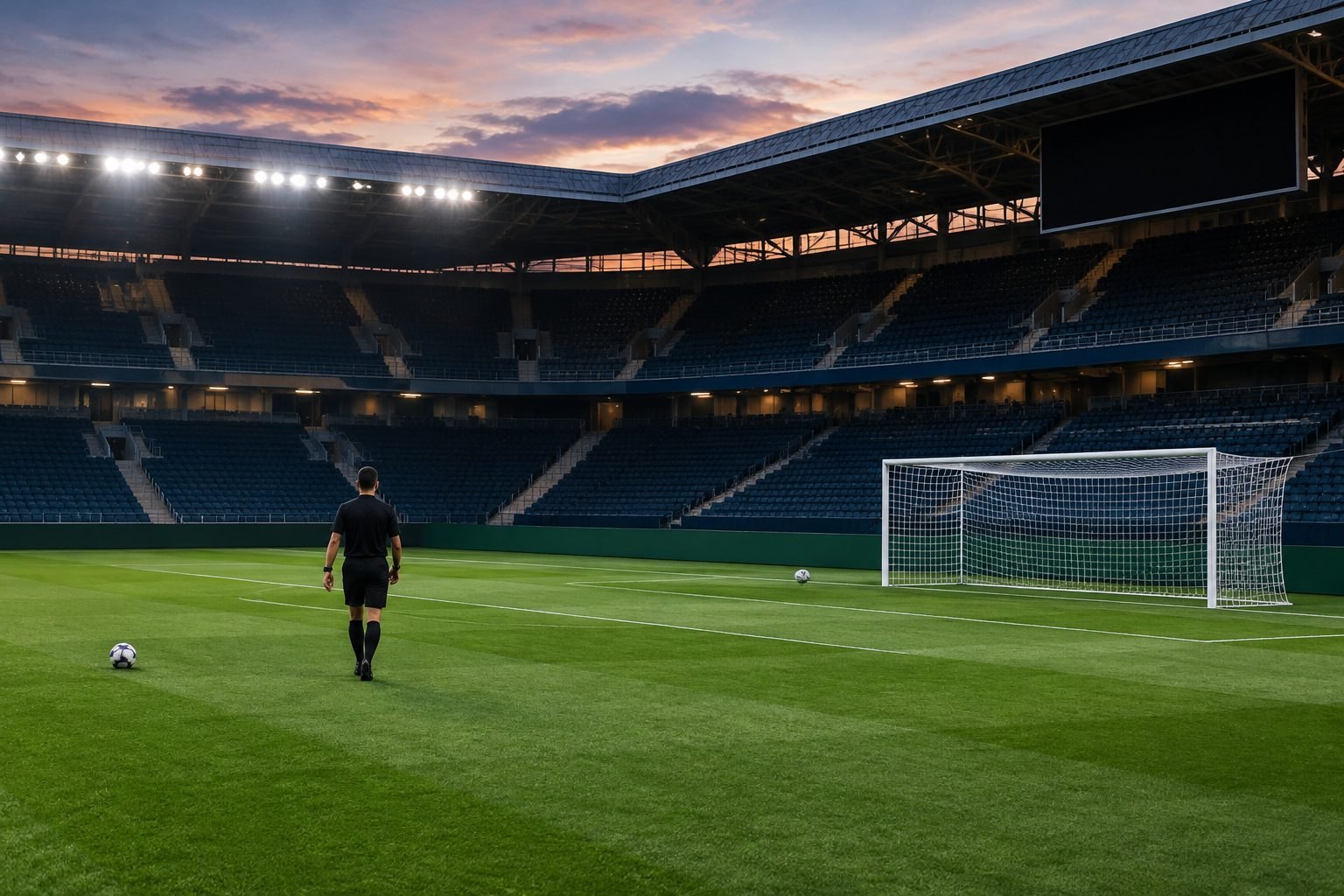
If a second ball, another object or an animal comes onto the field during the match, the referee must stop play and restart with a dropped ball only if it interferes with play. If it does not interfere, the referee must let play continue and have it removed at the earliest possible opportunity.
How the referee deals with outside interference
These are some of the outside-interference situations and how the referee responds.
| What happens | What the referee does |
|---|---|
| An extra ball, other object or animal enters the field and interferes with play | Stops play and restarts with a dropped ball |
| An extra ball, other object or animal enters the field and does not interfere | Allows play to continue and has it removed at the earliest possible opportunity |
| The ball is going into the goal and the interference does not prevent a defending player playing the ball | Goal awarded if the ball enters the goal, unless the interference was by the attacking team |
| A spectator blows a whistle which interferes with play | Stops play and restarts with a dropped ball |
| An object thrown by a spectator hits a match official, a player or a team official | May allow the match to continue, or stop, suspend or abandon it, depending on the severity |
| The floodlights are inadequate | Stops, suspends or abandons the match |
The key point is interference, not the mere presence of another ball, and the same rule covers an extra ball, another object and an animal.
When a goal is still awarded
A goal is not cancelled just because something else is on the field. If the ball is going into the goal, the interference does not prevent a defending player playing the ball, and the interference was not by the attacking team, the goal is awarded if the ball enters the goal, even if contact was made with the ball.
That is a separate exception inside the broader rule. In the standard case, interference by an extra ball, object or animal leads to play being stopped and restarted with a dropped ball. In this goal-bound situation, the goal is awarded if the ball enters the goal.
What counts as an outside agent
The referee allows no unauthorised persons to enter the field of play. An outside agent is any person who is not a match official or on the team list (players, substitutes and team officials); it may also be any animal, object, structure and so on.
Outside interference is wider than a second ball. Inadequate floodlights, an object thrown by a spectator that hits a match official, a player or a team official, and a spectator's whistle that interferes with play are outside interference too, and they do not all lead to the same decision.
A thrown bottle and a whistle from the crowd
If a spectator throws a bottle onto the field towards a player running with the ball and the player stops to avoid it, the object has interfered with play. The referee stops play and has the bottle removed; if the match is not suspended or abandoned for safety reasons, play restarts with a dropped ball.
If the referee signals advantage after a foul but the attacking players stop because someone in the crowd has blown a whistle, the advantage has not materialised because of outside interference. The referee awards the original direct free kick from the position of the foul.
FAQ
What happens if a dog runs onto the pitch?
A dog is an outside agent. If it interferes with play, the referee stops play and restarts with a dropped ball; if it does not interfere, play continues and the animal is removed at the earliest possible opportunity.
What if a fan blows a whistle during a match?
If the whistle interferes with play, the referee stops play and restarts with a dropped ball. If the referee has signalled advantage after a foul and the attacking players stop because of a whistle from the crowd, the referee awards the original direct free kick from the position of the foul.
What if a fan throws something onto the pitch?
The response depends on what happened and how serious it is. If an object thrown by a spectator hits a match official, a player or a team official, the referee may allow the match to continue, or stop, suspend or abandon it, depending on the severity of the incident. Any object that comes onto the field falls under the same rule as an extra ball: play is stopped and restarted with a dropped ball only if it interferes with play.
Does a goal count if a second ball is on the pitch?
A second ball on the field does not by itself cancel a goal, because play is stopped only if it interferes with play. If it does interfere, the goal is still awarded if the ball enters the goal, provided the ball was going into the goal, the interference did not prevent a defending player playing the ball and the interference was not by the attacking team, even if contact was made with the ball.