
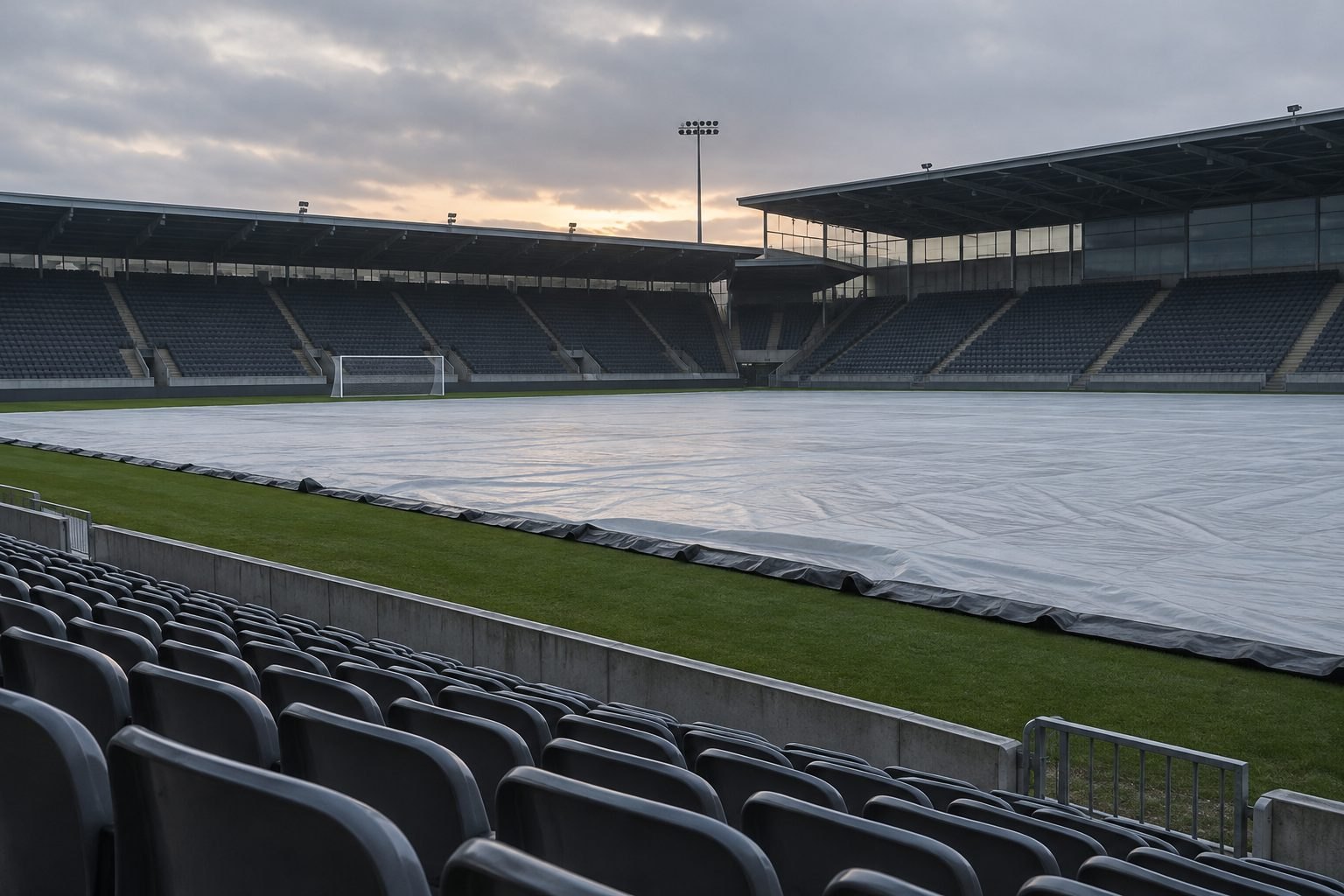
The Premier League season can be cut short only as a last resort. The rules put completion first, allow the board to alter how matches are staged, and give a fixed order for settling the table if the competition ends early.
Completion comes first
The starting point is simple: the competition should be completed if it is safe to do so and if finishing it does not materially affect the next one. Curtailment sits at the far end of the process, not at the beginning.
On any issue tied to the safety of staging matches, the board and the clubs must follow instructions from the government or from a competent public body acting under delegated powers. Clubs must also accept changes to normal match conditions and schedules so the competition can be finished, even if those changes affect sporting integrity.
What the board may require to finish the season
These are the measures the board may require in order to complete the competition.
| Measure | When it applies |
|---|---|
| Matches without spectators | Where the board considers it necessary to complete the competition |
| A neutral ground | Where a safety certificate cannot be obtained for the home club's stadium |
| No goal line technology or VAR | Clubs must still play the match |
| More frequent fixtures | After due regard to the health and safety of the players |
| Protocols set by the board | Covering training or the staging of matches |
Those powers are wide. The board can change the venue, remove spectators, drop certain match technology, tighten the schedule, and impose protocols around training or match operations.
The key point is that a season does not need fully normal conditions before play can continue. The rules are built to keep the competition moving where safety allows it.
What a board directive is and how it can end
If a force majeure event occurs, the board may issue a board directive. That power is limited: it can be used only for a specified period, only where the existing rules do not already deal with the issue, and never for governance matters or league finance.
A board directive can also be revoked through more than one route. The board may revoke it itself, a simple majority of clubs may revoke it by signed written notice, and the chair of the judicial panel may revoke it as well.
Who may propose curtailment and when it happens automatically
A curtailment resolution may be tabled only by the board, after a period of consultation with the clubs and relevant stakeholders, and the board must convene a general meeting for that purpose on no fewer than two days' notice.
Where a competition is still uncompleted 80 clear days after the date of its last scheduled match, it is automatically curtailed at that point, with no resolution and no further formalities required.
The power to start a formal curtailment process sits with the board alone. Clubs cannot force that resolution onto the agenda, whether acting alone or together.
The general meeting that the board must call within 14 clear days of that point decides the sporting consequences of the curtailment, not whether the competition is curtailed.
FAQ
Will the Premier League finish the season?
The rules are written to finish the season wherever that can be done safely and without materially affecting the next competition. Changes to match conditions and to scheduling come before any question of curtailment.
Finishing the competition is the priority, and curtailment must always be a last resort.
How would the table be decided if a season stopped?
Final placings are settled first by average points per game, then by goal difference, and then by average goals per game. The order matters because each step is used only if the earlier one does not separate the clubs.
After that, central funds are recalculated as reduced central funds and distributed using each club's forecast league position.
Are all Premier League games cancelled if there is a serious interruption?
No. The rules allow matches to go ahead under altered conditions instead, including behind closed doors, at a neutral venue, or without goal line technology or VAR.
They also allow more frequent fixtures, as long as due regard is given to player health and safety.
Does a board directive stay in place until the season ends?
No. A board directive must be for a specified period, so it is not an open-ended power.
It may also be revoked by the board, by written notice signed by a simple majority of the clubs, or by the chair of the judicial panel.