
Castle Labs says the era of neutral infrastructure is ending, and public blockchains can no longer rely on selling block space as a sustainable business model.
In an article translated and published by TechFlow, the firm said it has spent significant time studying revenue across both applications and public chains. Its conclusion is blunt: applications have remained strong revenue generators because they face customers directly and have to deliver value, while public chains have long supported their ecosystems through grants and protocol upgrades. That approach now needs to change, or treasuries risk being depleted.
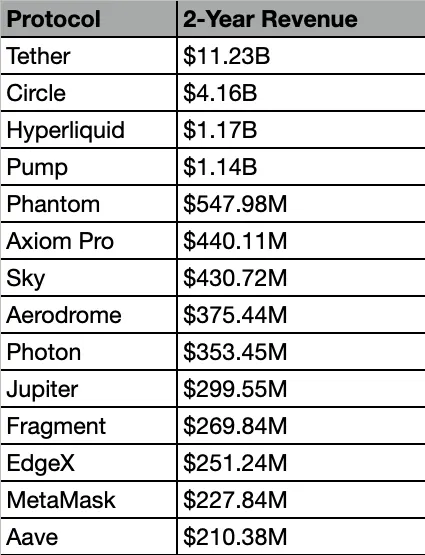
Over the past two years, 14 crypto companies produced more than $200 million in annual revenue, according to Castle Labs. Only one of them was a public chain, Hyperliquid.
To show how wide the gap has become, the firm compared the past 30 days of revenue at two networks. Arbitrum generated just $430,000, while Hyperliquid brought in about $58 million, more than 100 times as much. Castle Labs said this is pushing chains to accept that block space is no longer enough on its own and that other revenue lines will have to take its place.
Chains are shifting toward products, distribution and vertical SaaS
Castle Labs said the first movers are already trying to reposition themselves as product studios, application distributors, payment rails or vertical SaaS stacks. In its view, more chains will move away from the idea of neutral infrastructure and toward ownership of specific verticals.
Ostium attack highlights the risks of offchain price inputs
The report also pointed to last week’s attack on Ostium’s LP vault, which it said resulted in a loss of 23,752,746 USDC and wiped out more than 40% of TVL. According to the article, the attacker compromised the offchain infrastructure that feeds prices into the protocol.
Castle Labs said the attacker submitted invalid price reports that appeared legitimate, then used those reports to open and immediately close large positions, extracting artificial profit from the vault. In practical terms, the attacker found a way to push false price updates through an approved path, making losing trades appear profitable and draining the LP vault in the process.
The firm said the problem was especially painful for Ostium because the protocol’s core product is bringing offchain markets onchain. Stocks, commodities and foreign exchange do not have native onchain prices on Ostium, so the protocol has to import those prices and, crucially, trust them.
That trust sits at the center of the system. The contracts depend on it, and so do users. Castle Labs said bad data that passes checks can quickly turn into bad execution, distorted vault accounting and real LP losses. For a protocol built around translating offchain markets into onchain products, supervision of that journey is not a side issue but part of the product itself.
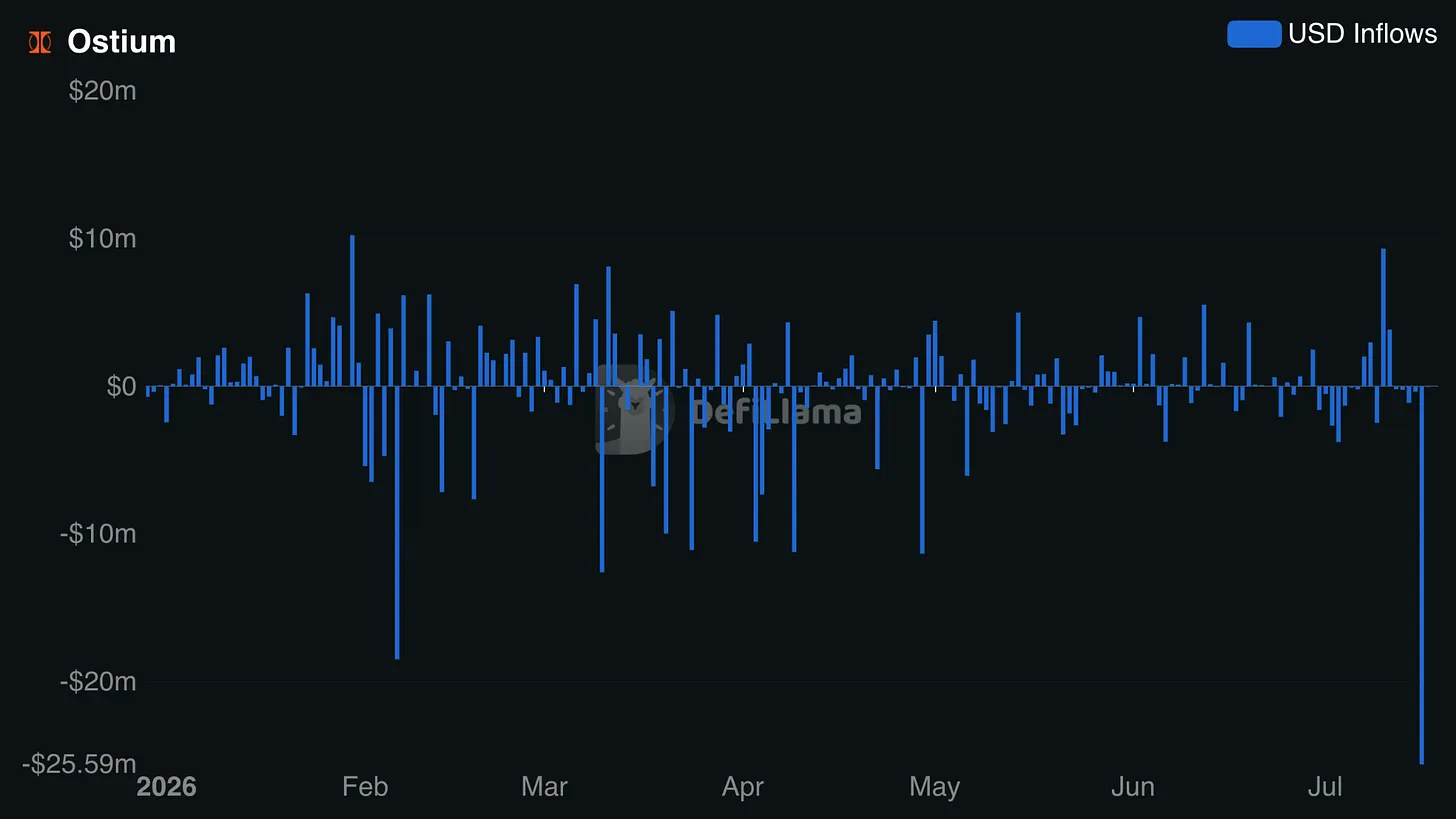
Ostium said trader collateral was isolated and unaffected, and trading contracts were frozen within 60 minutes. Castle Labs called that a relatively fast response, but raised a harder question: how much damage should a single bad price input be allowed to do before the protocol catches it?
The article added that Ostium is already accepting a number of trade-offs common in traditional finance. Many of the markets it offers are not truly 24/7 because the underlying assets are not either. If that is already accepted, Castle Labs argued, stricter controls around price updates, trade size, withdrawals and timing should be easier to justify, not harder.
It then laid out several measures it sees as necessary. If an authorized path can update prices, that path should be tightly controlled and monitored. If a new price update can support large trades or withdrawals, circuit breakers should exist around size and timing. If an attacker tests the system with smaller trades first, monitoring should detect the pattern before the vault is drained. For protocols that bring offchain markets onchain, Castle Labs said these controls should not be optional security features. They should be embedded into the product and marketed as such.
Onchain options need abstraction to grow
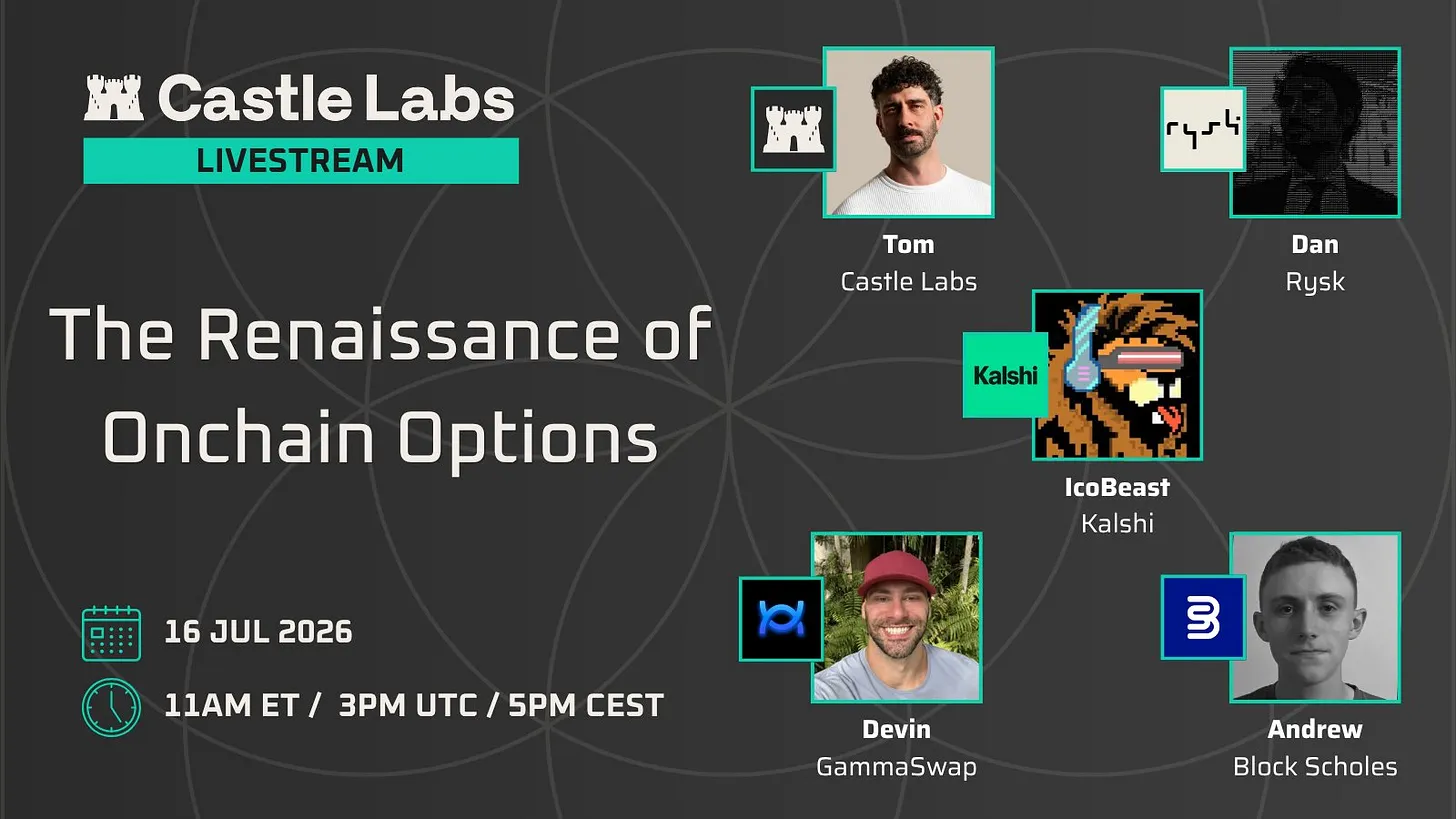
In another section, Castle Labs discussed a livestream held after the release of its report, The Revival of Onchain Options, with participants from Kalshi, Rysk, GammaSwap and Block Scholes. Across the discussion, builders returned to one theme: options are powerful, but marketing them as “options” is often the worst way to sell them.
Most users do not want to think in terms of Greeks, expiries, strike prices or volatility surfaces, the article said. They want yield, leverage, protection or a simple way to express a view. That is why the products with the strongest adoption potential are often not plain-vanilla options venues, but yield vaults, short-duration binary options, structured products and prediction markets.
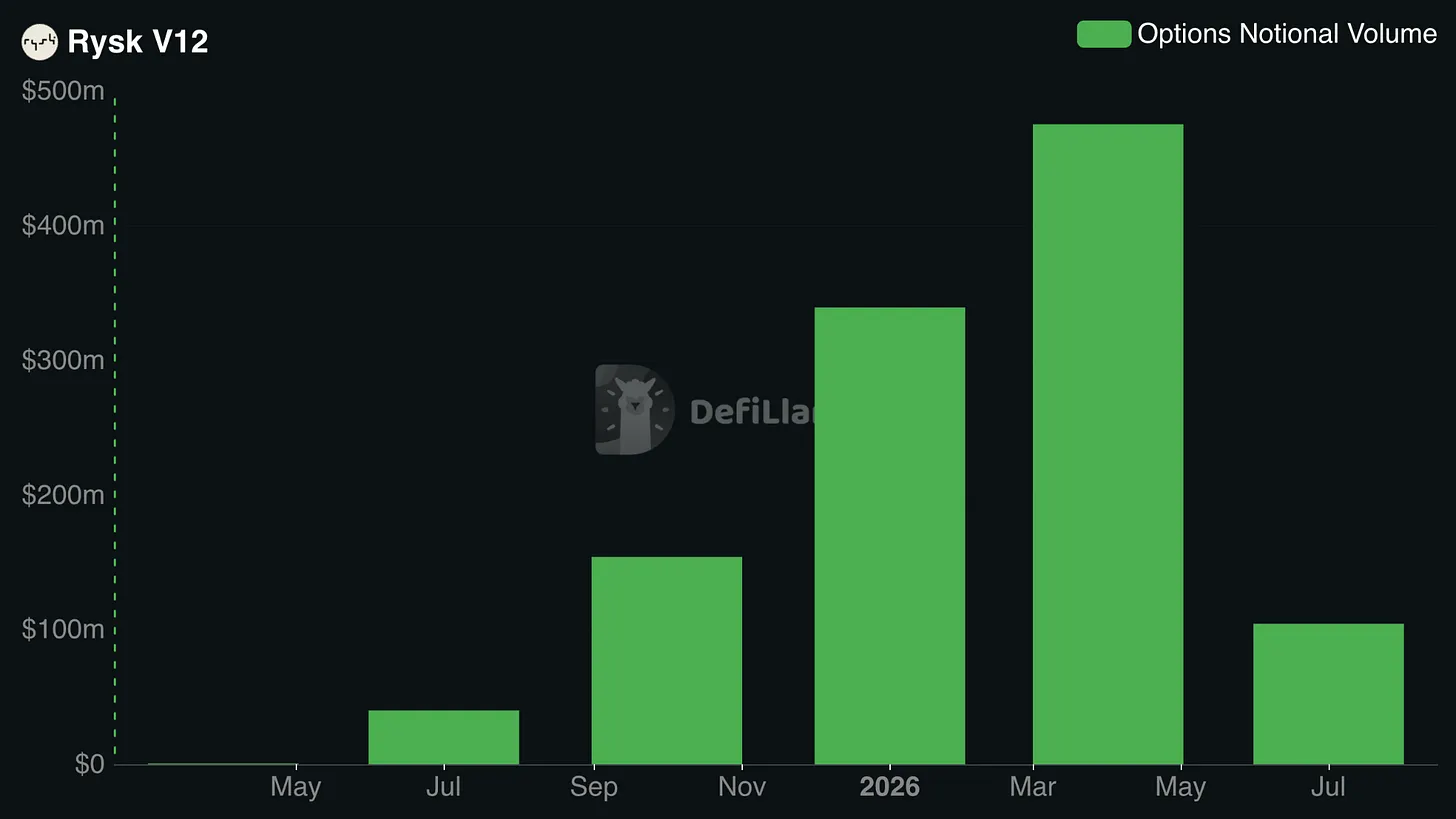
Rysk’s Dan summarized the idea in a line quoted by Castle Labs: “Options aren’t the product; the benefits of options are the product.” Rysk said its newer product logged more than $1 billion in open interest last year, driven mainly by experienced DeFi users seeking asset yield rather than users arriving as self-identified options traders. Castle Labs said quarterly notional volume charts show how quickly the product found demand.
Kalshi said it now handles 86% of global crypto binary options volume and roughly 70% of global prediction market volume. The article said 15-minute markets appear to be the best time window for crypto binary options because users can understand the payoff, the time frame and the risk more easily.
GammaSwap was presented as another example of pulling options complexity away from the end user. Castle Labs said its V1 let users borrow liquidity from an AMM, with the AMM behaving much like an options seller. But once Greeks, exotic payoffs and fragmented liquidity become part of every user journey, the product becomes hard to use and capital inefficient. V2, which is under development, is shifting toward predictive-style markets, order books and known payoffs, with a focus on posing a clear question instead of launching another complex options product.
Block Scholes brought an infrastructure perspective. Castle Labs said the firm supports about 90% of onchain options volume through venues such as Derive. In its view, traditional options exchanges may still retain a niche audience through their native user experience, but structured products are the more likely route for broader adoption, allowing users to access these payoff structures without necessarily knowing they are interacting with options.
The takeaway from this section was direct: if onchain options are to keep growing, they need to stop being sold as options. Castle Labs said the next wave is more likely to come from wrapping payoffs into products that are easier to understand.
What Castle Labs is watching
The article closed with a list of projects and themes on Castle Labs’ radar.
- Flex, Yearn’s fixed-rate lending product: Castle Labs described Flex as a fixed-rate money market where borrowers choose their own fixed rate, and said the new protocol is worth watching on DefiLlama.
- How Base could bounce back: The firm said two announcements from Jesse and Brian triggered broad backlash on X. According to the article, Jesse acknowledged that his strategy around social and creator tokens had failed and is now handing Base App to Cobie, described in the piece as a Crypto Twitter trader and the founder of Echo, which Coinbase acquired for $400 million. At the same time, Castle Labs said Brian took no responsibility for the pump-and-dump tied last week to a memecoin linked to his profile picture. The article added that posts from Rune captured the mood well, and said Cobie taking over Base App is effectively the last chance to regain credibility with crypto-native users.
- Plether, an onchain DXY perpetual DEX: Castle Labs said Plether is building a perpetuals exchange around the U.S. Dollar Index, or DXY, allowing users to go long or short synthetic dollar exposure onchain. Positions have a maximum payoff defined at entry, LPs are split into senior and junior tranches, and the protocol blocks new positions if it cannot enforce solvency.
- Starknet’s security focus: Castle Labs said it published a report the day before on two obstacles facing the next phase of institutional onchain growth: privacy and durability against quantum threats. The article said Starknet offers a useful lens here, because its recent work touches both areas. Privacy improvements affect how institutions can safely disclose information onchain, while quantum durability asks whether today’s infrastructure can survive the next security cycle.
The article was credited to Castle Labs and published in Chinese translation by TechFlow.