
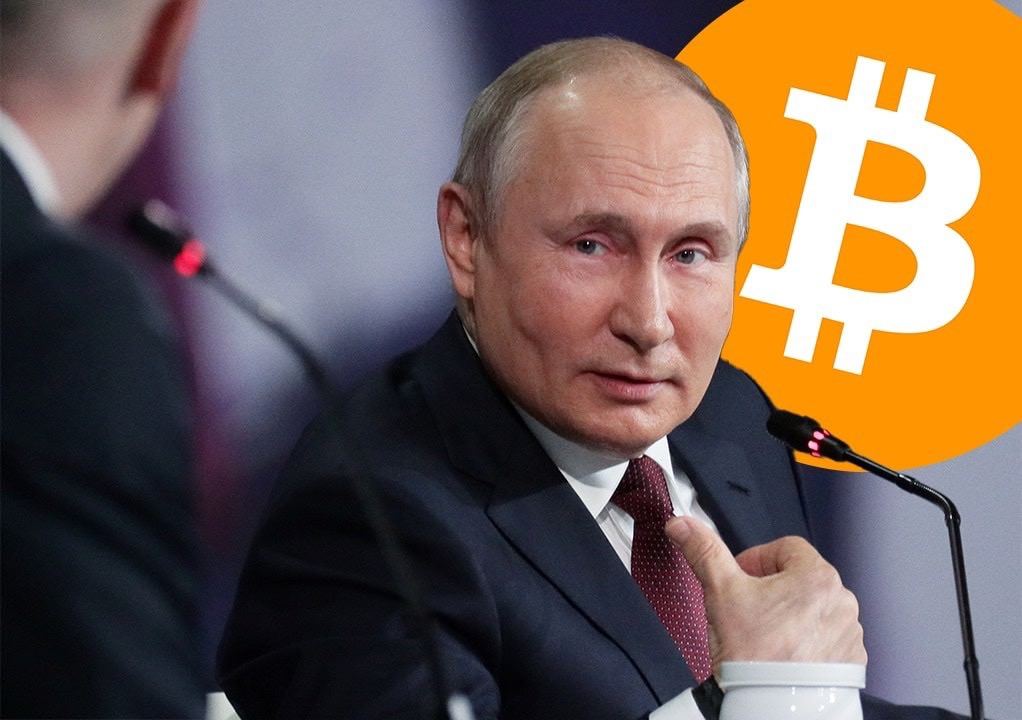
Russia has entered a new phase of cryptocurrency regulation after President Vladimir Putin signed a law that formally sets rules for exchanges, custodians, brokers, clearing institutions, and investors, while also allowing retail investors to buy crypto within a defined limit.
The law keeps in place Russia’s ban on using cryptocurrency as a domestic means of payment or as legal tender. It does, however, allow crypto to be used for cross-border trade settlements, preserving a channel that Russia has used in response to Western sanctions.
Retail investors get legal access under an annual cap
According to TASS, the new law formally folds Russia’s crypto market into a regulated framework. Under the rules, retail investors can buy highly liquid cryptocurrencies through qualified intermediaries, with an annual investment cap of 300,000 rubles per person, or about $3,700. Russian authorities have not yet disclosed which cryptocurrencies will qualify as “highly liquid.”
Qualified professional investors will not be subject to investment limits and may trade any crypto asset.
Both retail and professional investors must first pass an official suitability test. Retail investors may also apply to be reclassified as professional investors based on their prior cryptocurrency trading records, which would allow them to access a higher investment limit.
Exchanges must register and meet capital thresholds
The law also creates a regulatory regime for trading platforms. Any cryptocurrency exchange seeking to operate legally in Russia will need to join a government registry and hold at least 15 million rubles in own capital, or about $185,000.
Exchanges will also be required to join a financial market self-regulatory organization and remain subject to both market oversight and industry rules.
Domestic crypto payments remain banned
While Russia is building out a formal structure for crypto trading, the government is keeping tight restrictions on payments. Under the law, cryptocurrency cannot be used as a payment tool for goods or services inside Russia and cannot obtain legal tender status.
Cross-border use remains open. The law allows Russian residents and foreign companies to use cryptocurrency for international trade settlements.
Russia had already started allowing companies to use crypto in international trade from 2024 as part of efforts to reduce the impact of Western financial sanctions.
Implementation timeline and transition period
The law is scheduled to take effect on Sept. 1, 2026. Some provisions covering the issuance and circulation of crypto assets will be delayed until Sept. 1, 2027.
Existing exchanges will be given a grace period, with operators required to complete compliance adjustments and registration procedures by March 1, 2027.
Broader crypto rules are taking shape as mining restrictions tighten
The law marks a notable shift in Russia’s digital asset policy. The State Duma, the lower house of parliament, passed the bill last month. It had completed its first reading in April, and Putin’s signature now brings crypto trading into the state regulatory structure.
Russia’s central bank has also been working on related rules. Last week, it published a draft framework for organized trading in “digital assets and digital rights,” covering oversight of cryptocurrency exchanges and digital asset custodians, a sign that authorities are building out market infrastructure step by step.
At the same time, Russia has been tightening oversight of crypto mining. Last month, the government issued an administrative order banning cryptocurrency mining and mining pool participation in Moscow, the Moscow region, and parts of Kursk from Aug. 15 through the end of 2032.