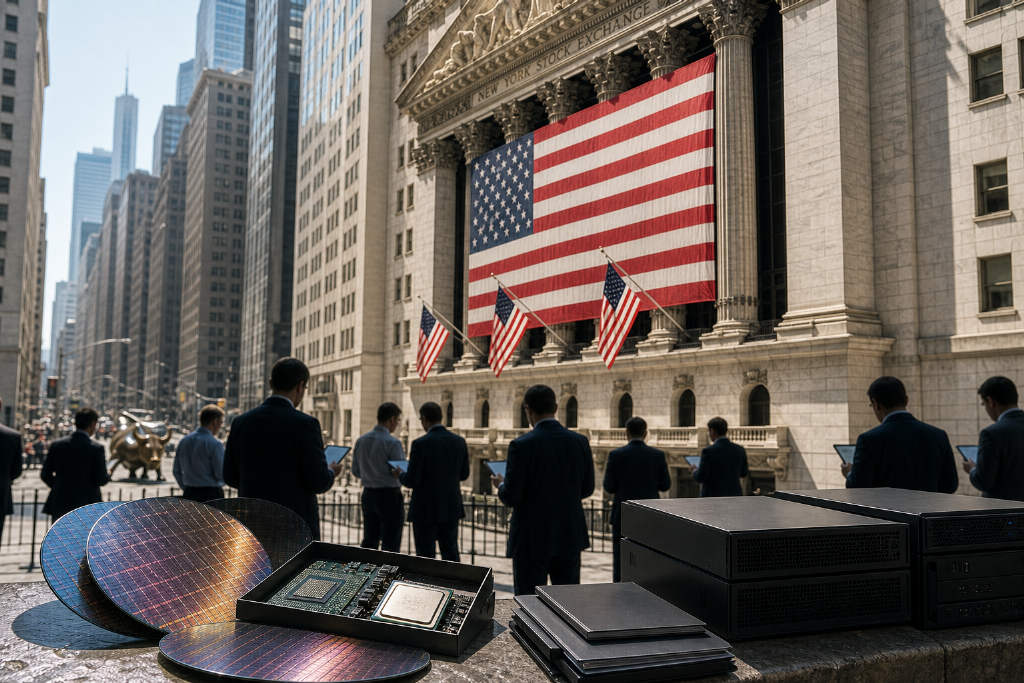
The clearest message from second-quarter 2026 13F filings is not that AI has lost momentum. It is that Wall Street has become more selective about where it wants exposure. The theme remains intact, but the period of buying AI almost indiscriminately is fading.
A 13F filing is a backward-looking snapshot by design. Under U.S. Securities and Exchange Commission rules, institutional managers can disclose quarter-end holdings as late as 45 days after the quarter closes. This latest wave of filings reflects positions as of June 30, with the main disclosure deadline falling on Aug. 14. The form also mainly covers qualifying long positions in U.S.-listed securities, which means short equity exposure and some other positions are not fully visible. That makes 13F filings a poor tool for real-time copy trading.
They still matter for a different reason: they show what large pools of capital were buying and selling over the prior three months. Read that way, the quarter’s filings point to a market that still believes in AI, but no longer treats every AI-related asset the same.
Institutional positioning still favors AI, but the crowding is loosening
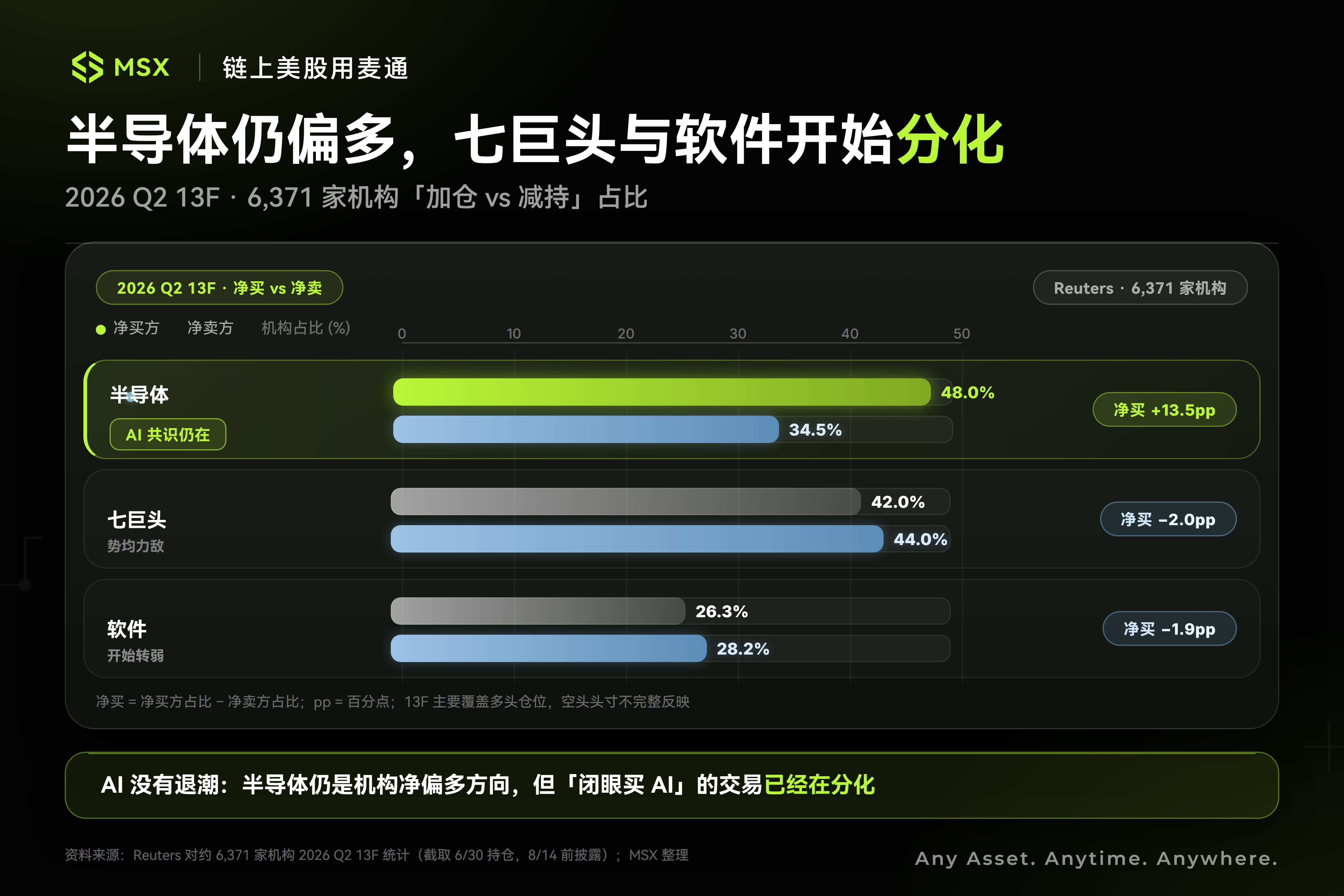
Looking only at a handful of famous managers can distort the picture. The broader institutional sample gives a more useful read. Reuters reviewed second-quarter 13F filings from 6,371 pension funds, hedge funds, wealth managers and other institutions and found that nearly 44% reduced holdings in the Magnificent Seven, while about 42% opened new positions or added to existing ones. The split was close.
Semiconductors told a different story. Roughly 48% of institutions were net buyers, while only 34.5% were net sellers. Software went the other way. Across a group of major software companies, net sellers accounted for 28.2%, slightly above the 26.3% share of net buyers.
Those numbers suggest the market has not turned against AI at a system level. If that were happening, the first clear sign would likely be broad-based selling across semiconductors, compute and data-center infrastructure. That is not what the filings show. Chips remain a favored area, and AI infrastructure has not seen wholesale liquidation.
What has changed is the line of questioning. Large investors are now asking whether the next two to three years of growth is already priced in, which companies can convert ongoing AI capital expenditure into profit, and which assets carry the most crowded institutional positioning if the market pulls back.
That may be the most important shift in the quarter’s filings. Wall Street is now openly sorting the AI complex by payoff rather than by theme alone.
Four major investors, four different ways to think about payoff
Berkshire Hathaway: putting cash to work in Alphabet
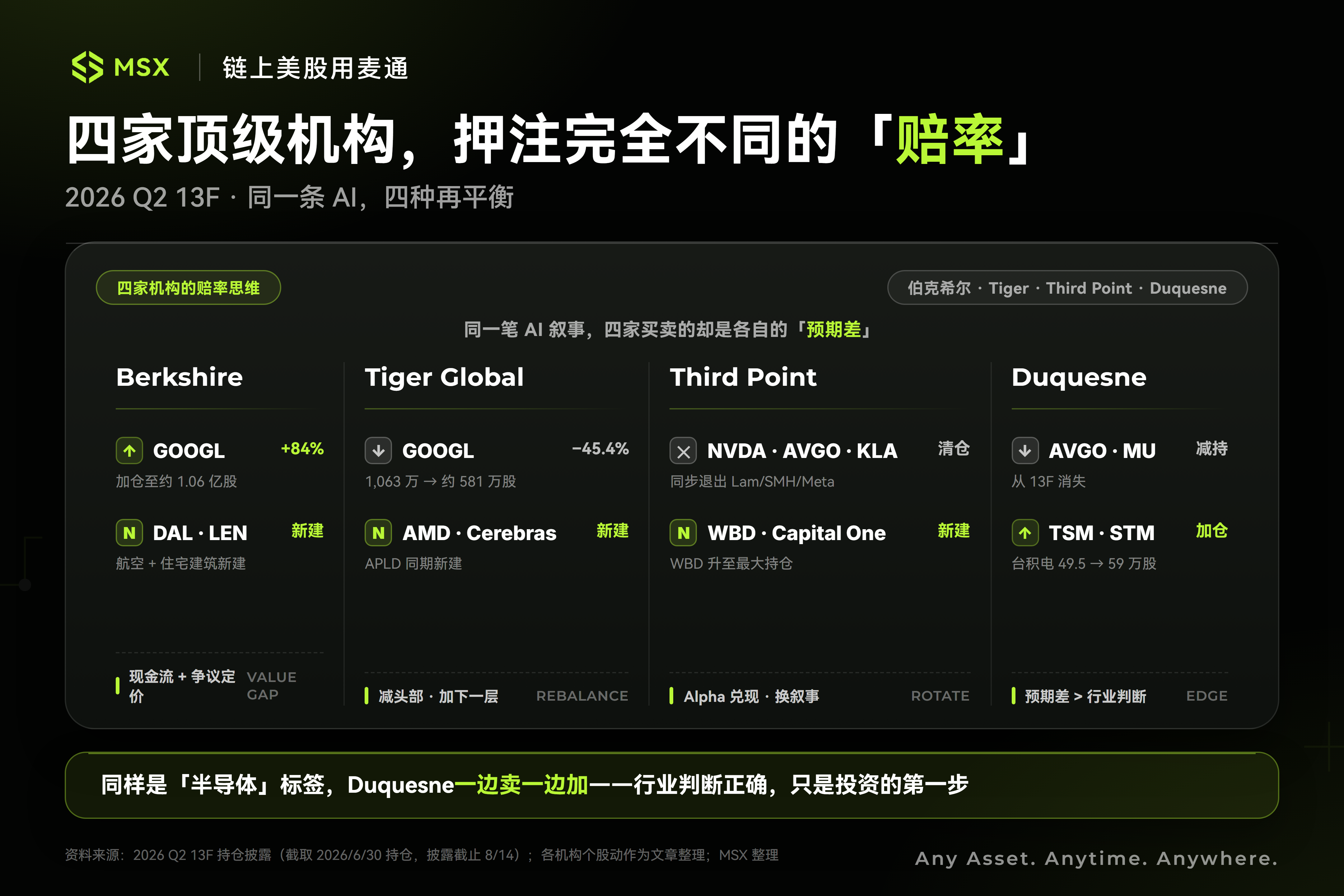
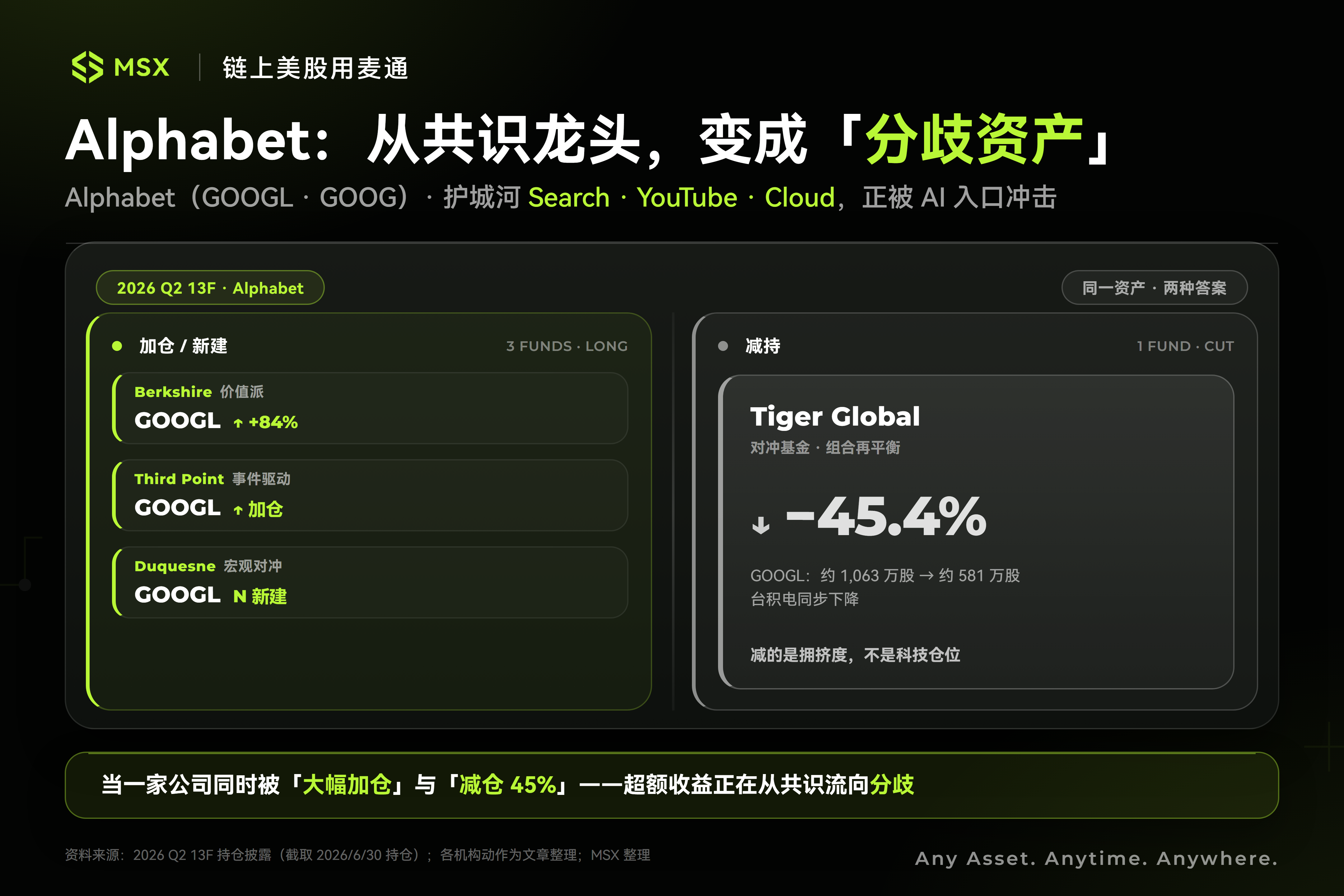
Berkshire Hathaway’s move in Alphabet stands out in this round of filings. At the end of the first quarter, Berkshire disclosed a combined stake of about 57.84 million Alphabet Class A and Class C shares. By the end of the second quarter, that figure had risen to around 106 million shares, an increase of more than 80%.
Based on quarter-end market value, Alphabet moved into the top tier of Berkshire’s U.S. public equity holdings. Berkshire also added exposure to aviation and homebuilding through positions including Delta Air Lines and Lennar.
Alphabet is not the cleanest pure AI trade among the Magnificent Seven. One of the central concerns hanging over the company has been whether generative AI could reshape the search entry point and weaken the long-standing moat around Google Search. At the same time, Alphabet still has Search, YouTube, Google Cloud, its advertising business and a large cash-flow base.
Berkshire’s enlarged position looks less like a chase for the hottest AI winner and more like a bet that a company with strong cash generation and an unbroken core franchise may still have room for re-rating after spending years under pressure from AI-related questions.
Tiger Global: trimming mega-cap tech while staying in tech
Tiger Global offers a very different template. In the second quarter, it cut Alphabet from about 10.63 million shares to roughly 5.81 million, a 45.4% reduction. It nearly halved its Broadcom stake, reduced Taiwan Semiconductor Manufacturing Co. as well, and also trimmed Microsoft, Meta and NVIDIA to varying degrees.
On that evidence alone, it would be easy to argue Tiger was backing away from AI. The additions tell a different story. The fund initiated positions in AMD, Applied Digital and Cerebras during the quarter. Its portfolio also included AI compute and data-center related names such as Cipher Digital and Core Scientific. Intel rose from about 1.64 million shares to roughly 4.25 million.
This looks more like a rebalance within AI than an exit from it. The fund appears to have reduced the most crowded leaders and shifted part of that capital into the next layer of opportunities where expectations were less uniform.
NVIDIA is the clearest example. A fund can remain structurally bullish on AI compute without raising its NVIDIA weight forever. Once a position becomes large enough, or once the stock rises faster than earnings expectations are being revised upward, trimming can reflect portfolio management rather than a reversal in the industry thesis.
That distinction is likely to matter more in U.S. equities from here. Earnings can keep growing without the stock repeating the same kind of move it delivered over the previous two years. Price is shaped not only by how strong the result is, but by how much of that strength the market has already priced in.
Third Point: taking profits on the first wave and looking for the next one
Third Point, led by Daniel Loeb, made one of the sharper rotations in the filings. In the second quarter, the fund exited NVIDIA, Broadcom, KLA, Lam Research and the VanEck Semiconductor ETF, or SMH, all of them core beneficiaries of the AI capital-expenditure cycle. It also exited Meta.
Viewed in isolation, that set of trades looks like a meaningful reduction in AI exposure. But Third Point did not leave technology. It increased Alphabet and TSMC, established new positions in Keysight and Flex, and also moved capital into Warner Bros. Discovery, Capital One and Norfolk Southern across media, finance and industrials. Warner Bros. Discovery became its largest disclosed U.S. public equity holding by the end of the quarter.
The pattern suggests Third Point was monetizing the most obvious winners from the first phase of the AI trade while looking for areas the market had not yet fully priced for the next phase.
The first-wave winners were straightforward. Bigger models needed GPUs. Advanced chip expansion needed semiconductor equipment. Larger AI clusters needed networking, ASICs and more complex infrastructure. None of that logic has disappeared. The issue is different now. Once every investor already knows those arguments, future returns depend much more on whether actual growth can keep outrunning high expectations.
That, in turn, suggests some top investors now believe the easiest alpha in the first phase of AI has become increasingly expensive.
Duquesne: trading expectation gaps
If one fund best captures the thinking behind this 13F season, Stanley Druckenmiller’s Duquesne may be it. At the end of the first quarter, the fund still held Broadcom and Micron. By the second quarter, both had disappeared from the filing.
At the same time, Duquesne opened positions in Alphabet, AMD and Palo Alto Networks, while adding to TSMC and STMicroelectronics. TSMC rose from about 495,000 shares to roughly 590,000. STMicroelectronics increased from about 2.61 million shares to around 3.10 million.
At first glance, selling some semiconductor names while buying others can look contradictory. The key word may be expectations. If a company has rallied so quickly that the market has already capitalized the next two to three years of growth, realizing gains can make sense even if the long-term industry story remains sound. On the other side, if another company is entering a better earnings cycle while consensus expectations are not yet fully built, it can offer a better risk-reward profile even without being the market’s favorite AI leader.
Getting the industry call right is only the first step. Entry valuation, position sizing and the amount already embedded in expectations are what shape returns.
From buying AI to pricing payoff
Put the four managers together and the more useful signal starts to emerge.
First, Alphabet is shifting from a consensus leader to a divided asset. Berkshire made a large addition. Third Point and Duquesne also added or re-established exposure. Tiger Global, by contrast, cut its stake by nearly half. The same company produced very different answers from top-tier capital.
The reason for that split is clear in the debate itself. The market has not settled whether AI ultimately weakens the moat around Google Search or helps Alphabet unlock more value from its traffic, data, cloud business and compute base. Buyers are focused on cash flow, valuation and potential AI upside. Sellers are focused on changes to search behavior, expanding capital expenditure and long-term structural pressure on the legacy business model.
That kind of asset often deserves more attention than a company everyone already agrees is strong. Excess return tends to show up where disagreement remains.
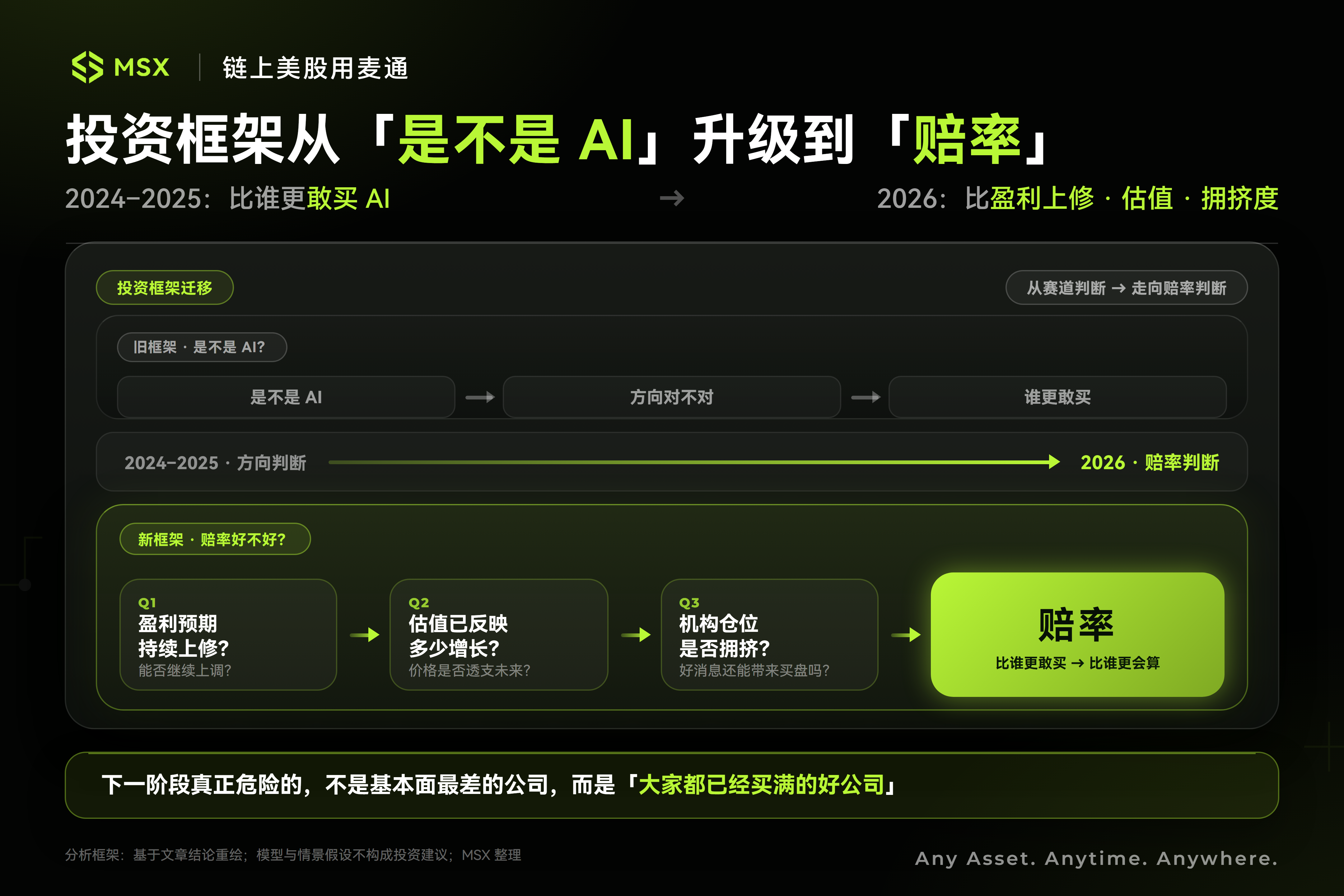
Second, the semiconductor consensus is still alive, but the era of buying chips as one broad basket is ending. At the aggregate level, semiconductors remain a clear overweight area among institutions, with net buyers comfortably above net sellers. But within the group, the splits are wide. Some managers reduced Broadcom. TSMC drew both buying and selling. AMD saw fresh positions. NVIDIA, once an almost unquestioned core AI holding, is becoming a position that investors need to re-evaluate in terms of cost basis and crowding.
That means semiconductors can no longer be traded as one clean beta. GPUs, ASICs, foundries, memory, semiconductor equipment, networking and data-center infrastructure all sit inside the AI hardware stack, but they face different earnings cycles, supply-demand setups and valuation levels.
In other words, AI hardware is moving from a sector-beta trade to a stock-selection phase.
A third shift is easier to miss: non-AI assets are returning to portfolios. That does not amount to a rejection of AI. It looks more like an effort to lower correlation. Homebuilding, airlines, finance, healthcare, media, railroads and industrials are showing up again in meaningful portfolio changes at several major firms.
- Berkshire added aviation and homebuilding exposure.
- Third Point directed significant capital toward media, finance and rail.
- Duquesne’s portfolio changes extended beyond AI-related names.
In a sense, AI’s dominance as the market’s most visible and easiest-to-understand theme is exactly why large investors need return streams with lower AI correlation. Over the past two years, getting the AI direction broadly right was enough to drive substantial gains. Going forward, portfolio construction may matter much more.
The signal from Q2 2026 13F filings
For the past two years, one of the simplest trades in U.S. equities was to identify AI and buy it. NVIDIA, Broadcom, Meta, Microsoft, TSMC and the broader semiconductor chain all benefited at the same time from industry growth, upward earnings revisions and valuation expansion.
The latest 13F cycle points to a more defined shift. AI has not ended, but the phase in which the whole group could rise together as long as the theme stayed right is fading.
That is the main takeaway from second-quarter 2026 filings: AI is still the dominant theme, but the crowding is loosening. The next stage may depend less on who is willing to chase hardest and more on who calculates payoff better.
The original article also carried a disclaimer stating that markets involve risk, investment requires caution, and the piece does not constitute investment advice.