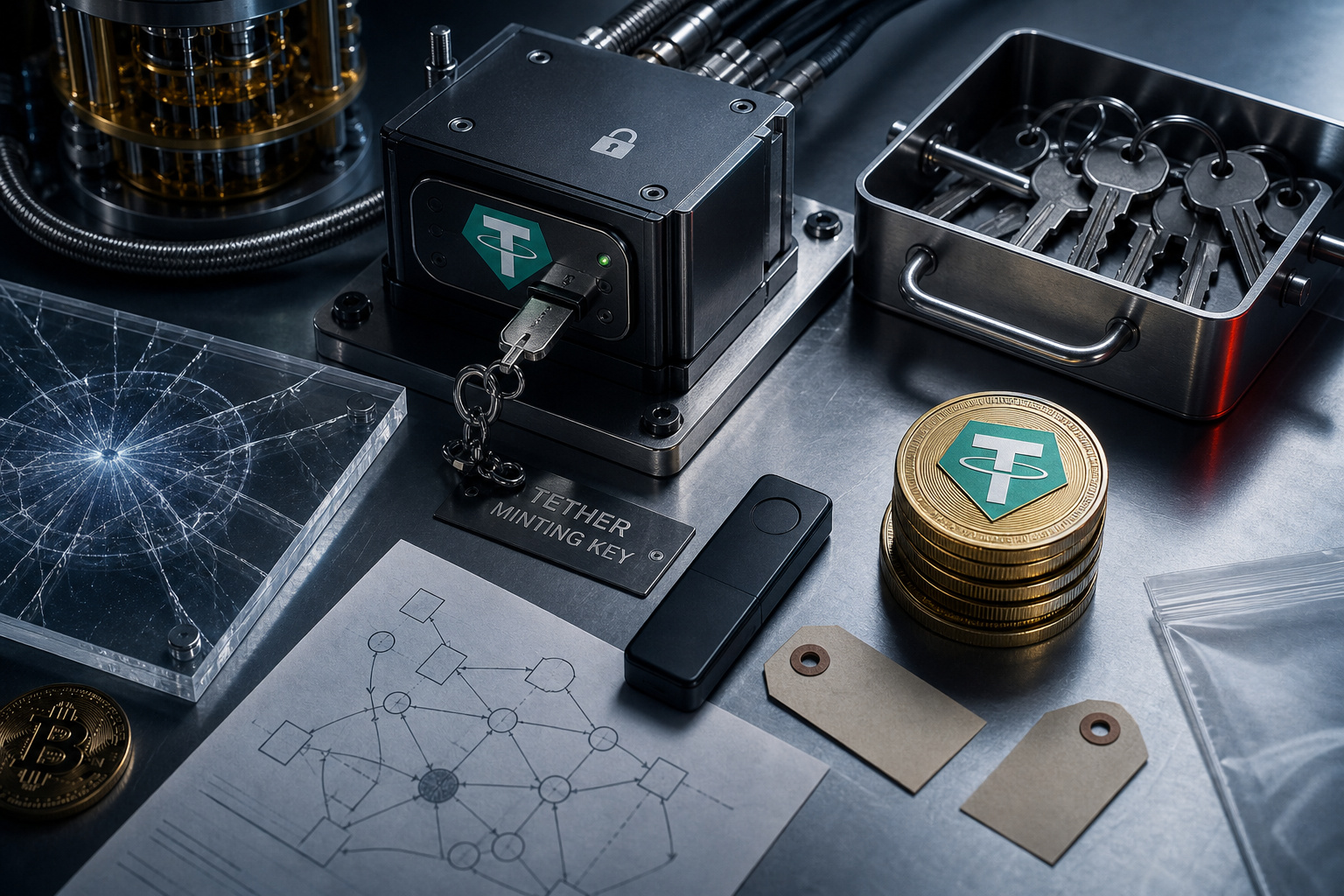
Christopher Smith, founder of blockchain startup Quantus, said the first quantum attack may appear as a string of unexplainable crypto wallet thefts, not as a heist of the estimated $63 billion in dormant bitcoin attributed to Satoshi Nakamoto. A sufficiently powerful quantum computer could derive private keys from public keys exposed on-chain, enabling transfers without breaching wallets, devices, or exchange internals. In a breach of a highly secure institution, the only forensic evidence might be the absence of intrusion traces. Smith sees military systems and state secrets as early targets, while in crypto, Tether's minting keys could be more valuable—allowing an attacker to create tokens at will and dump them before the issuer responds. Google has accelerated its post-quantum migration timetable to 2029, and Smith puts the probability of quantum computers breaking modern cryptography around 2028 at 50-50. Some blockchains already, Smith noted, have started moving to post-quantum signatures.
Blockchain startup Quantus founder Christopher Smith expects the first quantum attack to emerge as a series of unexplained crypto wallet thefts, rather than a direct strike on the roughly $63 billion in dormant bitcoin tied to Satoshi Nakamoto.
Smith said a powerful enough quantum computer could derive private keys from public keys visible on the chain, letting attackers drain funds without breaking into a wallet, device, or exchange infrastructure. In incidents at highly secure institutions, the sole forensic clue may be that no intrusion ever happened.
Early quantum targets, he argued, could be military systems and state secrets. In the blockchain space, Tether's minting keys might be even more valuable. Whoever controls the management wallet can mint tokens out of thin air and dump them before the issuer reacts.
Google has pulled its post-quantum migration schedule forward to 2029. Smith puts the odds of quantum machines cracking modern cryptography around 2028 at "50-50." Some blockchain networks have already begun shifting to post-quantum signatures. (Cointelegraph)
This article was originally published by Bit.Fan. For more cryptocurrency news and market insights, visit www.bit.fan. Disclaimer:
The market information, project data, and third-party content displayed on this platform are for industry information sharing only and do not constitute any form of investment advice or return commitment.
Cryptocurrency trading carries high risks. Users should fully assess their risk tolerance and make independent decisions. All profits, losses, and legal responsibilities are borne by the users themselves.