
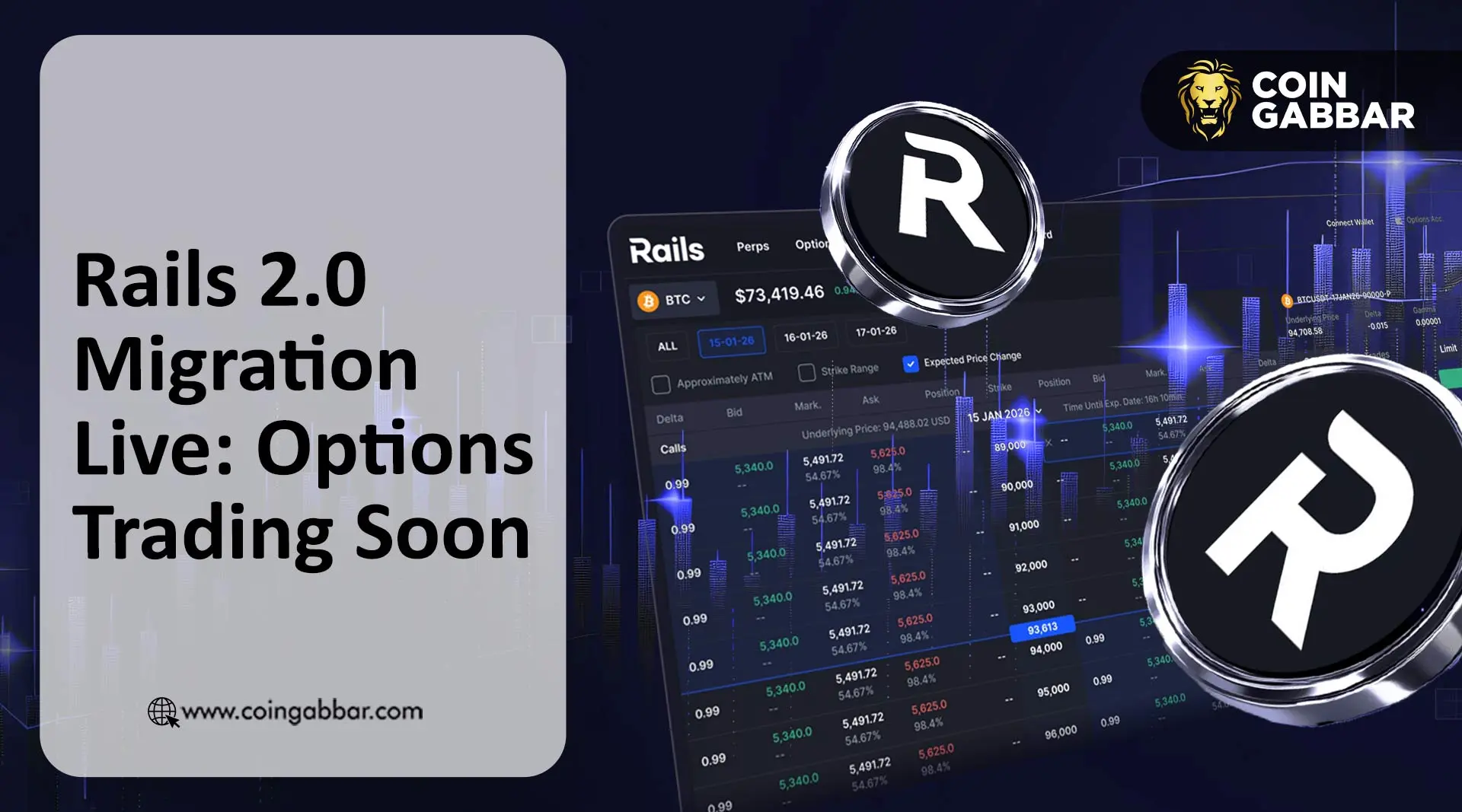
Rails has kicked off its 2.0 migration, pairing the technical rollout with product and token structure changes. In updates shared through X and email, the on-chain derivatives platform said the upgrade centers on vault infrastructure and liquidity, with the stated aim of improving scalability for larger institutional clients. At the same time, XRP, PUMP, and HYPE are scheduled to be delisted on April 28, and refunds for affected users are expected by May 29.
Migration timeline begins with delisting and refund deadlines
According to the project, the Rails Airdrop 2.0 migration is now live. The company framed the move as more than a backend refresh. It is also setting the platform up for new trading products. For current users, the immediate operational change is the removal of three tokens from support, with a fixed delisting date already published.
Rails also attached a refund schedule to that decision. The official communication said users affected by the delisting should receive refunds by May 29. The source material does not include details on claim mechanics, settlement rails, or whether user action is required, so the confirmed information at this stage is limited to the dates announced by the platform.
BTC options preview points to a broader derivatives lineup
The most notable product update in the 2.0 package is options trading. Rails said it plans to launch options in Q2 2026 and shared a preview of a BTC options interface. The contracts shown are cash-settled, extending the platform beyond its previous offering, which had focused on perpetual futures.
Rails said the design keeps access under a single integration, allowing fintech firms and institutional users to reach a wider derivatives suite without adding separate connections for each product. The company also described its model as hybrid crypto derivatives infrastructure, combining centralized order matching with on-chain custody to support compliance requirements and scalability.
In the same set of disclosures, Rails said it has already processed billions of dollars in trading volume. That figure was presented as part of the setup for the options push. A firm launch date, though, has not been released yet.
Tokenomics 2.0 cuts supply from 100 million to 65 million
Rails also introduced a revised tokenomics model for the 2.0 era. Under the new structure, total token supply falls from 100 million to 65 million. The updated allocation gives shareholders, including investors and the team, 23,075,986 tokens or 35.50%. Liquidity provisioning receives 17,245,000 or 26.53%. Institutional partnerships account for 12,000,000 or 18.46%. Early user rewards remain at 6,500,000 or 10.00%, while the foundation is assigned 6,179,014 or 9.51%.
The company added that founders reduced their allocation by about 7 million tokens. The liquidity bucket consists of 2 million newly issued tokens and 15.245 million tokens from the June 2025 token sale. Those tokens are meant to support market makers and more stable trading conditions. Partner allocations may be used for user rewards, fee discounts, and settlement discounts across integrated platforms.
Early user vesting stays in place, but the FDV trigger is lower
The early user pool still represents 10% of supply. Eligible participants include Play1.0 users and members of the rewards program in Phases 1 and 2. At launch, 25% unlocks, with the remainder vesting over 12 months.
Rails also revised the condition for a full unlock of the remaining tokens. If fully diluted valuation, or FDV, holds at $500 million for seven days, all remaining tokens unlock. The previous threshold was $1 billion. That change puts the release condition at a lower valuation level than before. Beyond these token changes, the next milestones still to be watched are the completion of the 2.0 migration, token launch-related announcements, and the timetable for the planned options release in Q2 2026.