
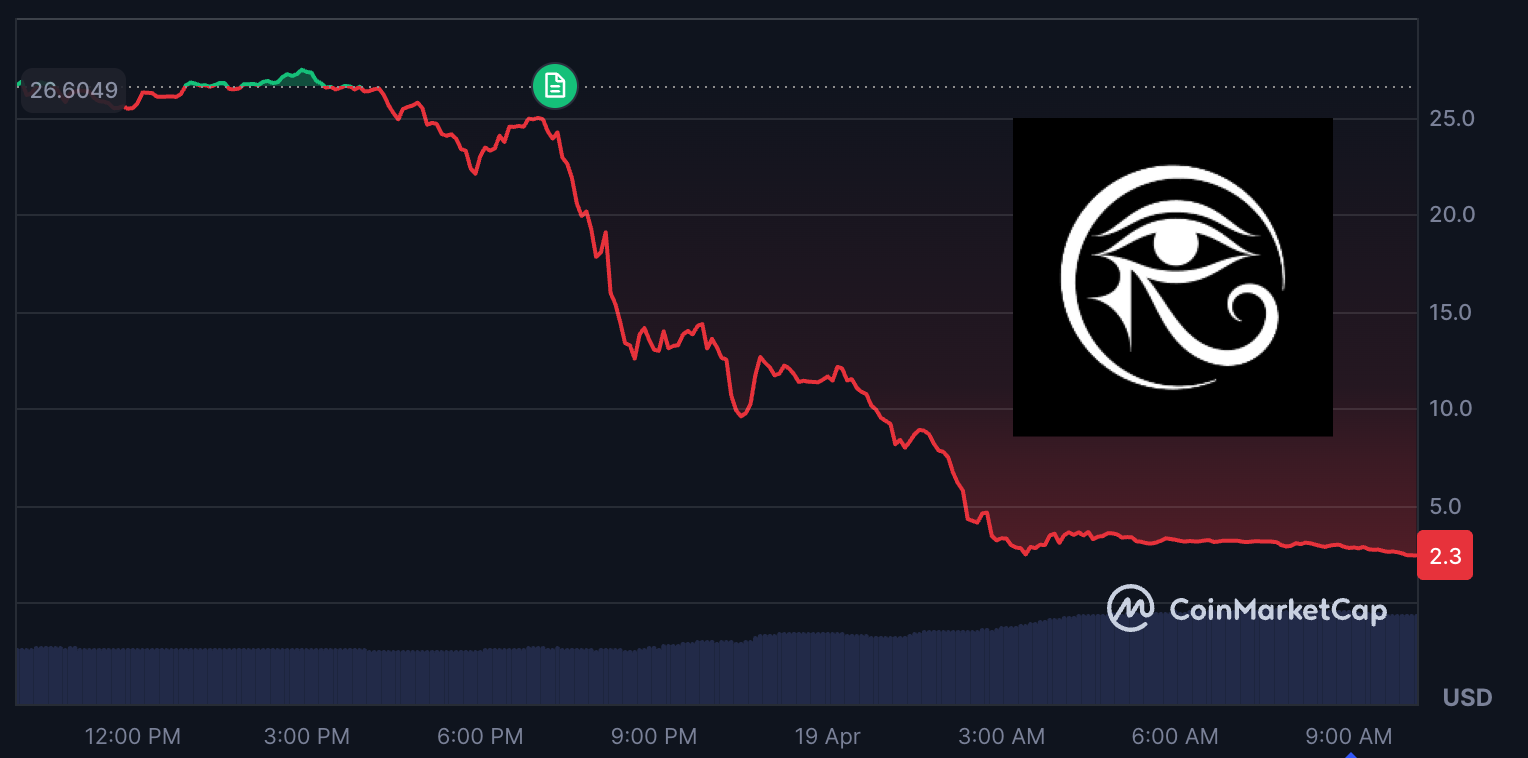
RAVE token collapsed more than 90% in 24 hours, falling from $25 to $2.47. The token, once hailed as a Web3 music dark horse, had surged over 10,000% in 11 days before the crash.
On-chain investigator ZachXBT triggered the collapse by posting on X that RAVE's abnormal price movements were linked to Binance, Bitget, and Gate. He alleged insiders control over 90% of the circulating supply, conducting coordinated pump-and-dump operations. ZachXBT also offered a bounty for whistleblowers.
Binance co-CEO Richard Teng responds directly
Hours later, Binance co-CEO Richard Teng replied on X, thanking ZachXBT for the tip and stating the platform "always fulfills its duty to investigate all market misconduct." Bitget also issued a statement confirming it would join the probe. The swift reactions from two major exchanges deepened market skepticism about RAVE's team.
The pattern mirrors a classic pump-and-dump: initial hype attracts retail buyers, then insiders dump holdings at the peak. The 90% supply concentration fits the core prerequisite for such manipulation. RAVE's rise and fall is now a textbook case.
RaveDAO denies manipulation: supply unlocks as planned
RaveDAO released a statement that night, denying any team involvement in price manipulation. It explained that some unlocked tokens were sold according to schedule, with proceeds used for operations, global hiring, and marketing. The project also said it is exploring "price-triggered or performance-triggered lock-up mechanisms" tied to ecosystem growth, aiming to align team incentives with community interests.
RaveDAO positions itself as a Web3 infrastructure for music events, donating 20% of event profits to charity. But the statement failed to reassure the market. RAVE continued to fall — for retail buyers who entered near the peak, the 90% drop is already a reality. If an investigation confirms market manipulation, the token risks delisting or further risk control measures from exchanges.