
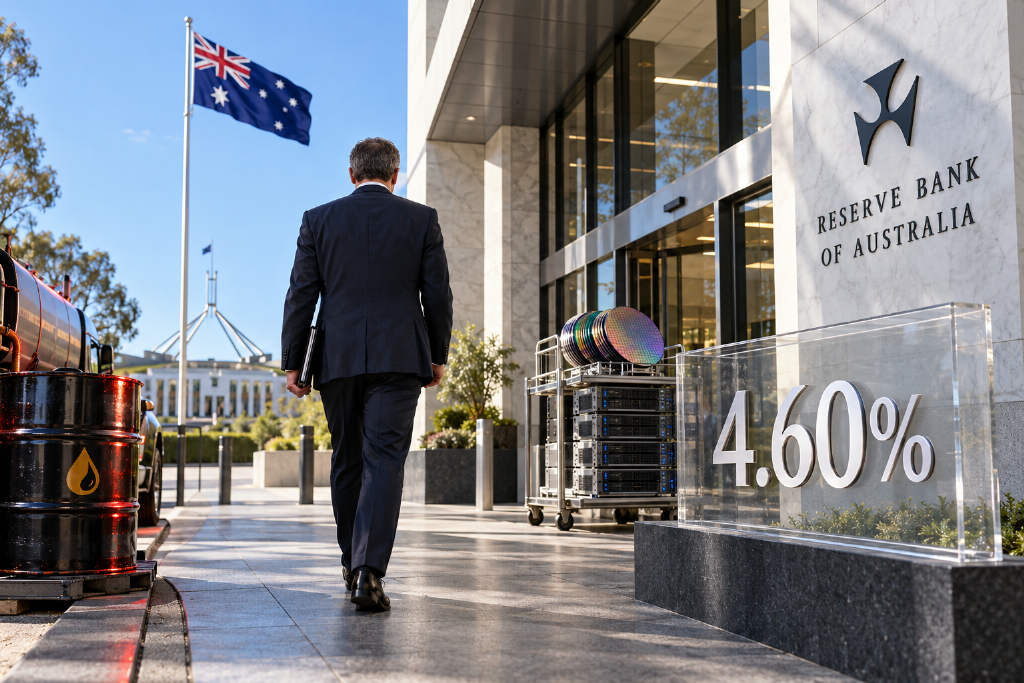
The Reserve Bank of Australia raised its cash rate target by 25 basis points to 4.60% on Sept. 29, up from 4.35%, in what the central bank said was its fourth rate increase this year. The decision was unanimous, according to the RBA’s Monetary Policy Board statement. ABC reported that the move takes Australian interest rates to their highest level in 15 years.
RBA says oil and AI demand are adding to inflation pressure
In its statement, the RBA said inflation remains high and that some of the upside risks it identified in August are now starting to materialize. It specifically cited an expanding Middle East conflict, saying global energy prices are now well above the assumptions used in its August forecast. The bank also said AI-related demand has been driving a rapid rise in prices for technology-related goods globally.
At home, the RBA said its business liaison program shows firms are still under cost pressure. Some have already raised prices for goods and services, while others are planning to do so. The statement added that higher fuel prices have partly passed through to other goods and services, short-term inflation expectations remain elevated, and recent inflation data have been stronger than expected at the time of the previous meeting.
The central bank also said economic growth among Australia’s major trading partners is running ahead of expectations because support from AI-related investment has outweighed the negative effects of the Middle East conflict.
Central bank leaves room for another hike
The RBA said the three rate increases delivered earlier this year have tightened financial conditions and that the economy appears to be slowing, but inflation is still too high. The board said further tightening may be needed to return inflation to target within a reasonable period.
The statement said: 「The Board will continue to take the measures needed to return inflation to target sustainably, including raising the cash rate target further if necessary.」
ABC, citing data, said Australia’s headline inflation rate rose 3.5% year over year in July, while core inflation came in at 3.6%. Both figures remain above the RBA’s 2% to 3% target range. David Bassanese, chief economist at BetaShares, said his base-case forecast is for the RBA to deliver another 25-basis-point increase on Melbourne Cup Day, taking the cash rate to 4.85%. ABC also noted that the European Central Bank, the U.S. Federal Reserve, the Bank of Japan, and the Reserve Bank of New Zealand have all raised rates in recent weeks.
Housing and borrowing capacity come under pressure
The RBA said housing prices have fallen in most Australian capital cities, new mortgage lending has dropped noticeably, and the labor market is slowing broadly as expected. At the same time, business investment and borrowing have continued to grow strongly.
According to ABC, property data firm Cotality estimates that this year’s four rate increases have reduced Australians’ average borrowing capacity by nearly A$90,000. Macquarie Bank announced shortly after the decision that it will raise its variable home loan reference rate by 0.25 percentage points from Oct. 15.