
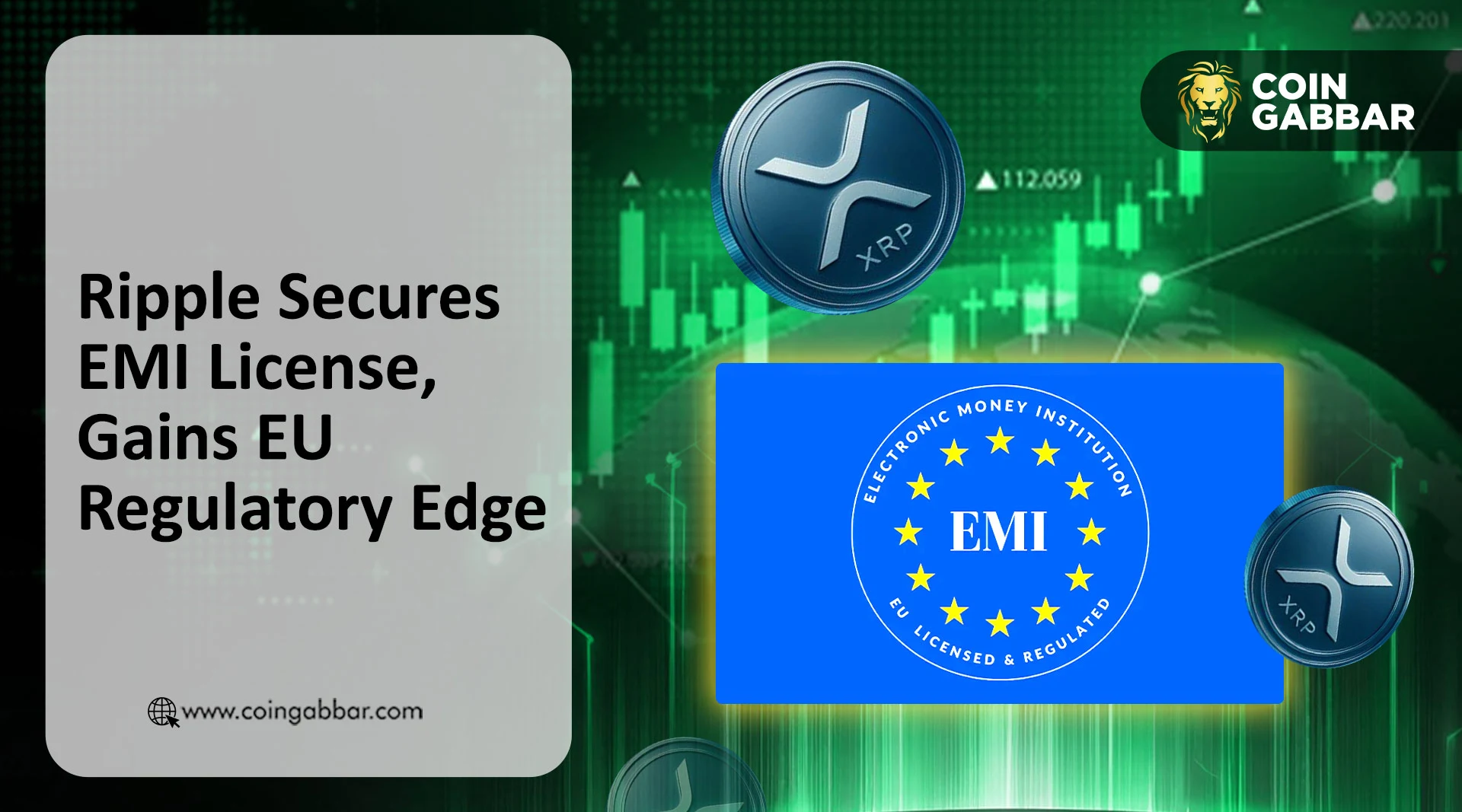
Ripple has taken a major step in European compliance. The company secured a Electronic Money Institution (EMI) license from Luxembourg's financial regulator, the Commission de Surveillance du Secteur Financier (CSSF). The license, granted to Ripple Payments Europe S.A., allows the firm to issue e-money, handle client funds, and passport payment services across the European Economic Area under the bloc's MiCA framework once final conditions are met.
More Than Just Another Approval
Luxembourg is a premier financial hub, and the EMI license there places Ripple inside the EU's strictest regulatory ecosystem. Banks can now confidently use Ripple's blockchain-based infrastructure for real money movement without legal ambiguity. The firm gains legal authority to hold and transfer client funds while operating as a regulated electronic money institution.
Cassie Craddock, Ripple's UK CEO, called it "a massive week for Ripple in Europe," highlighting Luxembourg's progressive regulatory environment as ideal for scaling digital payment infrastructure across the EU.
75+ Global Licenses, $95 Billion Processed
The Luxembourg license came just days after Ripple obtained both EMI and crypto registration approval from the UK's Financial Conduct Authority (FCA). Globally, Ripple now holds over 75 licenses and registrations, has processed more than $95 billion in payment volume, and reaches roughly 90% of daily foreign exchange markets.
These are not pilot numbers — they show real infrastructure moving real money at scale. Few blockchain companies have reached this level of regulatory compliance.
XRP Price Reacts: Up 3.8% in 24 Hours
XRP rose about 3.8% in the last 24 hours after the news, outperforming Bitcoin and Ethereum. Trading volume strengthened significantly. The move was supported by the EMI license news, a broader crypto market rally, cooler US inflation data, and growing confidence in institutional crypto adoption.
Technically, XRP holds above $2.15. If sustained, the next target could be near $2.26. In case of market weakness, XRP may revisit $2.05 before attempting another recovery. Short-term volatility aside, Ripple's regulatory progress underpins long-term conviction.
Compliance as the Bridge to Real Finance
This EMI license is not just about Ripple. It shows a clear path for crypto to enter mainstream finance through compliance, regulation, and trust — not through hype. Ripple is building regulated payment services, institutional-grade infrastructure, a global licensing network, and a bridge between traditional finance and digital assets.
That is why many now see XRP as a future bridge asset for global on-chain payments. Ripple is no longer just a blockchain company — it is becoming part of the financial system itself.