

ARB briefly touched $0.094 intraday and was up nearly 20% over the past week, making it one of the best-performing major Layer 2 tokens in that stretch.
The move followed the debut of Robinhood Chain, Robinhood’s real-world asset-focused Layer 2 built on Arbitrum technology. The mainnet went live on July 1 at a launch event in London.
The market response appears tied to more than the launch itself. Robinhood Chain has drawn attention back to an existing revenue-sharing framework inside the Arbitrum ecosystem, one under which part of the chain’s revenue can flow back to ArbitrumDAO. The arrangement is not new, but Robinhood’s entry has pushed investors to price it in more seriously.
AEP gets a large-scale test case
The framework is called the Arbitrum Expansion Program, or AEP. It was introduced in January 2024 by the Arbitrum Foundation and Offchain Labs. In simple terms, Arbitrum allows outside builders to launch chains using its technology, with some of those chains required to share revenue.
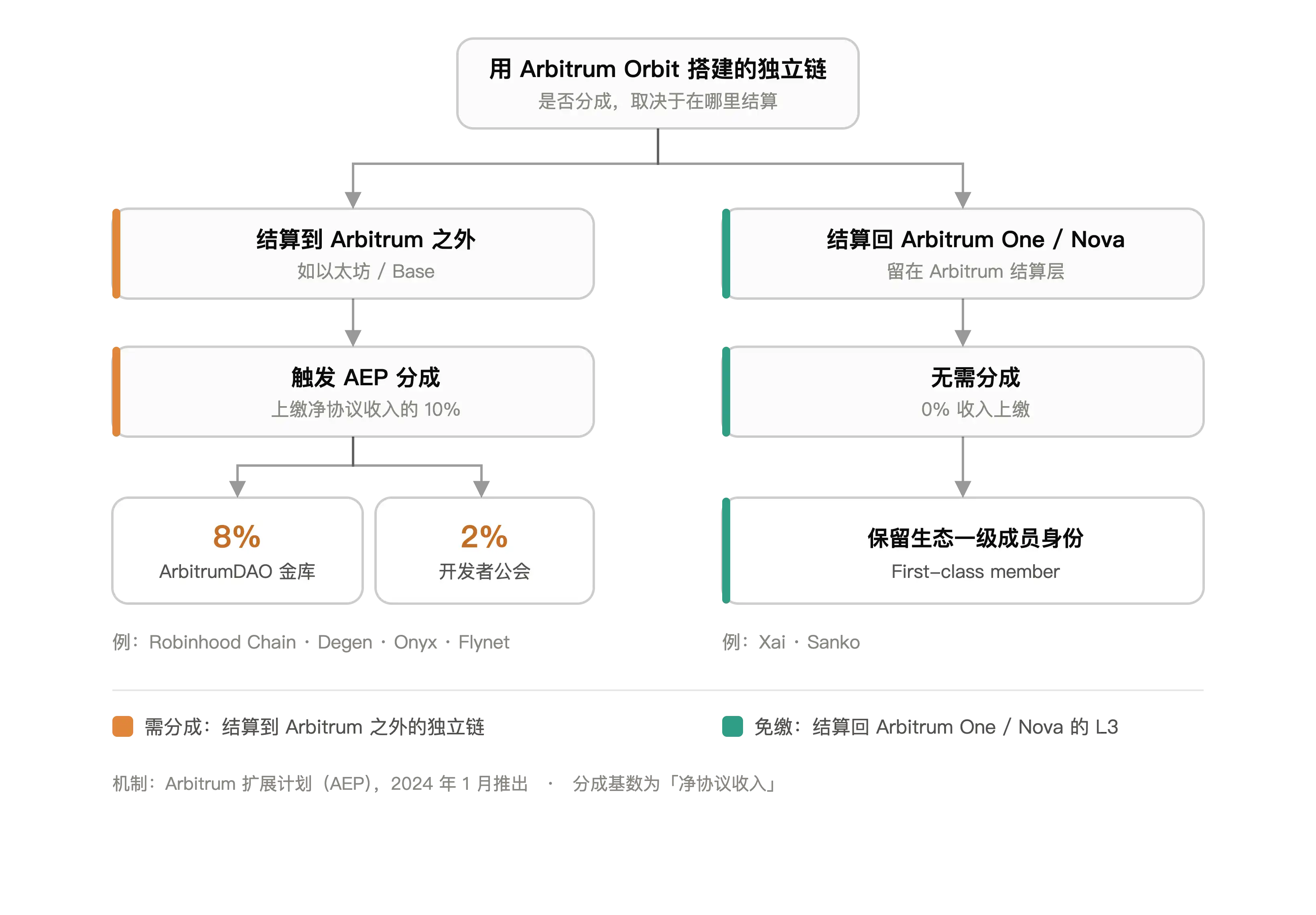
Under the rules, independent chains built with Arbitrum Orbit that do not settle on Arbitrum One or Nova — for example, chains that settle directly to Ethereum or Base — must return 10% of net protocol revenue to the Arbitrum ecosystem. Of that, 8% goes to the DAO treasury and 2% goes to the developer guild. By contrast, L3s that settle back to Arbitrum One or Nova, such as Xai and Sanko, do not fall under that revenue-sharing requirement.
Robinhood Chain is not the first network to trigger AEP. The article noted that smaller chains settling to Base, including Degen Chain, Onyx, and Flynet, had already been paying under the same structure. What makes Robinhood Chain different is scale. It is the first project large enough for the market to view the revenue share as financially meaningful.
Strong early metrics, limited revenue today
According to Johann, head of Robinhood International and Crypto, Robinhood Chain had processed more than 17 million transactions as of July 10, with more than 350,000 addresses, about $250 million in total value locked, and more than $1 billion in DEX volume. For a chain that had been live a little over a week, those figures stood out.
But the amount currently flowing into Arbitrum’s share is still small. Citing Dune data, the article said Robinhood Chain had generated about $147,000 in protocol revenue as of publication. After Ethereum L1 settlement costs, that figure was about $146,000. Even if 10% is shared back with the Arbitrum ecosystem, the near-term payment remains modest.
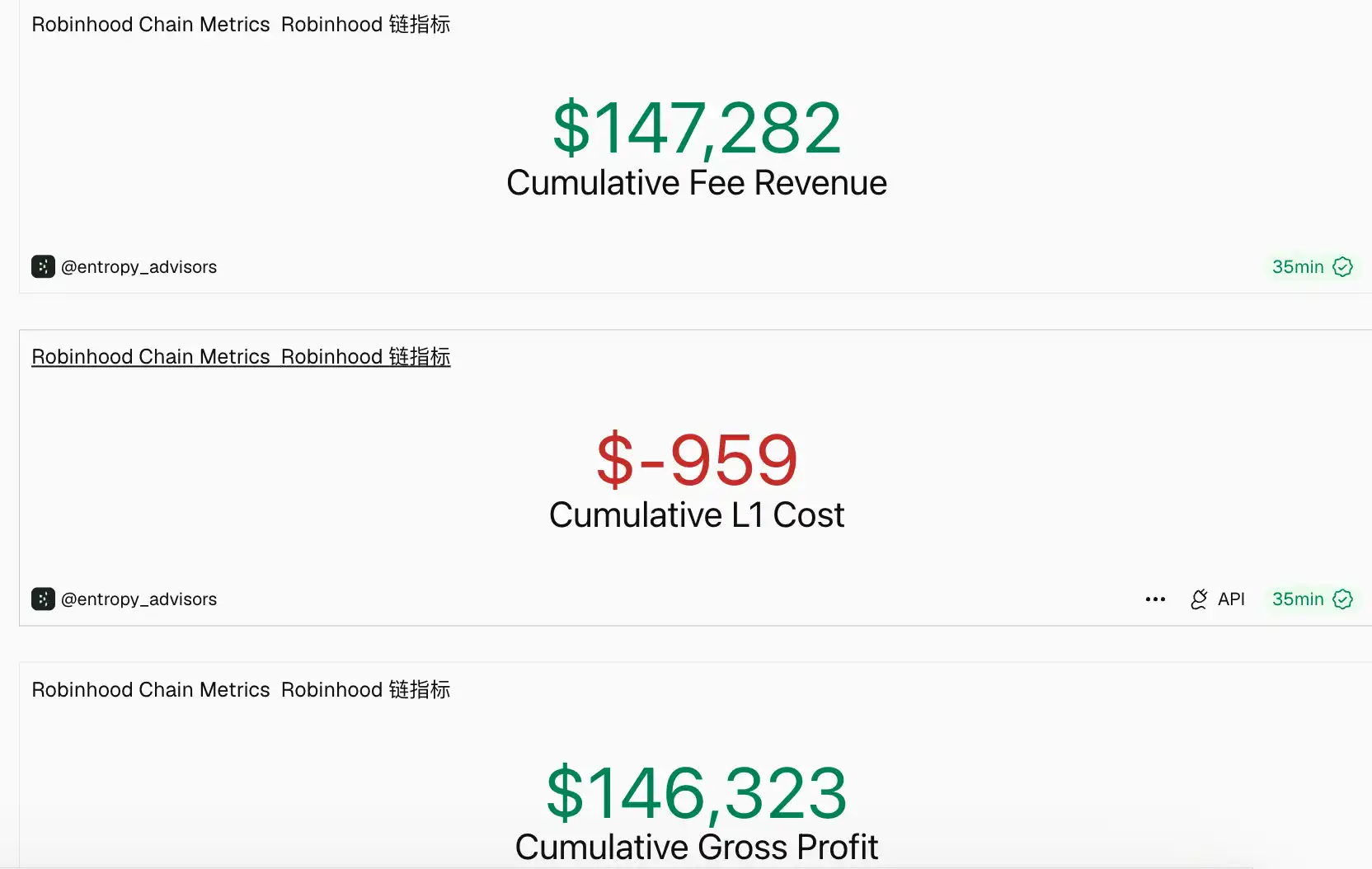
That is why the recent ARB move is being framed more as a narrative-driven repricing of AEP’s longer-term expansion potential than as a reaction to meaningful cash flow already arriving onchain.
The upside case, as presented in the article, rests on the size of Robinhood’s broader platform. Robinhood reportedly has about $324 billion in total platform assets and about $143.6 billion in assets under custody. Its tokenized stock offering has expanded to more than 2,000 tokens across 120 countries, while most of those assets are still not onchain. If settlement activity gradually shifts over, the article argues that the current revenue base of $57,000 used for sharing could look very different later on.
Comparison with Optimism’s model
Arbitrum’s approach is not unique. Optimism has operated a similar landlord-style model for some time.
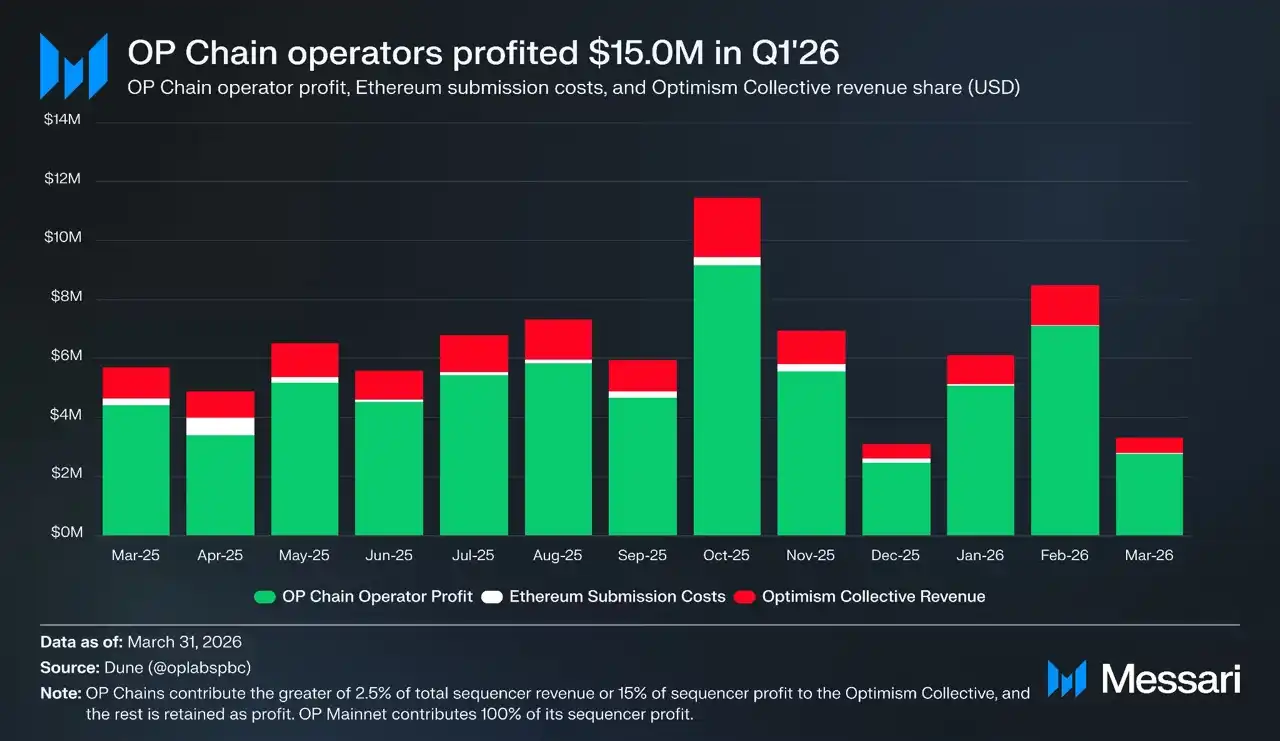
According to the article, the Optimism Collective collects fees from Superchain member chains built on the OP Stack, including Base, Zora, Mode, and Unichain. The fee is set at either 2.5% of sequencer revenue or 15% of net profit, whichever is higher. OP Mainnet also contributes its own net revenue to the treasury.
That revenue stream has been shrinking. The article said Collective revenue fell to about $2.9 million in the first quarter of 2026, including about $1.4 million from Base, down 21.5% from $3.7 million in the previous quarter.
In February this year, Base announced that it would leave the OP Stack. Measured by gas fees, Base had contributed about 96.5% of the revenue flowing into the Collective. OP fell 28% over two days after the announcement, according to the article.
Against that backdrop, Robinhood Chain has effectively given Arbitrum its first large tenant under AEP. The structure is similar on both sides: core infrastructure is licensed outward, external chains contribute revenue, and the proceeds end up in a DAO treasury. The difference is timing. Arbitrum wrote the rules in 2024, but only this week did the model start to look commercially significant.
Can Arbitrum keep the tenant?
That same Base episode is also being used by some analysts to question how durable Robinhood Chain’s ties to Arbitrum will be. One view cited in the article is that Robinhood Chain could eventually follow the same path, leaving Arbitrum Orbit and aligning directly with Ethereum.
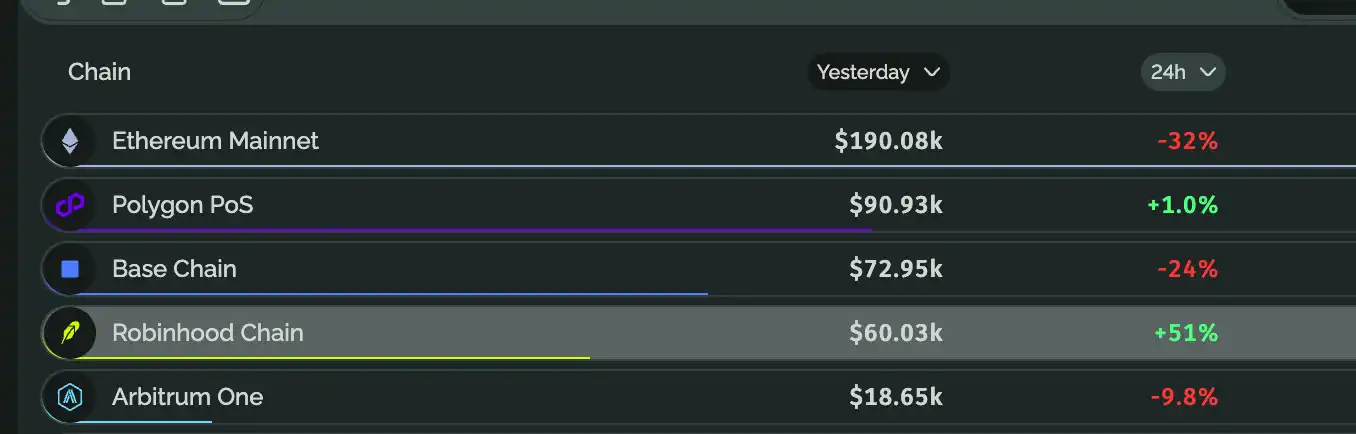
Data from growthepie showed Robinhood Chain’s daily sequencer revenue had climbed to nearly $60,000, second only to Base at $72,000 among Ethereum Layer 2 networks, and close to three times that of Arbitrum itself.
There is also a separate debate over who ultimately captures the value. One week after launch, Robinhood Chain had already become the second-largest Ethereum DA demand source after Base. Its sequencer pays blob fees, settles in ETH, and those fees are permanently burned. Based on that setup, some analysts argue that if the chain ends up with a single ecosystem currency, ETH is a more likely candidate than ARB.