

Robinhood Chain meme launchpad NOXA paused new token issuance on July 11. Two days later, its original website became temporarily inaccessible. A static entry point launched on July 14 kept only historical project browsing, secondary trading for existing assets, and creator fee claims. On July 15, NOXA said it would no longer charge future trading fees and would transfer all trading revenue to creators. As of publication, new issuance had not resumed.
The platform’s retreat has been nearly as quick as its rise. After Robinhood Chain’s mainnet went live, NOXA used CASHCAT to gather creators, traders, and fee income at speed. Robinhood’s own attention to early native projects lowered the cost of user acquisition during the cold-start phase. NOXA created more than 60,000 tokens in total and generated nearly $12 million in cumulative fees. Once new issuance stopped, however, supply shifted quickly toward other entry points including Pons.family and Flap.
CoinW Research said Robinhood Chain launchpads have entered a high-supply, low-conversion phase. Dune data cited in the report shows 42,709 new tokens were created across the chain on July 16, with Pons.family and Flap together accounting for 50.30% of that total. At the time of writing, only 18 tokens on the chain had market capitalizations above $1 million, and most of them came from NOXA and Virtuals. Issuance flow has moved to Pons and Flap, but higher-value projects are still concentrated on platforms that built wealth effects earlier in the cycle. After NOXA’s exit, no new undisputed leader has emerged, and future rankings are likely to hinge on metrics such as effective graduation rates, the number of $1 million-plus tokens, and market-cap retention.
NOXA’s early lead did not turn into a durable moat
NOXA moved from leadership to a halt in a very short market cycle. Its climb relied on being an early issuance gateway, having a standout token, getting amplification from Robinhood, and capturing buyer attention. Once new projects stopped entering the platform, that growth loop broke.
How CASHCAT helped NOXA build its first edge
Robinhood Chain opened its public mainnet on July 1. The network runs on Arbitrum Platform, supports roughly 100-millisecond low-latency confirmation, and is compatible with EVM development tools. Uniswap v2, v3, v4, and UniswapX all went live on the mainnet at launch. Developers could deploy token contracts directly, create public liquidity, and enter wallet and aggregator trading routes quickly.
NOXA tied token creation directly to one-sided liquidity on Uniswap v3. New projects entered public price discovery from the first trade, creators could earn pool trading fees, and the need for manual pool creation and later migration was reduced. Before competing launchpads had stabilized their own products, that workflow absorbed new-token issuance demand on Robinhood Chain.
Its first wave of traction did not come from product design alone. CASHCAT linked Robinhood’s early brand narrative, on-chain community activity, and short-term trading demand. Robinhood’s attention and distribution increased project exposure, community trust, and inclusion by trading tools. Price action and trading volume then sent attention back to NOXA. Creators wanted access to an existing buyer base and ranking-page traffic, while traders increasingly treated NOXA as a discovery venue for new Robinhood Chain tokens. A feedback loop formed between flagship tokens, official attention, and platform traffic.
Once issuance stopped, existing assets kept running but the growth loop broke
NOXA said the pause in new issuance was due to bot copying and a flood of low-quality tokens. After the original domain was interrupted, the team moved the historical interface to an ENS entry point. Existing projects could still be viewed and traded, and creators could still claim fees. The fee change announced on July 15 reinforced the direction of travel: NOXA stopped taking future trading fees and redirected all revenue to creators. In practice, it kept historical contracts and trading rails alive while giving up ongoing platform monetization.
For existing projects, tokens and liquidity pools can still function. For NOXA, the growth cycle built on new listings, platform revenue, and leaderboard updates has stopped. The report uses that sequence to argue that launchpad traffic loops depend on continuous supply. Platforms need to keep bringing in projects, maintaining leaderboards, integrating trading tools, and pushing content to market. If new projects stop arriving, creators lose access to an existing buyer network and traders move to venues that are still updating.
Three weaknesses exposed by NOXA’s reversal
First, a flagship token can expand a platform’s traffic quickly, but it also raises dependence on a single asset cycle. CASHCAT helped NOXA establish market awareness. When that token cooled, the platform halted issuance, and sentiment weakened at the same time, trading activity and user attention fell together.
Second, continuous operation is itself a core competitive capability. If a platform stops its main business during the most active part of the market, creators may reassess expectations around fee claims, contract maintenance, and product continuity. A platform with aspirations to lead has to show it can filter weak projects during supply peaks while still maintaining contracts, front ends, and project services.
Third, official backing matters in the cold-start stage, but it is not a substitute for independent growth. NOXA’s early breakout showed that Robinhood’s attention, brand linkage, and distribution channels can materially improve visibility for native projects. Beyond product design in issuance and liquidity, later-stage platforms still need content distribution, event coordination, and infrastructure access. More important, they need to convert early support into a steady project pipeline, real buyers, and repeatable market distribution.
42,709 tokens in one day, but only 18 above $1 million
Pons.family and Flap now account for just over half of new issuance
Dune data cited in the report shows Robinhood Chain added 42,709 new tokens on July 16. Pons.family created 11,547 tokens, or 27.04% of the total. Flap created 9,935, or 23.26%. Together they launched 21,482 tokens, equal to 50.30% of chain-wide daily issuance, while all other platforms combined accounted for 21,227 tokens, or 49.70%.
They are now the two main issuance gateways on the chain. But by the report’s update point, only 18 tokens across Robinhood Chain had market capitalizations above $1 million.
| Platform or scope | Issuance volume | Tokens above $1 million market cap | Issuance share | Result and reading |
|---|---|---|---|---|
| Pons.family | 11,547 | 1 | 27.04% | Only $PONS made the list, with value output concentrated in one token |
| Flap | 9,935 | 0 | 23.26% | Second in issuance, but no project had crossed the $1 million threshold |
| NOXA | New issuance stopped | 10 | — | 55.56% of the chain total, ranking first by number of $1 million tokens |
| Virtuals | Dashboard did not break out daily issuance | 5 | — | 27.78% of the chain total, ranking second |
| Bullmarkets | Dashboard did not break out daily issuance | 1 | — | 5.56% |
| Bowfun | Dashboard did not break out daily issuance | 1 | — | 5.56% |
| Entire chain | 42,709 | 18 | 100% | $1 million tokens remain highly concentrated on a small number of platforms |
The table shows issuance share and market-cap output have split into two different rankings. Pons and Flap produced 50.30% of new tokens on July 16, yet the latest $1 million list is still dominated by projects from NOXA and Virtuals. For now, Pons’ high-value sample is largely its namesake token, while Flap had zero tokens above the threshold. Issuance flow is moving toward Pons and Flap, but higher-value projects remain concentrated elsewhere.
Pons leads in volume, but the report flags suspected bot inflation
Pons’ public page showed around 21,454 tokens still in the curve phase, 110 graduated tokens, and about 21,564 cumulative creations. Based on that, CoinW Research estimated a raw graduation rate of roughly 0.51%. Of those 110 graduated tokens, only one — $PONS — made the current $1 million list. That equals about 0.91% of graduated projects and 0.0046% of all created tokens.
The report also says on-chain data points to suspected bot-driven wash activity in the Pons ecosystem. In this context, that refers to automated accounts repeatedly creating tokens, buying them, approving trading routes, selling them, and collecting fees, causing token-creation counts and on-chain transaction totals to rise quickly in platform statistics.
- Address 1: 0x7DE5b9C86D2B47607A2962043bB165f7BEFeB06b
- Address 2: 0x7D22d3Dd32F00848A54eBE00c00a9082A18D4E66
The report gives a specific example from July 17, 2026 involving VLAD, a token created by the Pons launch contract at address 0x91e2ce85c223CD55b0Cf76Ca668a0e61ed696C6b. At 00:23:51, 00:24:58, and 00:26:06, the two addresses bought VLAD three times in the same second each time, using the exact same amount of 0.033333333 ETH. Each address spent about 0.1 ETH in total, for a combined input of about 0.2 ETH.
At 00:31:09, both addresses approved and sold all of their VLAD in the same second. Address 1 sold about 5,694,114.656 VLAD and received 0.101688749 WETH from the pool, ending with 0.100671862 ETH after routing fees. Address 2 sold about 5,707,289.584 VLAD and received 0.106254208 WETH, ending with 0.105191665 ETH.
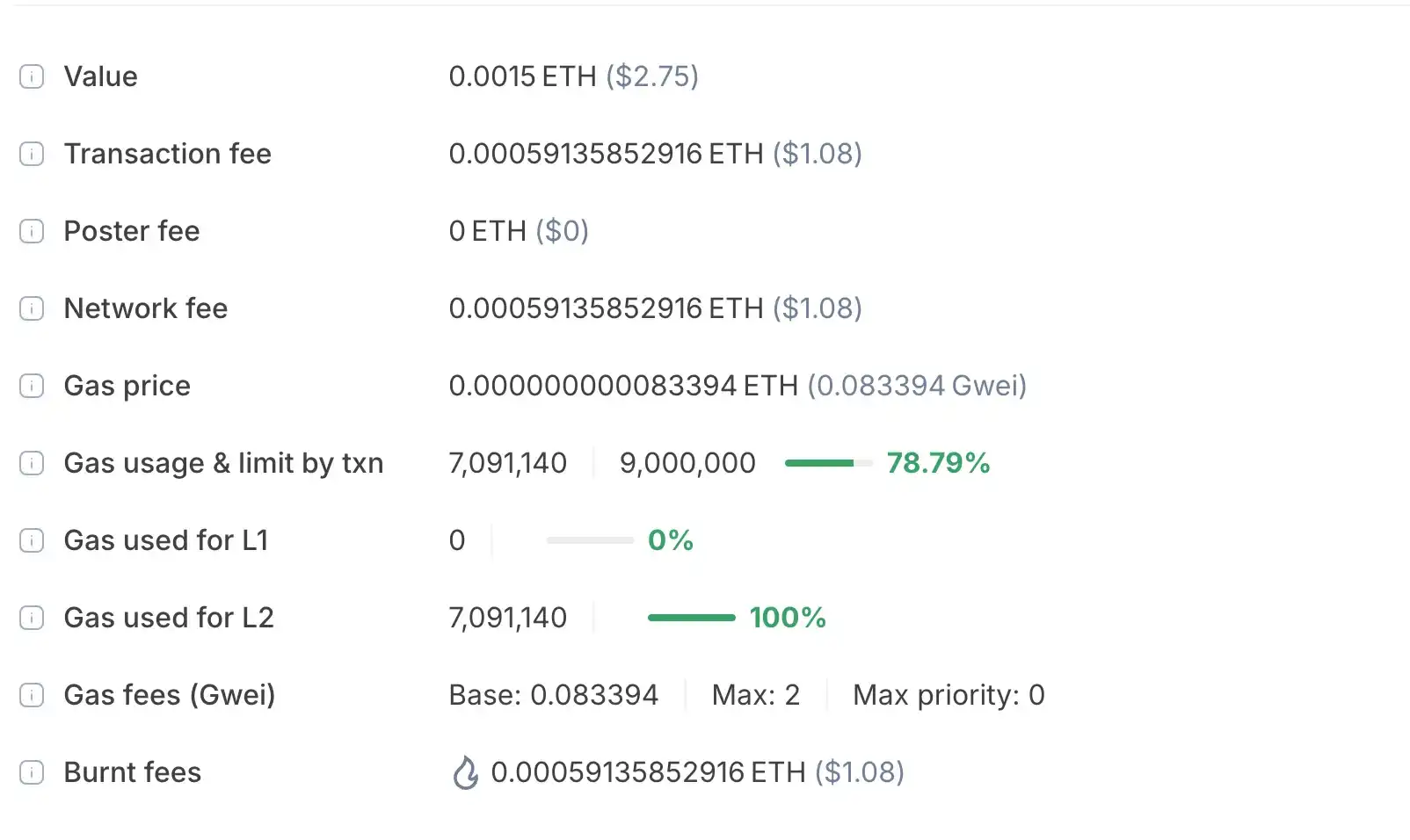
On the same day, Address 1 and Address 2 successfully called the Pons launch contract 896 times and 886 times, respectively, creating 1,782 tokens in total. Each creation transaction used a fixed input of 0.0015 ETH.
Large batches of standardized creation records, coupled with three same-second purchases at identical sizes and same-second exits by both addresses, do not match the pattern of independent manual users. The report concludes that the activity was likely executed by bots or automated scripts at scale. That kind of behavior can inflate Pons’ issuance totals and transaction counts while also pushing many weak tokens into the graduation sample. On that basis, CoinW Research says Pons’ issuance data shows fairly clear signs of bot-driven inflation.
Flap scaled fast, but its market-cap conversion is still unproven
Flap recorded about 22,000 tokens in a single day on July 14. By July 16, daily issuance had fallen to 9,935, still equal to 23.26% of chain-wide token creation and enough to keep it in second place behind Pons.
Dune data in the report shows only 18 tokens on Robinhood Chain had market capitalizations above $1 million, with most of those slots still occupied by NOXA and Virtuals projects. Flap expanded issuance quickly, but it had zero tokens above $1 million. The report says its current strength lies in the creation gateway and project distribution, while the next question is whether that issuance scale can turn into higher-value projects with durable market cap, liquidity, and organic trading retention.
Longer-term ranking depends on repeated market-cap output
Pons’ strengths are issuance scale, a namesake representative token, and strong attention within the chain’s ecosystem. Its weak points are a raw graduation rate of only about 0.51%, signs of bot-heavy creation data, and value output above $1 million that is mainly concentrated in $PONS. Flap’s strengths are protocol reuse, external distribution, and its ability to scale supply quickly. Its weakness is simple: zero $1 million projects in the cited sample.
By contrast, NOXA and Virtuals no longer lead in new issuance, yet their projects still occupy a large share of the $1 million leaderboard. In the report’s view, that means flagship projects, real buyers, and post-graduation operations matter more for long-term relevance than raw token-creation counts.
It argues that launchpads on Robinhood Chain should be judged first by the number of $1 million tokens and their day-by-day retention, then by the median market cap, liquidity, and count of independent buyers among graduated projects, then by the effective graduation rate after removing bot-heavy batch creation, and only after that by raw issuance volume. Using that framework, the chain still does not have a platform that fully replaces NOXA. Pons and Flap lead in new issuance entry, but neither has produced many high-value tokens yet.
Why Uniswap is the downstream winner
Launchpads fight for creation flow, while Uniswap absorbs public liquidity
Pons, Flap, and similar launchpads compete around creation cost, curve parameters, creator revenue sharing, project discovery, and external distribution. But once a token hits graduation conditions, liquidity usually moves into Uniswap or another public trading pool. Klik creates Uniswap v4 pools directly. Bankr organizes v4 liquidity through Doppler. Flap, Pons, and hood.fun migrate liquidity to Uniswap or other decentralized exchanges after projects meet preset thresholds. In that split, launchpads handle token creation and early user acquisition, while Uniswap handles public price discovery, trade execution, and liquidity after graduation.
NOXA’s halt makes the division easier to see. Once NOXA stopped issuing new tokens, historical projects could still trade through Uniswap and other interfaces. A launchpad front end can stop updating, but public liquidity pools that already exist can still be called by wallets, trading bots, and aggregators. Tokens can therefore continue to trade even after leaving the original launch entry point behind.
That structure gives Uniswap a growth path that is relatively independent of any single platform’s ranking. Shares among launchpads may change quickly, but as long as new projects keep using Uniswap v3 or v4 to build public liquidity, Uniswap can add more tradeable assets, more pool volume, and more fees for liquidity providers. The more fragmented launchpad entry becomes, the more the market needs a liquidity layer that can be shared by multiple platforms, wallets, and aggregators. The report says that is Uniswap’s main advantage on Robinhood Chain.
CCA pushes Uniswap closer to the primary issuance stage
Most launchpads route liquidity into Uniswap at creation or graduation. Continuous clearing auctions, or CCA, extend Uniswap one step further into initial issuance. Issuers can set sale quantity, auction duration, settlement asset, and use of funds. Participants submit budgets and maximum prices, and orders are gradually involved in clearing as blocks pass. After the auction ends, the system can automatically create a Uniswap v4 pool at the market-cleared price, linking token allocation, initial price formation, and secondary trading.
CCA serves a different project profile from one-click launchpads. One-click platforms emphasize low barriers, fast creation, and community spread, which suits high-frequency meme tokens driven by narrative and attention. CCA is better suited to projects that want to sell a fixed quantity publicly, reduce the effect of sniping, and form an initial price through open bidding. That leaves Robinhood Chain with two issuance tracks: one-click launchpads for high-frequency community creation, and CCA for more structured public auctions. Both can eventually feed into Uniswap’s public liquidity system.
TRASH is one of the early attention-grabbing Robinhood Chain projects launched through CCA. At the time cited in the report, its fully diluted valuation was about $759,000, it had roughly 2,350 holder addresses, and 24-hour trading volume was about $7.1 million. Single-day volume was therefore about 9.4 times FDV. The report says that combination shows CCA can concentrate orders and generate heavy turnover quickly, though such high turnover also means early prices can be influenced sharply by short-term capital.
From that perspective, Uniswap benefits on Robinhood Chain through two channels. Launchpads feed graduated projects and public liquidity into Uniswap, while CCA places first allocation, price discovery, and initial pool creation for some projects directly inside the Uniswap system. Both channels increase asset count, trading scale, and fees. Whether that growth turns into protocol revenue and value for UNI depends on whether protocol fees are activated and how those fees are distributed.
Compared with Hyperliquid, similar trading fees do not mean similar value capture
Uniswap and Hyperliquid are built very differently. Uniswap centers on multi-chain spot automated market making and permissionless liquidity. Hyperliquid is based mainly on order-book matching and covers perpetuals as well as spot trading. The report does not treat them as direct substitutes in market share or product quality. Instead, it compares their fee figures over the last 30 days to examine how trading structures route value to liquidity providers, market makers, protocols, and tokens.
| Metric | Uniswap | Hyperliquid | Comparison |
|---|---|---|---|
| Trading fees | $61.435 million | $62.193 million | The gap is only about 1.2% |
| Protocol revenue | $3.946 million | $44.306 million | Hyperliquid is about 11.2x higher |
| Protocol revenue / trading fees | About 6.4% | About 71.2% | A clear difference in fee-retention structure |
| Liquidity / market-making compensation | Liquidity providers receive most trading fees and bear capital lock-up and impermanent loss | Market makers profit through spreads, hedging, and maker rebates; HLP has a separate distribution path | The protocol’s ability to retain trading fees differs |
| Token value path | Protocol fees go into the TokenJar contract and are converted by searchers into UNI burns | Fees are distributed to HLP, the assistance fund, and deployers; the assistance fund buys and burns HYPE | Hyperliquid has a more direct path, while Uniswap depends on governance execution and liquidity retention |
Over the last 30 days, Uniswap generated about $61.435 million in trading fees and Hyperliquid about $62.193 million, a difference of roughly 1.2%. Over the same period, Uniswap’s protocol revenue was about $3.946 million, while Hyperliquid’s was about $44.306 million, or roughly 11.2 times higher. Their protocol revenue as a share of trading fees came to about 6.4% and 71.2%, respectively. Traders paid similar fee totals, but the share routed into protocol-controlled value paths was very different.
The report says the first explanation is how liquidity is compensated. Uniswap’s AMM structure requires liquidity providers to keep capital in pools and bear price movement, out-of-range positions, and impermanent loss. That means most trading fees need to stay with liquidity providers. Using Uniswap v2 after protocol fees are enabled as an example, traders pay a 0.30% fee, of which 0.25% goes to liquidity providers and 0.05% goes to the protocol. The protocol keeps one-sixth of the total fee.
Hyperliquid’s order-book model gives professional market makers other ways to earn, including spreads, inventory management, cross-market hedging, and maker rebates. Its dependence on trading-fee compensation is lower. That leaves more fees available for HLP, the assistance fund, and deployers, with the assistance fund using related funds to buy and burn HYPE.
So the difference in protocol revenue as a share of trading fees mainly reflects how two trading and market-making structures allocate fees. Hyperliquid can route a much higher share into the protocol and HYPE value path. Uniswap has to protect liquidity-provider economics first in order to preserve open liquidity and market depth. Uniswap may still grow network value through more assets and more trading, but whether UNI captures that value in parallel remains unresolved.
UNI value capture still depends on protocol-fee activation
Robinhood Chain has already driven clear trading growth for Uniswap. DeFiLlama data cited in the report shows the chain contributed about $23 million in trading fees to Uniswap over the last 30 days, making it the single biggest network contributor by fees. Yet protocol revenue from that activity is still zero. For now, the gain shows up in new assets, higher trading scale, more fees for liquidity providers, and the expansion of a public liquidity network. UNI holders have not received direct value flow from it.
The direct reason is that protocol fees on Robinhood Chain have not been activated. The Uniswap community has already proposed extending protocol fees to the chain’s v2, v3, and v4 deployments. The relevant governance proposal ended on July 15 and received about 12.953 million votes in favor, with zero votes against and zero abstentions. Even so, passage only marks preliminary social consensus. Formal on-chain voting and cross-chain execution are still pending.
Under the plan described in the report, protocol fees for Robinhood Chain’s v2 and v3 deployments would be enabled through separate on-chain proposals, while v4 would be included in the first batch of multi-chain activation proposals. After formal approval, the governance message would still need to be sent from Ethereum mainnet to Robinhood Chain and executed there before fees begin to flow on the network. That process could convert part of Robinhood Chain trading fees into UNI token value, but the eventual result depends on two things the report highlights: whether liquidity and aggregators remain after fees are switched on, and whether higher-market-cap tokens continue to generate real trading activity. Protocol fees reduce the share of fees received by liquidity providers, so if fee settings affect pool depth, protocol revenue growth could also be constrained.
In aggregate, the report says launchpad market-cap conversion on Robinhood Chain remains weak, but a small number of successful projects still channel trades and public liquidity into Uniswap, making it a structural beneficiary of launch-market expansion. For now, the gains sit mainly at the level of asset count, trading volume, liquidity-provider income, and the public liquidity network. Only if protocol fees complete formal governance and cross-chain execution, and only if volume and liquidity stay stable afterward, can that growth move more directly into protocol revenue and UNI token value.
No full successor to NOXA has emerged yet
Robinhood Chain has already moved into a high-frequency token issuance phase. On July 16, the chain added 42,709 tokens in a single day. Pons and Flap together created 21,482 of them, equal to 50.30% of the total. Dune data in the report shows only 18 tokens had market caps above $1 million. In CoinW Research’s reading, token creation is now running far ahead of the growth in real capital and user demand, and the bottleneck in platform competition has shifted from creation tools to post-graduation market cap and liquidity retention.
At this stage, raw issuance volume shows how much token-creation demand a platform can absorb, but it says little on its own about project quality. Bot-driven batch creation can inflate issuance totals and graduation rates, while a platform’s graduation threshold only shows that a project obtained initial capital and liquidity. The more useful comparison set, the report argues, is the effective graduation rate after excluding identified automated addresses, the number of $1 million tokens and their day-level retention, and the median market cap, liquidity, and count of organic buyers among graduated projects. A platform can only build lasting wealth effects and repeat user inflows if its projects continue attracting independent buyers after passing graduation.
On the current numbers, Pons leads in issuance but has a raw graduation rate of about 0.51%, and the on-chain sample includes batch creation and synchronized trades that may not reflect real user demand. Its $1 million output is still concentrated mainly in the platform’s own token. Flap is more complete in external distribution and protocol reuse, but it had no $1 million project in the cited data. At the same time, NOXA and Virtuals still hold most of the slots in the high-market-cap list, suggesting that the user base and wealth effect built by earlier representative projects have not yet been displaced by the new leaders in issuance volume. For now, after NOXA’s retreat, Robinhood Chain still does not have a new outright leader that combines both issuance dominance and proven market-cap conversion.