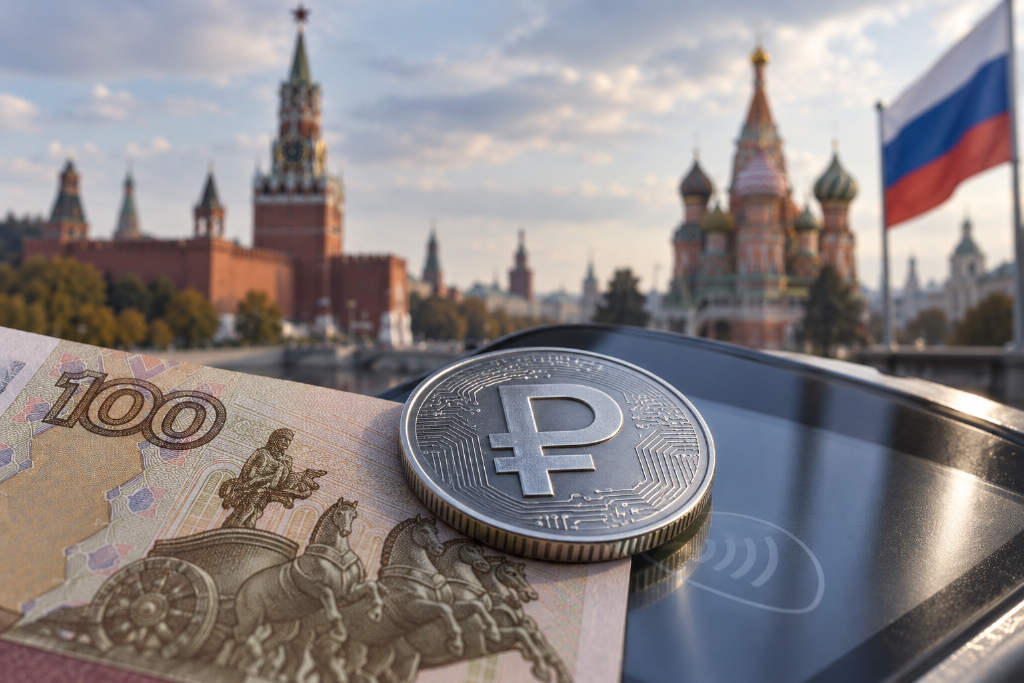
Russia’s digital ruble opened more than 220,000 accounts in its first month, a figure that sharply exceeded the central bank’s earlier expectation of about 60,000 after the currency’s Sept. 1 launch, according to Reuters. The number offers an early real-world test of whether central bank digital currencies can move beyond limited pilots and attract actual user adoption.
The rollout is unfolding as BRICS countries examine ways to connect their CBDCs for cross-border payments. Reuters said Russia sped up work on the digital ruble after Western sanctions tied to the war in Ukraine cut the country off from parts of the global financial system and made payments with major trading partners, including China and India, more difficult. Separate Reuters reporting said CBDCs were also a key issue at last month’s 18th BRICS Summit in New Delhi, where leaders supported broader local-currency trade settlement and links between member states’ digital currencies.
At the same time, CBDCs remain politically contentious. Critics have raised concerns about state surveillance and centralized control over money. In the United States, a major housing law passed earlier this year included a provision blocking the Federal Reserve from issuing or creating a CBDC through the end of 2030.
Russia’s central bank digital currency, the digital ruble, opened more than 220,000 accounts in its first month, well above official forecasts and offering an early test of whether CBDCs can gain traction outside pilot programs.
Reuters reported on Tuesday that Russian central bank Deputy Governor Zulfiya Kakhrumanova said the total far exceeded the roughly 60,000 accounts officials had expected after the digital ruble launched on Sept. 1.
BRICS weighs cross-border CBDC links
The launch comes as BRICS countries study ways to connect their central bank digital currencies for cross-border payments. The bloc includes major emerging economies such as Russia, China and India.
According to Reuters, Russia accelerated development of the digital ruble after Western sanctions imposed over the war in Ukraine cut the country off from parts of the global financial system and made payments with key trading partners, including China and India, more complicated.
Separate Reuters reporting said CBDCs were a major topic at last month’s 18th BRICS Summit in New Delhi, India. Leaders there backed efforts to expand local-currency trade settlement and link member states’ CBDCs for cross-border payments.
Debate over CBDCs continues
CBDCs remain controversial because of concerns over government surveillance and centralized control of money.
In the United States, a major housing law enacted earlier this year included a provision that bars the Federal Reserve from issuing or creating a CBDC through the end of 2030.
Related report
A separate report said India plans to issue its first tokenized bonds using a wholesale CBDC.
This article was originally published by Bit.Fan. For more cryptocurrency news and market insights, visit www.bit.fan. Disclaimer:
The market information, project data, and third-party content displayed on this platform are for industry information sharing only and do not constitute any form of investment advice or return commitment.
Cryptocurrency trading carries high risks. Users should fully assess their risk tolerance and make independent decisions. All profits, losses, and legal responsibilities are borne by the users themselves.