
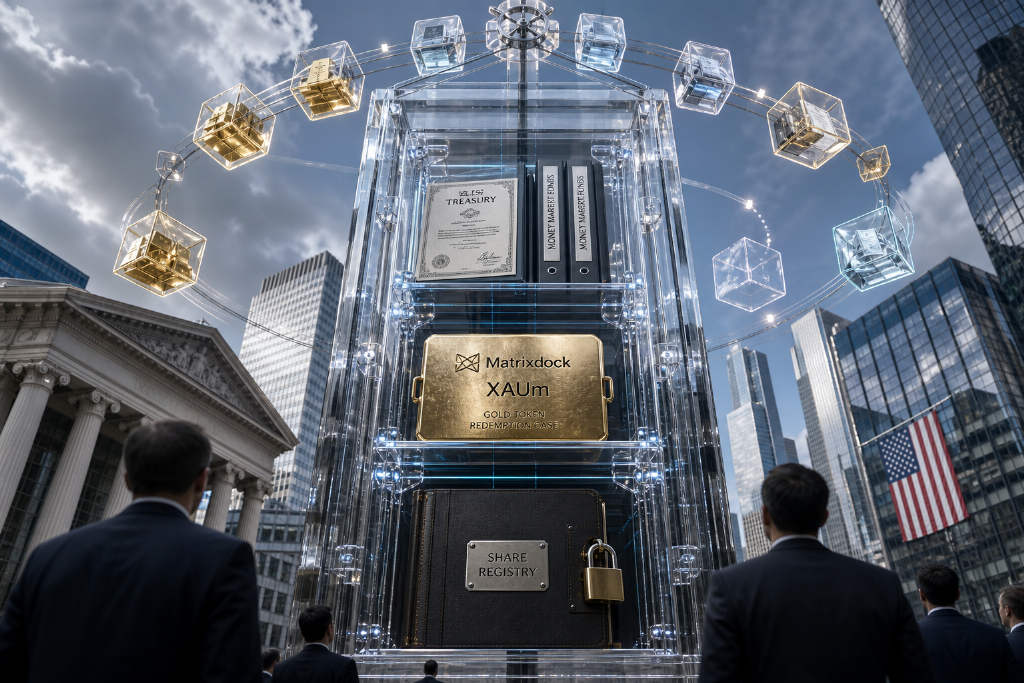
The tokenized real-world asset market is still growing, but the industry’s focus is starting to change. In a recent feature titled The $37 Billion Tokenization Boom Has an Ownership Problem, BeInCrypto said tokenized RWA on public blockchains had reached $37.29 billion as of Aug. 3, excluding stablecoins. U.S. Treasury and money market products made up $16.16 billion, or about 43% of the market. Commodities stood at $4.6 billion, while stocks and ETFs accounted for $2.16 billion.
As more real-world assets move on-chain, a more basic question is coming into view: does holding a token mean the holder actually owns the real asset, or the rights tied to it, in a way that can be enforced off-chain?
BeInCrypto put that question at the center of its report and interviewed Matrixdock head Eva Meng, AMINA Bank Chief Product Officer Myles Harrison, Securitize Chief Operating Officer Billy Miller, and OKX US Chief Executive Officer Roshan Robert. The discussion approached the issue from several angles, including settlement, ownership registration, and 24/7 trading. Meng, in particular, placed settlement at the center of the ownership debate, shifting the discussion from how ownership is recorded on-chain to whether those rights can actually be settled in the real world.
From 32.148 XAUm to a 1-kilogram gold bar
Blockchain can record how many tokens an address holds with precision. For RWA, though, an on-chain ownership record by itself does not settle the question of whether the underlying asset can be delivered or used when the holder exercises a claim. Meng said the real test comes when those rights are invoked: can the underlying asset be settled under the relevant mechanism?
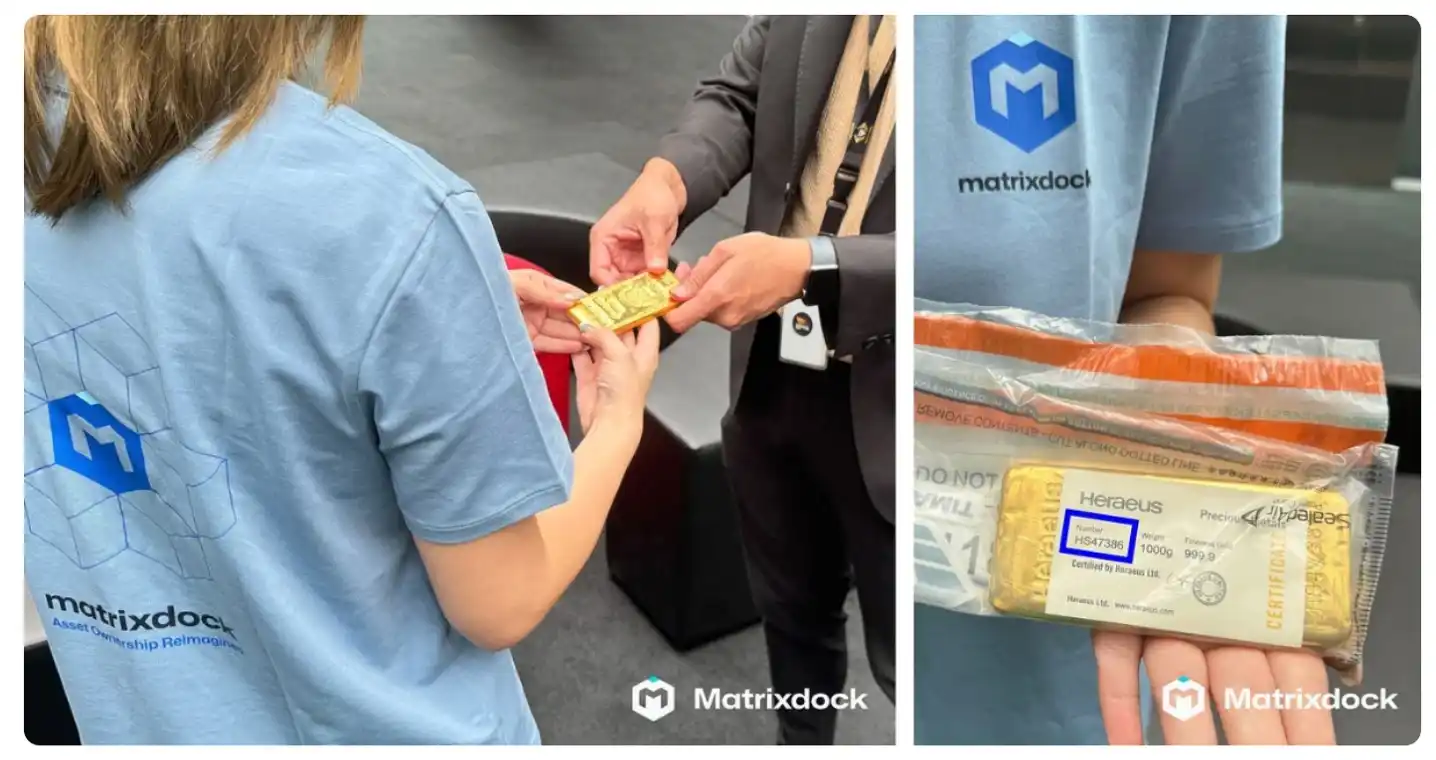
BeInCrypto pointed to a concrete case involving XAUm, the tokenized gold product from BIT-owned RWA platform Matrixdock. According to the report, in April 2025, one holder burned 32.148 XAUm and received a 1-kilogram LBMA gold bar within T+3 after submitting a redemption request. That linked the burning of the on-chain token to the release of the corresponding gold from custody.
The report also used physical gold delivery images from Matrixdock to illustrate how the rights represented by a token can move beyond an on-chain balance and into real-world asset delivery.
The point of that redemption case was not only that XAUm can be exchanged for gold. It showed a practical route from an on-chain record to real delivery: holding XAUm, submitting a redemption request, burning the token, releasing the matching gold from custody, and completing physical delivery. The rights represented by the token had to pass through an actual settlement process before they became delivery of the real asset.
For physical RWA such as tokenized gold, that offers a clearer way to judge whether on-chain rights actually hold up. The answer depends on whether the underlying asset can be settled or delivered under the relevant mechanism when the holder decides to exercise those rights.
Ownership gets more complicated in tokenized securities
The ownership question becomes more complex when tokenization extends to securities. BeInCrypto said securities ownership also involves dividend rights, voting rights, and corporate actions.
Myles Harrison, chief product officer at AMINA Bank, said institutional investors pay closer attention to who carries the obligations, which law applies, and what rights investors actually have. Billy Miller, chief operating officer at Securitize, said different tokenization models handle ownership registration in different ways.
That means a token alone is not enough to define the full ownership relationship for security-type assets. The key issue is how the token connects to legally recognized ownership records and the rights framework attached to them.
The XAUm redemption case gave that discussion a visible outcome. Rather than simply proving that gold had been tokenized, the path from 32.148 XAUm to a 1-kilogram LBMA gold bar showed more directly how the burning of an on-chain token connects to the release of the underlying asset and real-world delivery. As the RWA market shifts from asking how much can be put on-chain to how these assets work after issuance, that connection between the token and the underlying asset is becoming a more important way to judge value.
Tokens may trade 24/7, but the underlying market does not
Once on-chain ownership can connect to real assets, another issue follows. Tokens can trade around the clock, but the underlying market and the traditional financial infrastructure behind them do not necessarily run 24/7.
Meng used gold as an example in her interview with BeInCrypto and said only part of the full system is truly always on. Secondary trading and transfers on-chain can continue nonstop, but the underlying market, banks, custody, hedging, and primary market activity still follow traditional operating hours.
That means tokenized gold can keep forming prices on-chain even after the conventional gold market has closed, and may reflect new macroeconomic information or geopolitical events earlier.
The harder problem appears when the on-chain price diverges from the price in the underlying market. Meng said that if arbitrage, hedging, minting, and redemption mechanisms that would usually help bring the two markets back into line are temporarily unavailable, liquidity providers have to carry more inventory risk, basis risk, and gap risk until the relevant markets reopen.
In other words, 24/7 on-chain trading for RWA does not mean the full asset system supporting the token has also become a 24/7 market.
For tokenized gold, that extends the issue beyond how to tokenize gold in the first place. XAUm can continue circulating on-chain, but the gold backing it still exists inside the structure of the real-world market. On-chain trading can stretch the trading window, but it does not automatically turn banks, custodians, hedging venues, and primary market functions into round-the-clock systems. Connecting an always-on token market to an underlying asset system that still follows conventional hours is becoming a core issue as RWA moves from issuance to actual operation.
The market is moving from issuance to enforceable rights
BeInCrypto extended that point to the wider tokenization market. Blockchain choice still affects trading costs, execution speed, and asset accessibility. For institutions, though, legal and operational infrastructure also determines whether an asset can actually enter a portfolio.
The report said tokenization creates economic value where an on-chain representation improves accessibility, settlement, transferability, or collateral use, while ownership records still preserve enforceable rights for the holder throughout the process.
With the RWA market now at $37.29 billion, putting assets on-chain is gradually becoming the starting point rather than the finish line. From BeInCrypto’s discussion of ownership and settlement to the XAUm example that moved from the burning of 32.148 tokens to delivery of a 1-kilogram LBMA gold bar, the same issue keeps surfacing: once tokens enter trading, settlement, and collateral use, the real test is whether the on-chain record can stay connected to enforceable rights in the real world and to final settlement.