
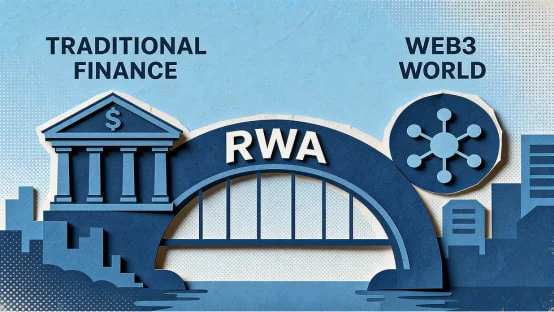
Real-world assets, or RWA, climbed to a record $32 billion on-chain in July, up about 22% from the start of the month and above the previous high set in April. The headline number pushed tokenization back to the center of the crypto market.
But the growth in supply has not translated into broad on-chain use. Several datasets now show that most tokenized assets are still sitting outside lending, collateral, and secondary trading activity. The market has grown quickly. Utilization has not.
Scale rose fast, while activity lagged behind
According to The Real State of Tokenization 2026, a report released by BeInCrypto Intelligence and RWA.xyz, 910 out of 1,289 tokenized assets worth more than $100,000 recorded no on-chain transfer over a one-week period. That means more than 70% of those assets were effectively dormant.
Edgy, a partner at Bitcoin layer-2 protocol Stacks, estimated that 87% of the RWA market, now worth more than $30 billion, is in an “on-chain dormant” state. These assets are not being used as collateral in lending markets and are not circulating in a way that creates active trading. In many cases, they have only completed the first step of tokenization: being recorded on-chain.
DWF Labs reached a similar conclusion in its own report, saying only about 10% of tokenized RWA is actively used in DeFi protocols, while the other 90% remains parked in institutional wallets as static capital.
The gap between headline scale and actual usage becomes clearer when the largest platforms are compared side by side.
Big issuers and active users are not the same group
Securitize: largest footprint, very low DeFi utilization
Securitize, the issuance partner for BlackRock’s BUIDL fund, stands as one of the biggest players in tokenized finance. Its tokenized asset base has passed $4.9 billion. The company posted $19.5 million in Q1 revenue and listed on the New York Stock Exchange at a valuation of about $1.25 billion.
Even with that scale, its DeFi utilization is only about 0.7%. The contrast is stark: a large balance of tokenized assets, but very little of it is moving through on-chain financial rails.
Ondo Finance: multichain reach, but still limited use
Ondo Finance manages nearly $3.5 billion in tokenized assets, has deployed across more than 10 blockchains, and counts 168 integrations. It also holds more than 70% of the tokenized equities market.
Its DeFi utilization is around 2.7%. That is better than Securitize, but still far from a level that would suggest deep, sustained on-chain activity.
Maple Finance: smaller asset base, much higher turnover
Maple Finance is much smaller by assets under management, at $2.3 billion, but its active loans have exceeded $1.6 billion. The protocol says cumulative loan originations have topped $22 billion, and its DeFi utilization stands at 62%.
The comparison points to a basic divide in business models. Securitize and Ondo operate more like asset issuers. Their strengths are compliance structure and institutional distribution: obtaining licenses, onboarding large clients, and bringing assets on-chain. Revenue comes mainly from issuance and management fees. Whether those assets later circulate or get used in DeFi is not the center of the model.
Maple is closer to an on-chain credit platform built around asset usage. Its products are designed to feed directly into lending activity from the start, which helps a smaller asset base generate more borrowing, more fees, and more measurable on-chain economic activity.
Why tokenized assets do not automatically circulate
The pattern is not explained by one issue alone. Asset design, securities compliance, and weak market infrastructure are all part of the picture.
Asset type matters: yield holding is not the same as trading
The current RWA market is dominated by two broad categories: private credit as an active yield strategy, and tokenized Treasuries as a yield-bearing safe haven. Their DeFi utilization rates look very different.
In private credit, the business model is lending by definition. In Maple’s pools, stablecoins deposited by investors are quickly lent out to qualified institutional borrowers, pushing utilization above 60%. Under that structure, a large share of TVL is effectively the outstanding loan book.
Tokenized Treasuries look different. Their DeFi utilization is only about 5%. The core value proposition is on-chain access to low-risk yield, not active trading. Holders of products such as BlackRock’s BUIDL and Franklin Templeton’s BENJI are mainly institutions and stablecoin issuers that buy them to earn yield, not to trade frequently or apply leverage.
That does not mean tokenized Treasuries are not being used financially. Ethena’s USDtb holds about 90% of its reserves in BUIDL, and Frax’s frxUSD also uses BUIDL as one of its reserve assets. Their role is real, even if that role is not fully captured by a DeFi utilization metric.
Compliance rules narrow the user base
Most tokenized assets are legally treated as securities, which means they are subject to investor suitability requirements. Products such as Securitize’s BUIDL and Ondo’s OUSG use KYC whitelist mechanisms, so tokens can move only between wallets belonging to approved qualified investors.
That creates a basic mismatch with permissionless DeFi. These assets can be tokenized, but they usually cannot move freely into public lending pools such as Aave or Compound as collateral. Even permissioned venues like Aave Horizon only reach a limited slice of institutional users.
At the same time, high scale and low utilization may simply be part of the path toward broader adoption. Institutions tend to bring assets on-chain in stages: first custody, audit, and transfer-agent processes, then deeper composability later. From that view, dormant RWA is not necessarily wasted capital. It may be early-stage infrastructure in waiting.
Liquidity infrastructure is still thin
DWF Labs managing partner Andrei Grachev said liquidity remains a bottleneck for RWA expansion on-chain. What the market lacks, he argued, is the infrastructure needed to trade tokenized assets at scale: real-time pricing, instant redemption, and secondary markets deep enough to support quoting.
That weakness runs through the rest of the market structure. Market makers are still cautious around tokenized assets. Trading volumes are often too low to cover market-making costs, valuation of the underlying assets is less transparent than in liquid crypto markets, and transfer restrictions shrink the available counterparty set.
As a result, many RWA products trade with lower turnover and wider bid-ask spreads than in traditional finance. Without stronger secondary-market depth, investors who want to borrow against them or use them in DeFi face practical issues around pricing and liquidation.
The next phase is shifting from issuance to usage
The market has started to focus on that problem more directly. Competition in RWA is moving away from a simple issuance race and toward the question of which platforms can make assets usable after minting.
One route comes from native credit protocols. Maple and Centrifuge tied assets to lending use cases from the start, so circulation is built into the model. These projects are smaller than the biggest issuers, but they point to a version of RWA that is more tightly connected to DeFi activity.
Another route is distribution-layer integration. Securitize has integrated UniswapX for compliant on-chain trading, while Centrifuge has worked with Morpho to open lending distribution channels. As infrastructure improves, the distance between issuance and actual usage is getting shorter.
Gateway platforms are drawing more attention as well. Robinhood Crypto is one example. For many DeFi protocols, the hardest part after launch is not issuing the asset but finding users and liquidity. Robinhood Crypto already has an app ecosystem, a wallet, and customer relationships. That gives newly issued assets direct access to an existing user base.
Maple’s yield-bearing token SyrupUSDG reached a circulating market capitalization of $100 million within one month of listing on Robinhood Crypto. A comparable product promoted through protocol-led channels, SyrupUSDT, took nine months to get to the same level. The comparison suggests that as RWA moves toward larger-scale adoption, distribution, user habit, and access channels can matter as much as the asset itself.
$32 billion is only the first step
The utilization paradox in RWA reflects a deeper clash between traditional finance and crypto-native systems. Traditional markets center on compliance, risk control, and income from holding. Crypto pushes for composability, velocity, and modular innovation on-chain. That gap is not likely to close through a single platform or a single technical fix in the near term.
The $32 billion figure shows that bringing traditional assets on-chain is workable. The low utilization rate shows that tokenization alone is not enough. The next test is not how many assets can be recorded on a blockchain, but how many can actually circulate, be used, and support new on-chain applications.
For builders and investors, that changes the lens. Issuance volume still matters, but so do liquidity depth and real usage. The length of an asset list matters less if the assets never move. Tokenization is not the finish line. The harder part is making those assets live on-chain.