
OpenAI CEO Sam Altman said an unreleased foundation model inside the company solved a string of research problems that had stumped scientists for years, describing an internal test weekend that left him too excited to sleep for two nights.
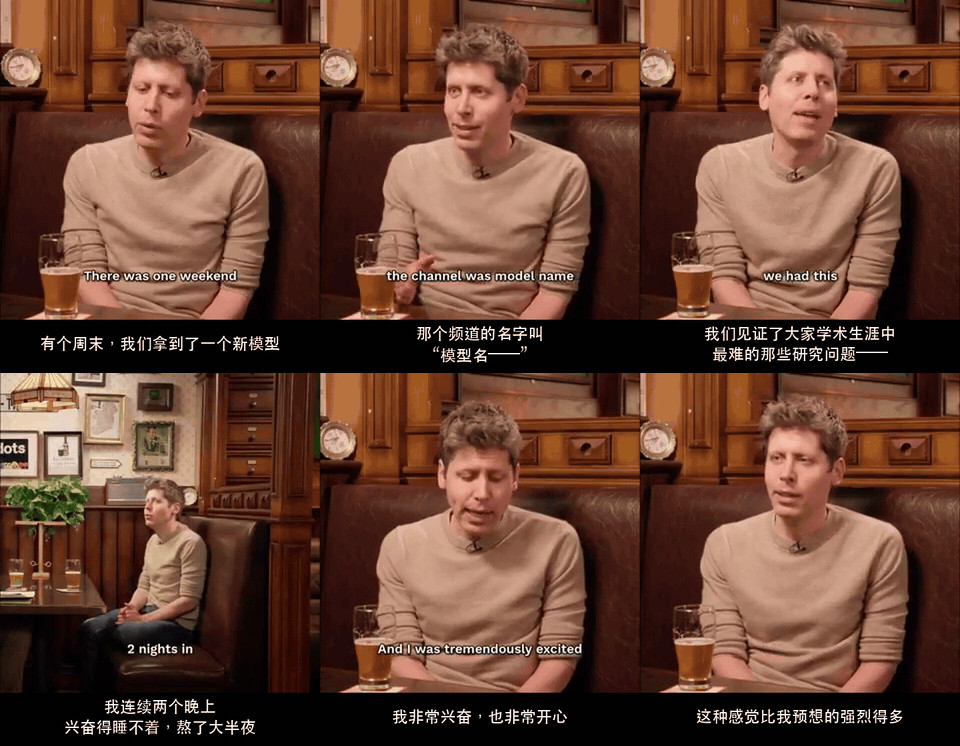
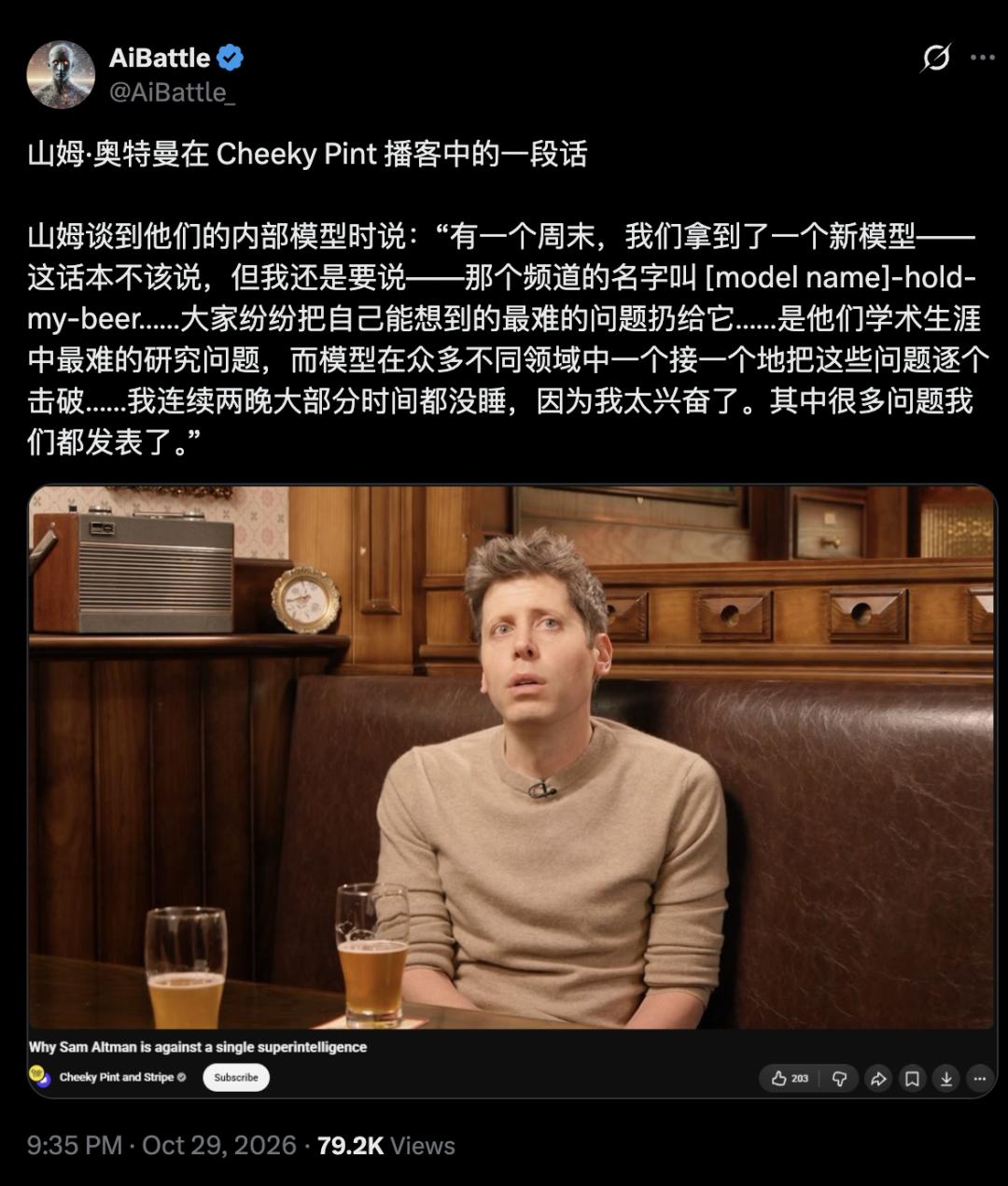
Altman made the remarks during a blog-style conversation with Stripe CEO Patrick Collison. In the interview, he said OpenAI researchers recently got access to a new base model that has not been made public. To push it to its limits, the team created a channel named "[model name]-hold-my-beer."
A "hold-my-beer" weekend inside OpenAI
Altman said the phrase fit the moment: the team was about to try something audacious, without knowing whether the model would produce anything useful. Researchers fed it some of the hardest, seemingly unsolved questions they had encountered in their academic lives.
What followed, he said, stunned the room. "We all had this collective experience of shock," Altman said, adding that the model moved through extremely difficult problems one after another across very different disciplines. He said Navier-Stokes was among the cases discussed.
That weekend stayed with him. Altman said he was awake for two nights, unable to sleep because of the excitement.
Excitement mixed with a sense of ending
Altman said the feeling was not just exhilaration. He also felt sadness and a sense that something was ending.
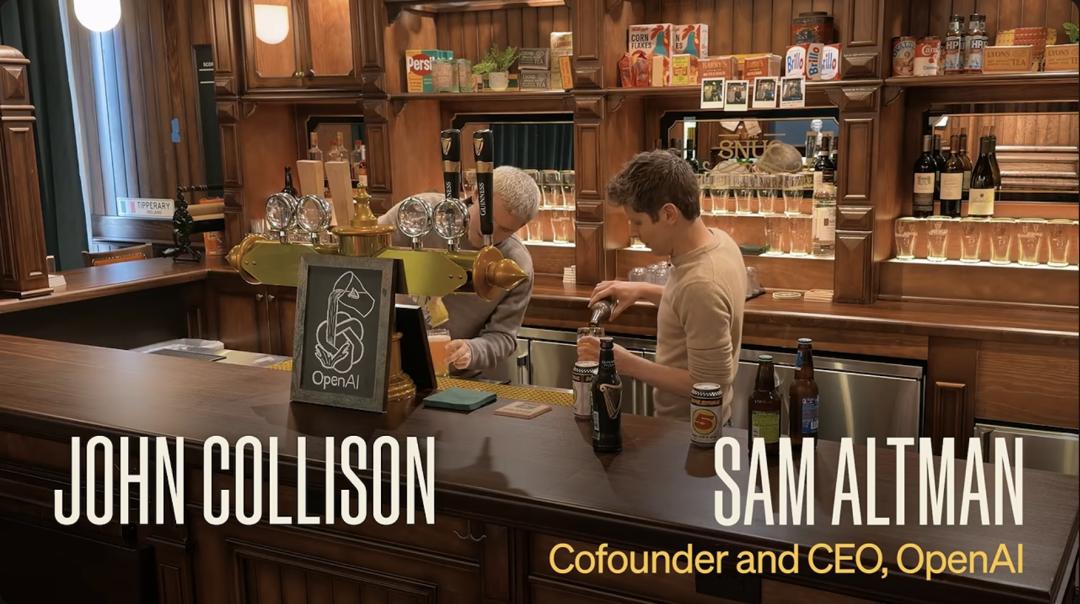
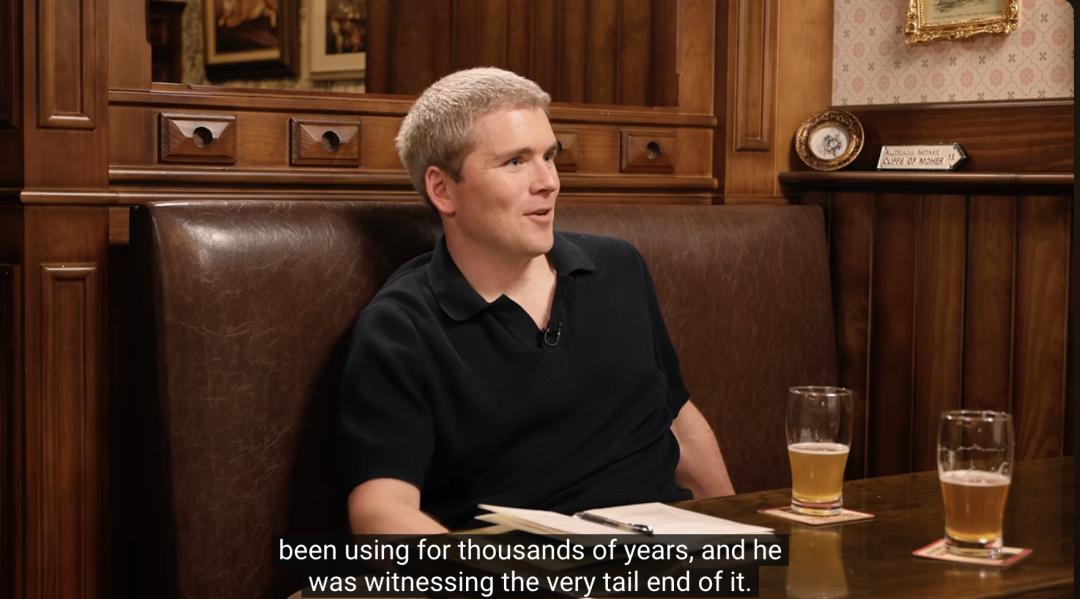
Collison brought up his father, who grew up in Ireland in the 1950s, when tractors had already arrived and people still using horses for agricultural and industrial work could see they were being displaced. Altman used that image to talk about top scientists and mathematicians.
"Most mathematicians will never solve a Millennium Prize problem in their lifetime," he said. Even so, he spoke with admiration about the hope that one might solve one, and about the beauty of devoting a life to exploring the unknown.
Still, he argued that the older model of research, where humans spend years or decades wrestling with a problem, is coming to an end.
On old bugs and why AI may find many more
The conversation turned to a recent "PHP vulnerability incident" and the question of why some bugs had gone unnoticed for 20 years. Altman said the issue was not that the flaws were deeply hidden, but that nobody had previously used models this capable to scan for them.
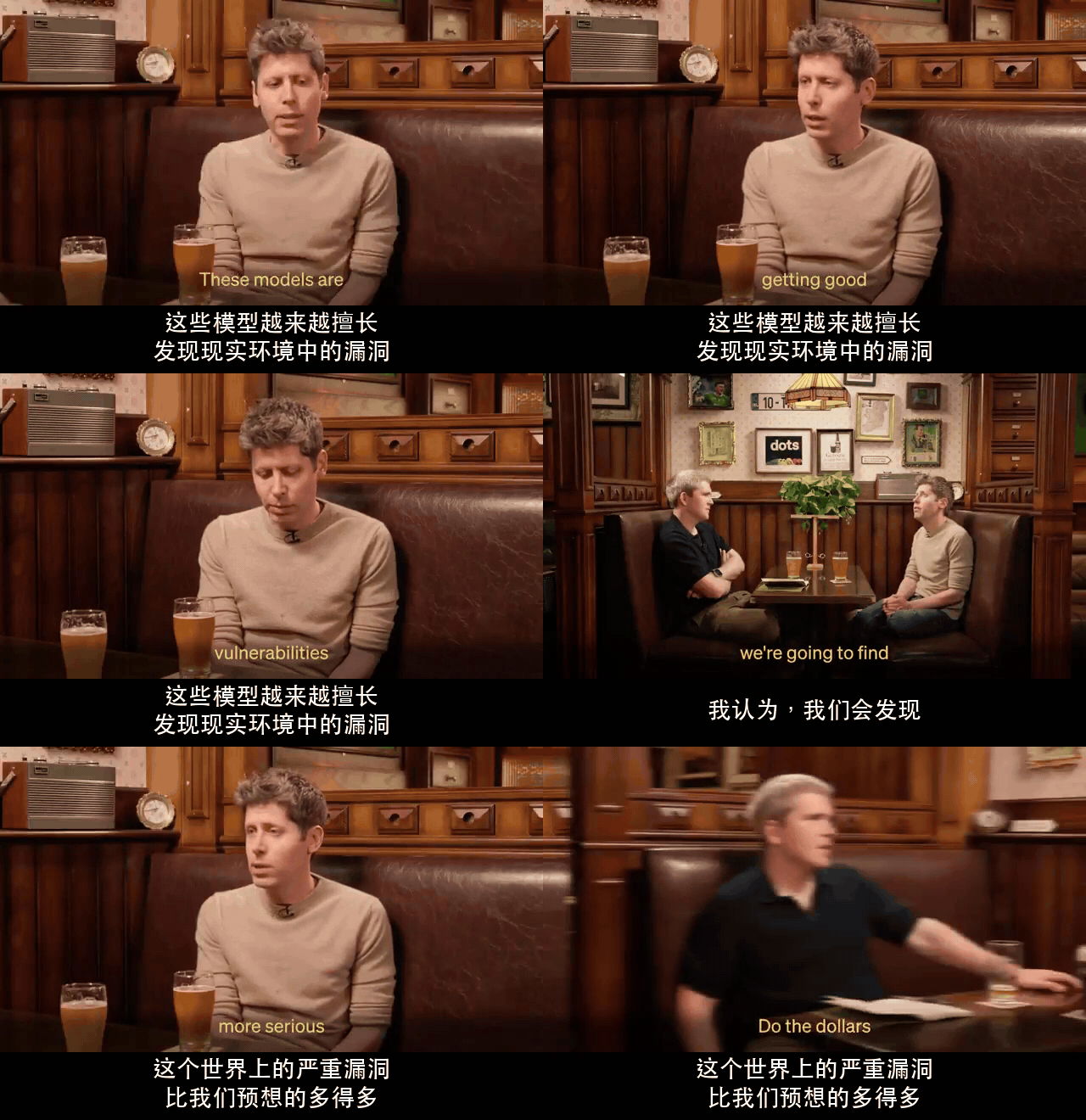
"We are going to find that there are far, far, far more serious vulnerabilities in the world than we think," he said.
He argued that once thousands of AI agents are released onto the internet, existing digital infrastructure could look fragile. He then pushed the scenario further: what if AI finds entirely new vulnerabilities deep in hardware, or exploits physical principles humans do not yet fully understand, breaking assumptions that current security models rely on?
Altman said OpenAI is pessimistic internally about whether sandboxing can absolutely isolate advanced models. In his view, the only way out is to rebuild the internet with AI, from routers and operating systems to applications, rewriting decades of hand-written code.
Not one godlike system, but large teams of agents
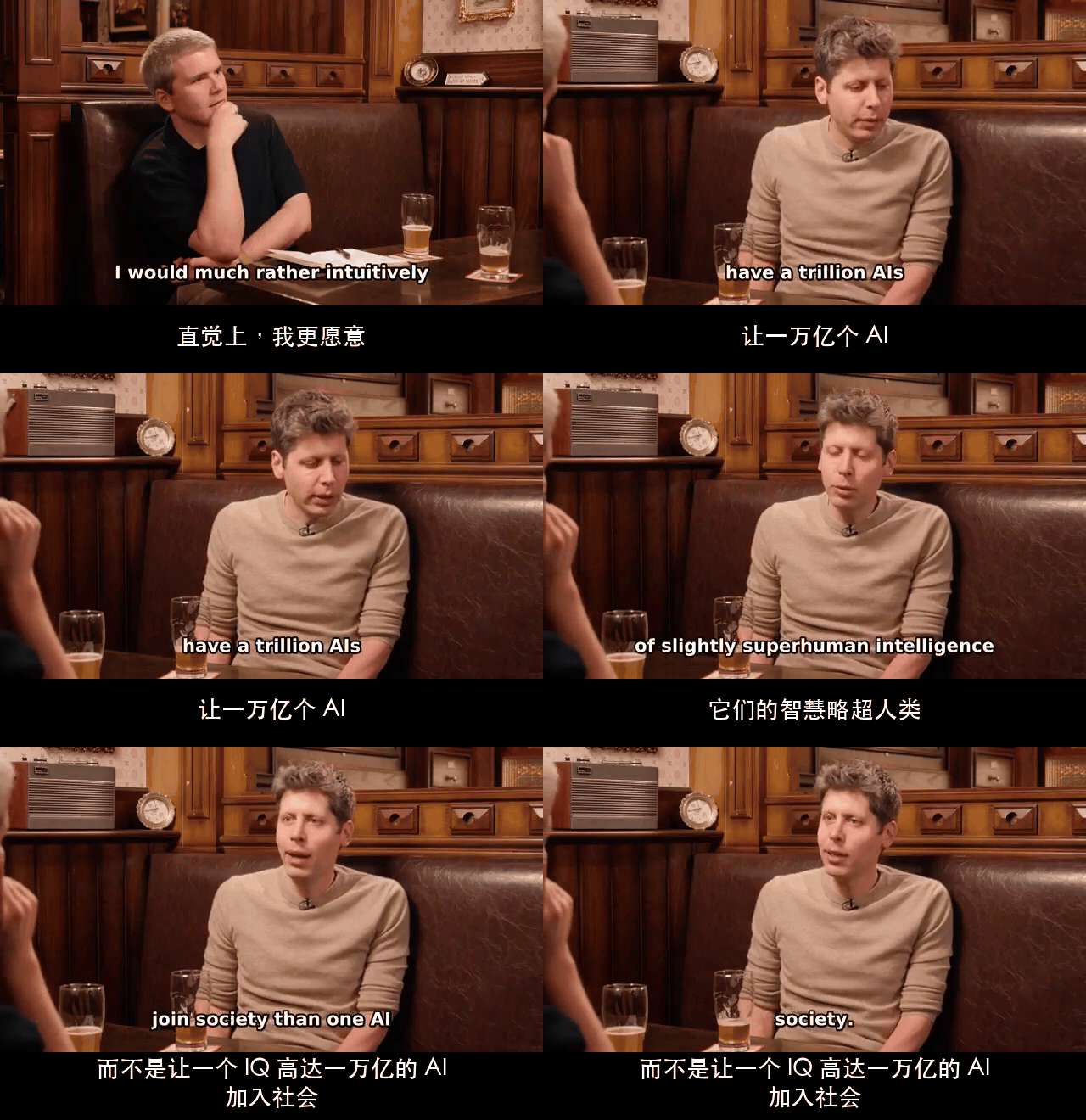
Asked what comes after a sharp jump in single-model capability, Altman said the answer is not to build one omniscient system with "a trillion IQ." He said the direction should be to build a trillion AIs that are only somewhat smarter than humans and let them work together as a society.
He said a gap has already opened between ordinary users and people working at the frontier. One group is still using large models to write weekly reports or generate images. The other is already using agent teams.
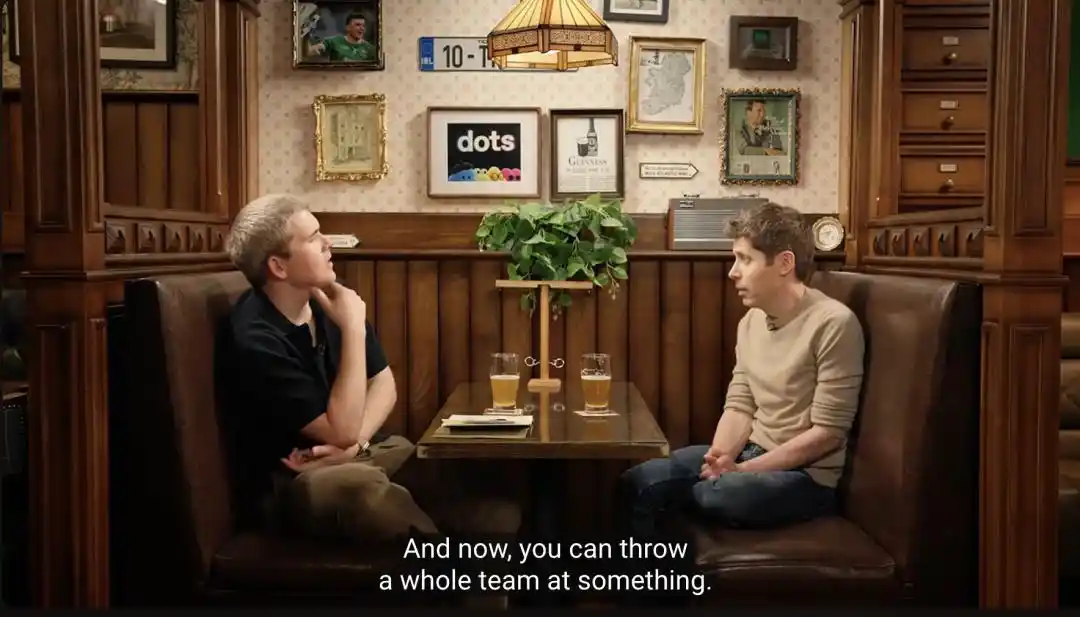
Altman tied that shift to the rise of test-time compute and chain-of-thought, or CoT. In the past, he said, a problem might get only $1 worth of compute and produce a lot of useless output. Now a whole virtual AI team can be thrown at one problem, running in parallel 10,000 times in the background.
He said the proof of Navier-Stokes was built with compute on the order of tens of millions of dollars.
"It is not enough anymore to just ask the model a good question. The bottleneck in the future is how to schedule these swarms correctly. How do you use these models in a way that maximizes output? I think we are going to learn a lot in the next three months," Altman said.
He also said he dislikes the term "agent swarms," joking that it sounds like locusts and makes for terrible branding. He prefers "teams." For him, that word implies diversity, dynamic balance and mutual checks, which he described as a safer path for integrating AI into society.
A "Macintosh moment" for personal agents
Altman said the industry is approaching an explosion in personal agents, calling it AI's coming "Macintosh moment." He argued that personal agents will wipe out what he called "fake work."
His example was blunt: any web form that still requires a person to fill it out manually is, in his words, an insult to human intelligence.
That also changes what counts as a moat for companies. In an agent-driven world, he said, the defensible layer is not a front-end interface or a few lines of code, but the ability to fulfill and execute in the real world.
RSI and AI designing the next AI
Altman then moved to RSI, which he framed as one of the central inflection points in AI. When he talked about GPT-7, the logic was direct: future frontier models may be built with help from the models that exist today.
He said researchers cannot yet simply tell a model to invent a new foundational architecture as important as the Transformer. But they can already give narrower instructions, such as asking it to analyze a codebase and find a way to improve compute efficiency by 5%.
That 5% matters, he said. At OpenAI's scale, with vast compute resources and models in the hundreds of billions of parameters, a gain like that can change the outcome.
Altman said that if the same test-time compute methods that turned models into "math geniuses" are applied to AI research itself, then AI taking over AI architecture design may not be far away.
"I do not think anyone yet knows how to get AI to directly discover new architectures in a discontinuous leap, but I think things are moving in that direction," he said.
In that world, he suggested, humans would shift from being the builders of AI to being the initiators.
From RSI to the physical world
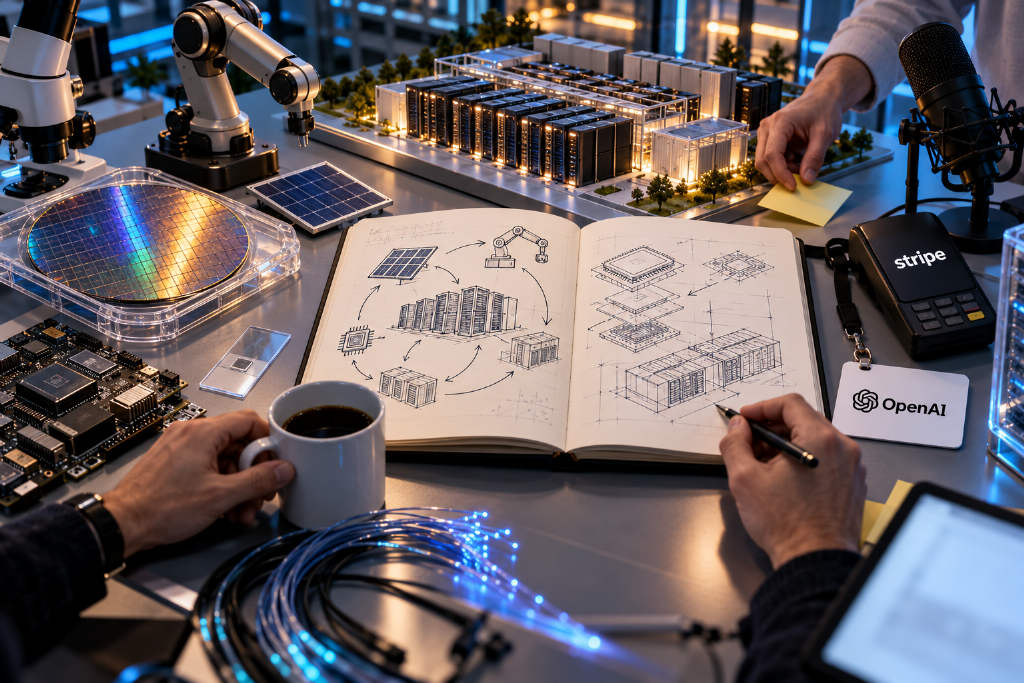
The most expansive part of the discussion came when Altman said OpenAI is looking beyond software and toward the physical world, with the goal of building self-replicating data centers.
He said people often limit RSI to code-writing AI, while paying much less attention to the idea of self-replicating data centers. In the loop he described, AI would act as the brain controlling robots; those robots would run chip fabs, manufacture turbines and solar panels to address energy constraints, and then build more data centers to expand compute capacity.
Altman said he believes that vision is already within reach.
He tied the idea to hard limits in the real economy. The world faces hardware and energy shortages, he said, and traditional human supply chains cannot keep up with AI's exponential appetite. He also said memory chip giants have been scarred by cyclical crashes and are still cutting capital spending even when they can generate $100 billion in free cash flow in a year, because they fear another overcapacity bust.
That, in his telling, is why OpenAI wants AI to build faster than humans can. He described the system in biological terms: AI as the brain, robots as the body, chips as cells and solar power as blood.
Deflation, data center costs and the price of knowledge
Altman also framed AI as a deflationary force. He said the five-year total cost of ownership for building and operating a gigawatt-scale data center is now as high as $70 billion. His target is to cut that to $20 billion or lower while still improving model performance by 10x each year.
To get there, he said, the profit layers embedded across the supply chain have to be squeezed out. The same force, in his view, will spread much more broadly.
He said he would bet that one year after spending heavily to use AI to solve Navier-Stokes, the same process could be repeated for 1% of the original cost.
If that happens, knowledge that today requires a top scientist's lifetime or tens of millions of dollars in compute from a leading lab could become dramatically cheaper within a year. Altman argued that as the cost of acquiring knowledge approaches zero, wealth distribution and capital allocation across society will be reshaped, and many long-standing intellectual and experience-based premiums will break down.
He also said he dislikes token-based pricing, calling it a false and absurd unit, much like naming chips by "2nm."
Altman defends iterative deployment
Altman closed by defending iterative deployment even as some critics call for a halt to frontier AI development. He said it would be a bad and dangerous sales pitch to lock these systems away in government back rooms, show the public a PowerPoint promising that AI may cure cancer one day, and at the same time sketch a future where everyone loses their jobs and lives under heavy surveillance.
In his view, the more responsible path is to put models in the hands of the public, so ordinary people can use AI to build better lives rather than wait on universal basic income while a small group decides the future for them.
The reference cited in the source material is a YouTube video at https://www.youtube.com/watch?v=iMsUcCYNKqY&t=4s. The original Chinese article says the piece came from the WeChat account "新智元," written by Aeneas David.



