
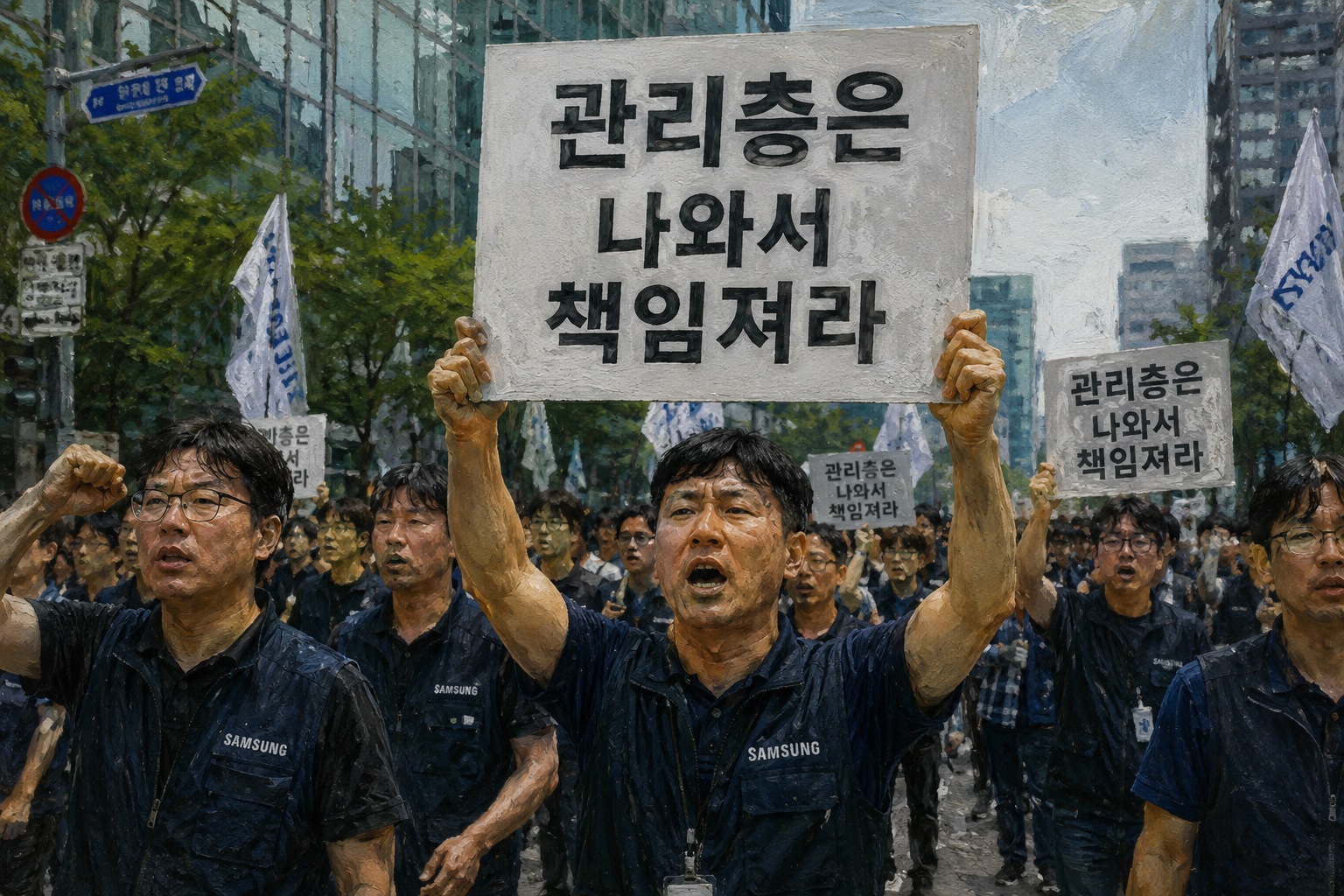
The internal wage dispute at Samsung Electronics escalated sharply ahead of a crucial vote. The smallest union, representing employees in the DX (Digital Experience) division, filed for an injunction with a South Korean court on Tuesday, seeking to suspend the final vote scheduled to end Wednesday. The core grievance: the proposed deal heavily favors the chip division at the expense of consumer electronics staff.
Chip employees get 513M won bonus; DX only 6M won
Based on the proposed terms and 2026 operating profit projections, semiconductor division employees would receive an average bonus of about 513 million won ($340,000) this year, while DX staff would get just 6 million won — a gap of more than 85 times. The union's leader stated, "We refuse to be second-class citizens."
Samsung has three labor unions. The largest, dominated by chip workers, led months of negotiations and reached a tentative deal on May 20, averting a strike that could have involved 48,000 employees. The agreement includes an average 6.2% salary increase, a housing loan plan of up to 500 million won, and annual bonuses totaling about 40 trillion won ($26.6 billion) for 78,000 chip workers.
Smaller union lost voting rights after quitting talks
The smallest union withdrew from the joint negotiating committee early in the process, citing insufficient attention to DX demands. The largest union then claimed that those who left the committee were no longer eligible to vote. The injunction request is the union's last-ditch effort to block the agreement before the vote closes.
DX union membership surges 10,000 in a day
DX union membership grew from about 3,000 before the deal to nearly 13,000 by Tuesday morning — a net increase of over 10,000 in one day. Some members actively recruited colleagues to join, aiming to ensure these new members could vote and potentially reject the deal. However, whether the surge translates into voting power depends on the court's decision and the largest union's recognition of the new members.
As of Monday evening, 87% of eligible members had already cast ballots; the deal needs only a simple majority to pass. Analysts widely expect the agreement to be approved.