
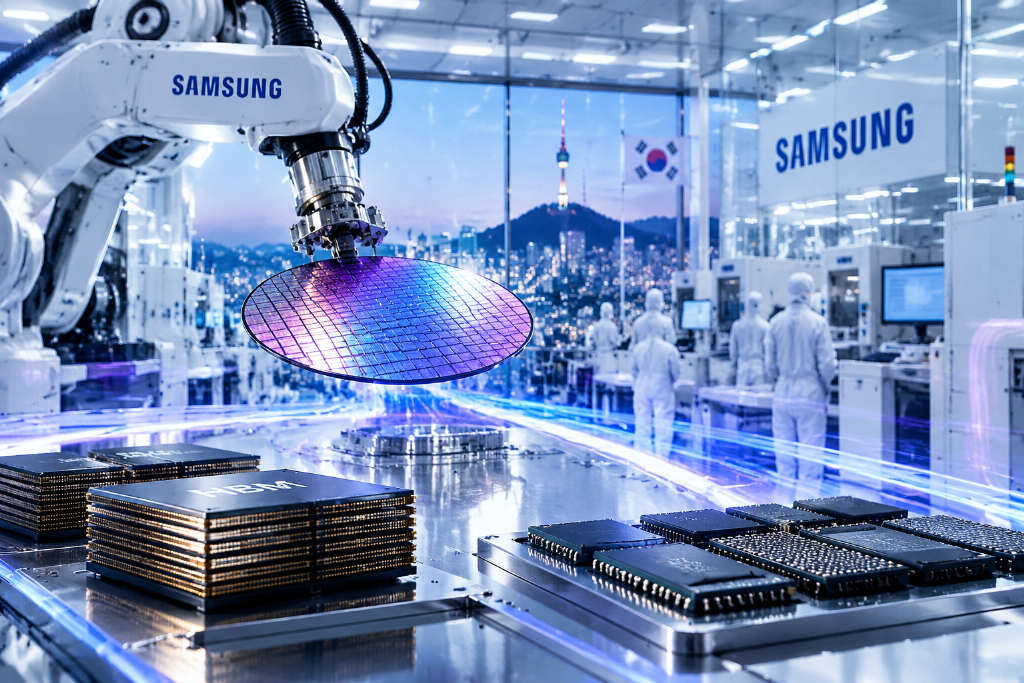
Samsung Electronics Executive Vice President Kim Taewoo said HBM is expected to account for nearly 30% of total wafer capacity at DRAM makers next year, up from about 20% now, according to a Sept. 29 local media report cited by CLS.
Kim said HBM and conventional DRAM compete for the same pool of wafer capacity. If HBM output expands, supply of traditional DRAM could be squeezed.
TrendForce sees tight memory supply in 2027
TrendForce had previously forecast that by the end of 2027, HBM wafer input from the world’s three largest HBM suppliers would account for about 30% of total DRAM wafer input. By memory capacity, though, that would contribute only about 13% of total DRAM supply.
The research firm said on the same day that demand for AI servers remains strong, while HBM and general-purpose DRAM will continue to share limited advanced-process capacity. On that basis, it expects memory supply to remain tight in 2027.
TrendForce also raised its 2027 HBM price outlook, saying blended average selling prices are expected to increase 121% year over year.
Samsung’s HBM4 production and sample timeline
Another media report dated Sept. 20 said Samsung began mass production and shipments of HBM4 in February this year. In May, it provided 12-high HBM4E samples to customers including NVIDIA.
Industry estimates cited in the report said Samsung’s average monthly HBM wafer input is expected to rise from about 180,000 wafers this year to about 250,000 next year.
8-high HBM seen as a priority option in 2027
TrendForce said limited supply and rising system costs are likely to make 8-high HBM a priority option for evaluation by multiple vendors in 2027.
It added that the price per Gb of 8-high HBM is expected to be about 10% to 20% higher than that of 12-high products.