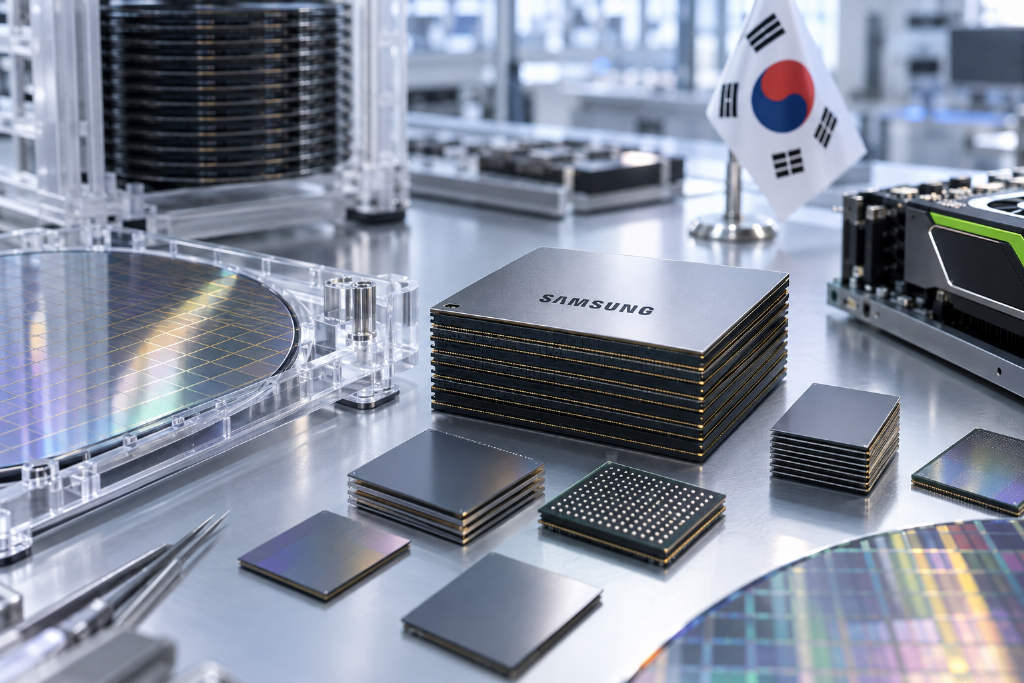
Samsung Electronics plans to expand production of its HBM4 family, including sixth-generation HBM4 and seventh-generation HBM4E, to at least more than double this year’s level in 2027, according to The Seoul Economic Daily as cited by ChainCatcher. The report said the company also aims to raise outsourced cleaning volumes for glass carriers used in DRAM thinning for HBM production from 20,000 sheets per month this year to 50,000 per month next year, a 2.5x increase. Monthly demand for those carriers was about 10,000 last year and doubled this year. Samsung’s capacity buildout is centered on HBM4 and HBM4E products with stacks of 12 layers or more. The company began mass production and shipments of HBM4 in February using sixth-generation 10-nanometer-class (1c) DRAM and a 4nm base die, and in May supplied 12-layer HBM4E samples to customers including Nvidia. Industry estimates cited in the report project Samsung’s average monthly HBM wafer input to rise from about 180,000 wafers this year to about 250,000 next year, while the HBM4 family’s share of shipments could increase from about 40% to about 80%.
Samsung Electronics plans to raise production of its HBM4 family, including sixth-generation HBM4 and seventh-generation HBM4E, to at least more than double this year’s level next year, according to The Seoul Economic Daily, as cited by ChainCatcher.
The report said Samsung intends to increase outsourced cleaning volumes for glass carriers used in DRAM thinning for HBM production from 20,000 sheets per month this year to 50,000 sheets per month next year. That would mark a 2.5x increase from this year. Monthly demand for the carriers was about 10,000 last year and has already doubled this year.
The company’s expansion is focused on HBM4 and HBM4E products with 12 layers or more.
Samsung began mass production and shipments of HBM4 in February. The product uses sixth-generation 10-nanometer-class (1c) DRAM and a 4nm-process base die. In May, the company provided 12-layer HBM4E samples to customers including Nvidia.
Industry estimates cited in the report said Samsung’s HBM capacity, measured by average monthly wafer input, could rise from about 180,000 wafers this year to about 250,000 next year, an increase of nearly 40%. The share of HBM4-series shipments may also climb from about 40% this year to about 80% next year.
This article was originally published by Bit.Fan. For more cryptocurrency news and market insights, visit www.bit.fan. Disclaimer:
The market information, project data, and third-party content displayed on this platform are for industry information sharing only and do not constitute any form of investment advice or return commitment.
Cryptocurrency trading carries high risks. Users should fully assess their risk tolerance and make independent decisions. All profits, losses, and legal responsibilities are borne by the users themselves.