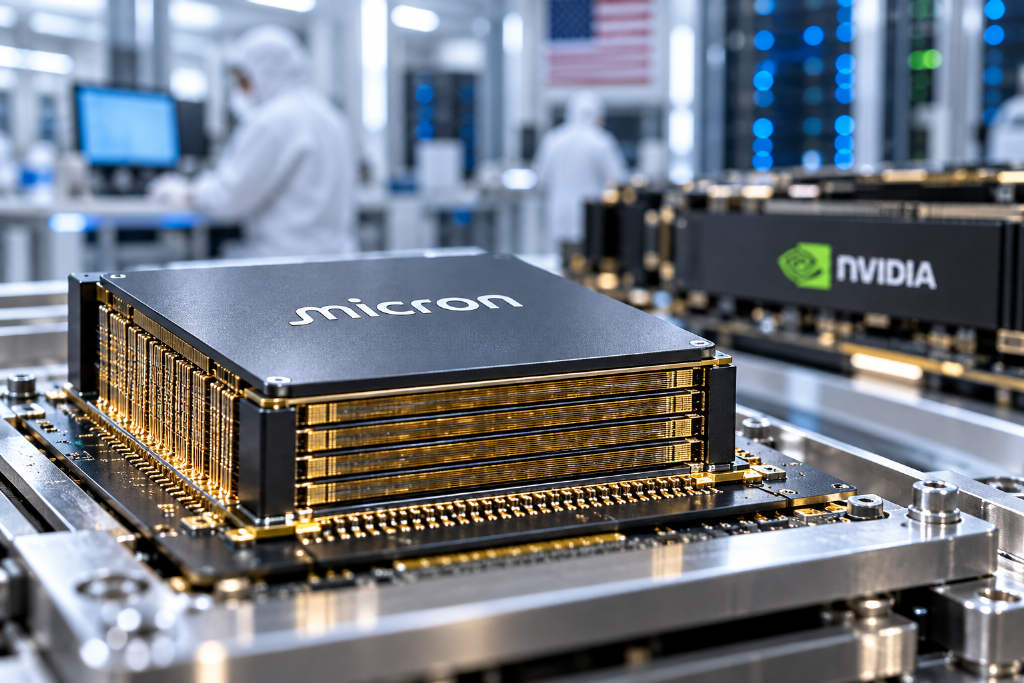
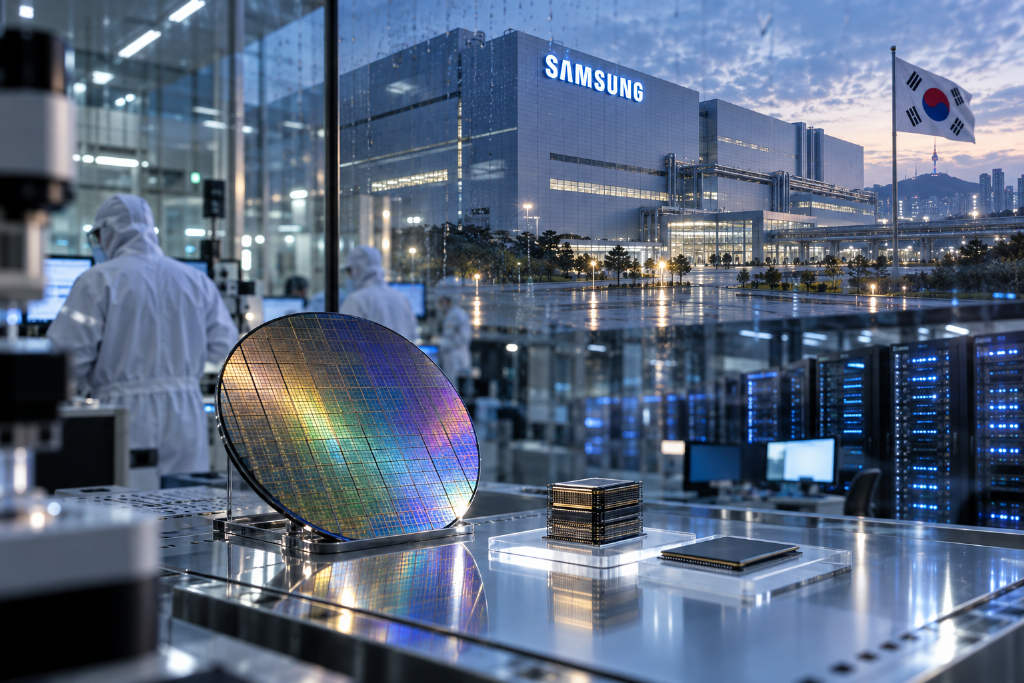
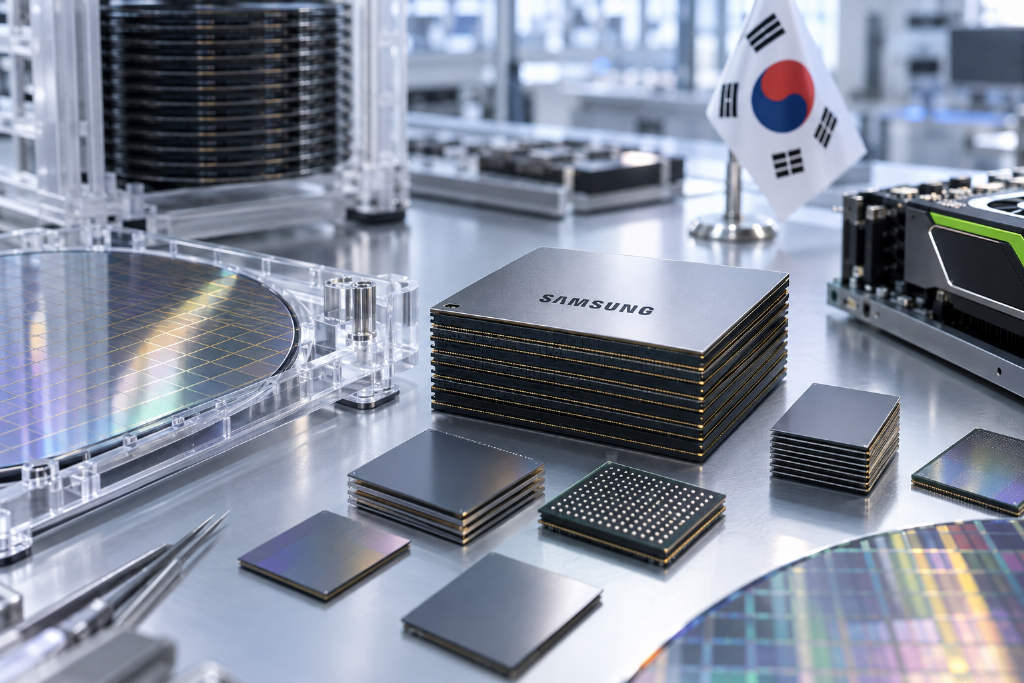
Samsung Elect2026-10-02 07:55:58Samsung reportedly seeks sharply higher HBM4 pricing for 2027 as Micron says supply is largely bookedSamsung Electronics has reportedly proposed a mid-to-high $4 per Gb price for 2027 HBM4 supply in talks with major customers, according to South Korea’s Maeil Business Newspaper. That compares with roughly $1.5 per Gb for current mainstream HBM3E, putting the new quote at more than three times higher. The report said much of next year’s HBM capacity has already been discussed and pricing talks are expected to wrap up within this month, making the outcome important for Samsung’s average selling price and profit profile. Micron added another signal on supply tightness. In its fiscal 2026 fourth-quarter earnings call on Oct. 1, the company said it had already signed contracts covering most of its 2027 HBM bit supply. CEO Sanjay Mehrotra said HBM pricing next year would be "well above 2026," and that HBM profitability, which had recently lagged conventional DRAM, would improve as prices rise. TrendForce estimates average HBM selling prices in 2027 will climb about 121% from this year, citing tight supply, a larger mix of higher-priced HBM4, and volume ramp for HBM4E in the second half of next year. Counterpoint Research data also showed Samsung’s HBM revenue share rose from 21% in Q1 to 33% in Q2, while SK hynix remained the market leader.40
Micron2026-09-30 14:21:45Micron earnings preview: EPS seen up 940% year over year, with profit contribution potentially topping NvidiaMicron Technology is scheduled to report fiscal 2026 fourth-quarter results after the U.S. stock market closes on Wednesday. According to FactSet, analysts expect earnings per share for Micron’s quarter ended in August to rise about 940% from a year earlier. If that forecast is met, Micron could surpass Nvidia for the first time in at least two and a half years to become the single largest contributor to S&P 500 profit growth in the third quarter. FactSet estimates overall S&P 500 earnings growth at 29.1% year over year, but that figure would drop to 24% without Micron, implying the company alone adds roughly 5 percentage points to the index’s growth rate. Another key focus for investors is the production ramp of HBM4. Susquehanna analyst Mehdi Hosseini said large-scale production and shipments tied to Nvidia’s Rubin platform may be concentrated after April 2027, suggesting any major revenue lift from HBM4 for Micron may largely show up in 2027.40
AI infrastruc2026-09-29 06:19:19AI Infrastructure Spending Shifts Toward Optical Interconnects as GPU Share FallsTwo research reports from Jefferies and Bank of America argue that the cost structure of AI infrastructure is changing as rack-scale systems grow larger. Jefferies’ bill-of-materials analysis of NVIDIA AI rack platforms shows GPU costs taking a smaller share of total rack spending, falling from 62.5% in the early GB300 NVL72 generation to 46% in the Rubin-era NVL576 Pod. Over the same period, total procurement cost for a single rack jumped from $4.16 million to $55.25 million, while networking and fiber interconnect rose from 8.6% to 22.4%, or more than $12 million in absolute terms. Bank of America, citing an interview with former Microsoft engineering vice president Fran Cardells, said the shift is tied to inference workloads rather than training. In agentic AI systems, KV cache must hold prior token sequences, enterprise context, guardrail rules, and agent decision logs, and in some cases can reach 10 times the size of model weights. As context windows expand from about 128K tokens toward 1 million tokens and multiple agents run at once, memory demand keeps rising. Cardells said the bottleneck is no longer simply how many GPUs a system has, but how quickly data can move across GPUs, memory, and storage. Both reports point to optical networking, photonics, memory pooling, and related infrastructure as areas the market may still be underestimating.330
Samsung Elect2026-09-28 05:17:24Samsung Electronics and SK Hynix face a high bar as Q3 earnings test the durability of the AI tradeSamsung Electronics and SK Hynix are heading into third-quarter earnings season with expectations running high, and investors are treating the results as a key read on whether the global AI-driven semiconductor rally still has room to run. Consensus figures cited by Seoul Economic Daily, based on FnGuide data, point to strong revenue and operating profit for both companies, though analyst estimates have been trimmed over the past three months. The reported revisions were linked mainly to a stronger Korean won, which reduced the value of dollar-denominated sales, rather than to weakening memory demand itself. Beyond the headline numbers, the market is watching several deeper questions: whether DRAM and NAND price gains can hold, how much long-term agreements are stabilizing or capping margins, whether HBM4 is beginning to turn into meaningful profit, and whether Samsung’s foundry business can return to the black while its device division copes with rising component costs. The upcoming reports are being watched not just for near-term valuation moves, but for what they say about the staying power of this semiconductor cycle.180
Samsung Elect2026-09-22 06:50:51Samsung weighs 4 nm foundry expansion as HBM4 base chip demand risesSamsung Electronics is reviewing an expansion of its 4 nm foundry capacity as demand for HBM4 base chips increases, according to a Sept. 21 report by Money Today cited by ChainCatcher. The company is pushing ahead with advanced-process capacity growth as the HBM market expands. Samsung’s HBM4 combines a 10 nm-class sixth-generation (1c) DRAM core die with a 4 nm logic base die that handles high-speed data exchange with GPUs and other AI accelerators. Unlike SK hynix, which uses TSMC’s 12 nm process for its HBM4 base chip, Samsung is using its own 4 nm node. The report said Samsung’s relevant production line is already running at full capacity and has taken orders tied to Nvidia Groq 3 LPUs. Samsung has also recently raised prices for new 4 nm orders and HBM4 base chips. The company expects third-quarter HBM4 revenue to rise by more than three times from the previous quarter, with HBM4 accounting for well above 60% of HBM revenue in the second half. It is also evaluating a new 2 nm line for HBM5.450
Samsung Elect2026-09-20 08:27:14Samsung plans to at least double HBM4-series output next year, report saysSamsung Electronics plans to expand production of its HBM4 family, including sixth-generation HBM4 and seventh-generation HBM4E, to at least more than double this year’s level in 2027, according to The Seoul Economic Daily as cited by ChainCatcher. The report said the company also aims to raise outsourced cleaning volumes for glass carriers used in DRAM thinning for HBM production from 20,000 sheets per month this year to 50,000 per month next year, a 2.5x increase. Monthly demand for those carriers was about 10,000 last year and doubled this year. Samsung’s capacity buildout is centered on HBM4 and HBM4E products with stacks of 12 layers or more. The company began mass production and shipments of HBM4 in February using sixth-generation 10-nanometer-class (1c) DRAM and a 4nm base die, and in May supplied 12-layer HBM4E samples to customers including Nvidia. Industry estimates cited in the report project Samsung’s average monthly HBM wafer input to rise from about 180,000 wafers this year to about 250,000 next year, while the HBM4 family’s share of shipments could increase from about 40% to about 80%.440
Goldman Sachs2026-09-14 05:13:09Goldman Sachs Keeps Neutral on Micron, Sees $51.9 Billion Quarterly Revenue Above ConsensusGoldman Sachs said in a Sept. 11 preview note on Micron Technology that it is maintaining a Neutral rating and a 12-month price target of $1,100. Based on Micron’s Sept. 10 close of $977.41, the target implies 12.5% upside. The firm’s valuation is based on 18x normalized earnings per share of $62. Goldman expects Micron to post quarterly revenue of $51.9 billion, gross margin of 87.3%, and EPS of $32.54, all above market consensus. For the November quarter, it forecasts revenue of $57.7 billion, gross margin of 88.1%, and EPS of $37.06, again ahead of consensus estimates. The bank said investors are focused on strategic customer agreements, capital return plans, and the company’s HBM4 roadmap. The note also raised estimates for CY26 through CY29, citing an updated DRAM demand outlook and recent pricing trends. Goldman said upside risks include continued execution on HBM products and share gains, while downside risks include further share expansion by Chinese DRAM maker CXMT and pressure on DRAM pricing. It added that debate around Micron is likely to remain centered on long-term supply growth, especially in China, and how long current pricing strength driven by tight supply can last.1270
Samsung Elect2026-09-11 00:44:51KB Securities says Samsung Electronics may lift HBM share to 40% in Q4KB Securities said in a Sept. 11 report that Samsung Electronics could raise its share of the high-bandwidth memory, or HBM, market from 33% in the second quarter to 40% in the fourth quarter. The report attributed the projected gain mainly to HBM4, with third-quarter sales expected to increase by more than three times from the previous quarter. It also said HBM4 is likely to account for more than 60% of Samsung’s total HBM sales in the second half of the year. The report outlined Samsung’s product roadmap as well, including full-scale mass production of HBM4, HBM4E sample shipments to core customers, an HBM5 architecture built with a 1c core die and a 2-nanometer base die, and work on next-generation ZHBM. On the foundry side, KB Securities said Samsung’s 4-nanometer yield has stabilized above 80%, while 2-nanometer gate-all-around, or GAA, yield has climbed quickly to above 70%. Analyst Kim Dong-Won said the foundry business may return to profit starting in the third quarter, and stronger 2-nanometer yields could help Samsung win orders from a major U.S. customer within the year.1500