
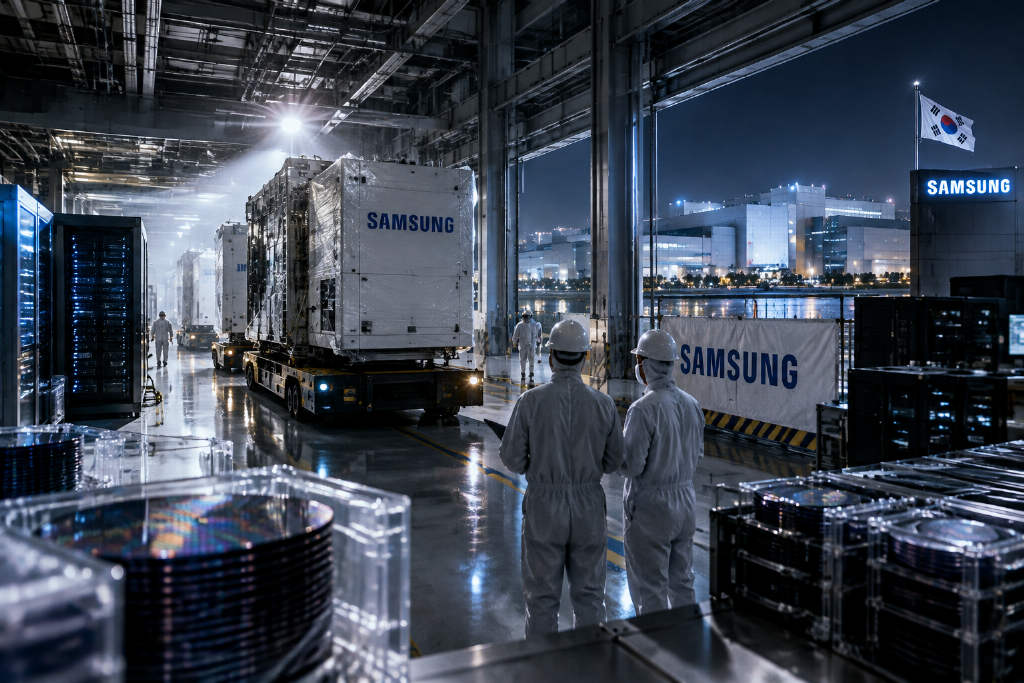
Samsung Electronics is accelerating work on Ph1, the first mass-production line at its fifth Pyeongtaek campus, P5, and is discussing with major equipment suppliers whether tool move-in can be advanced from the third quarter of next year to the second quarter, according to a Sept. 28 report by ZDNet Korea.
P5 is Samsung’s next-generation semiconductor production base targeted to begin operations in 2028. Cleanroom construction for P5 Ph1 started in the third quarter of this year. Samsung had already moved up completion of the Ph1 cleanroom by about six months from its original schedule of early next year, which had put equipment installation around the third quarter of next year.
Ph1 move-in schedule may shift earlier
Industry sources cited in the report said the start of equipment move-in is being considered for around May to June next year, instead of the previously expected July to August window. Another source said Samsung even proposed receiving equipment in the first quarter of next year and storing it at another location first, a sign, in that source’s view, that the company is showing a strong willingness to invest earlier.
Ph2 investment talks are also moving ahead
The report said discussions on investment for P5’s second phase, Ph2, are also under way. Under the plan now seen as more likely, Ph1 would be built for DRAM and HBM production, while Ph2 would more likely be used for advanced NAND lines, including 10th-generation V10.
An equipment industry source said no formal purchase orders have been placed yet. Still, Samsung has discussed with partners the possibility of building Ph2 as a NAND line and, because equipment lead times are long, has asked them to prepare related components in advance.
AI infrastructure demand is lifting memory orders
The report said large global technology companies are increasing orders for high-performance DRAM and NAND used in AI infrastructure, while memory makers including Samsung face limited production capacity.
On its second-quarter earnings call in July, Samsung said demand it failed to meet this year would carry into next year. It also said supply shortages next year would be more severe than this year and expected the shortage to continue through 2028.