
Sanctum has quietly passed Jupiter to become the largest protocol on Solana by total value locked, according to the MarsBit report, even as its token’s fully diluted valuation stands at just $32 million.

The piece, written by Shaunda Devens and Kunal Doshi and published in Chinese translation by TechFlow via MarsBit, framed Sanctum’s rise alongside a weekend rally led by altcoins. It looked at trading activity around Raydium and TAO, then shifted to Sanctum’s liquid staking business, revenue mix, and recent token proposals.
Altcoins led the weekend move, with Raydium and TAO in focus
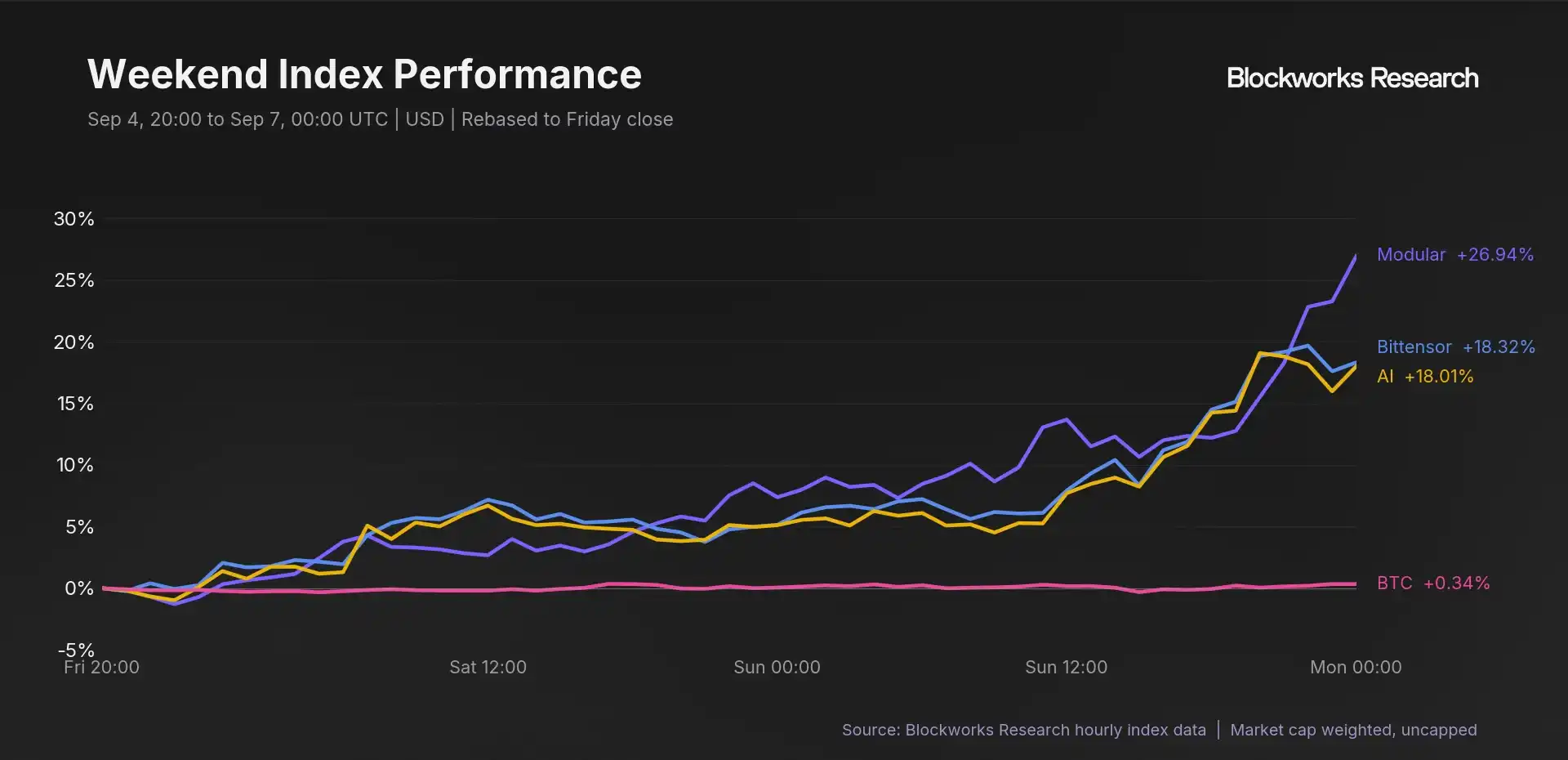
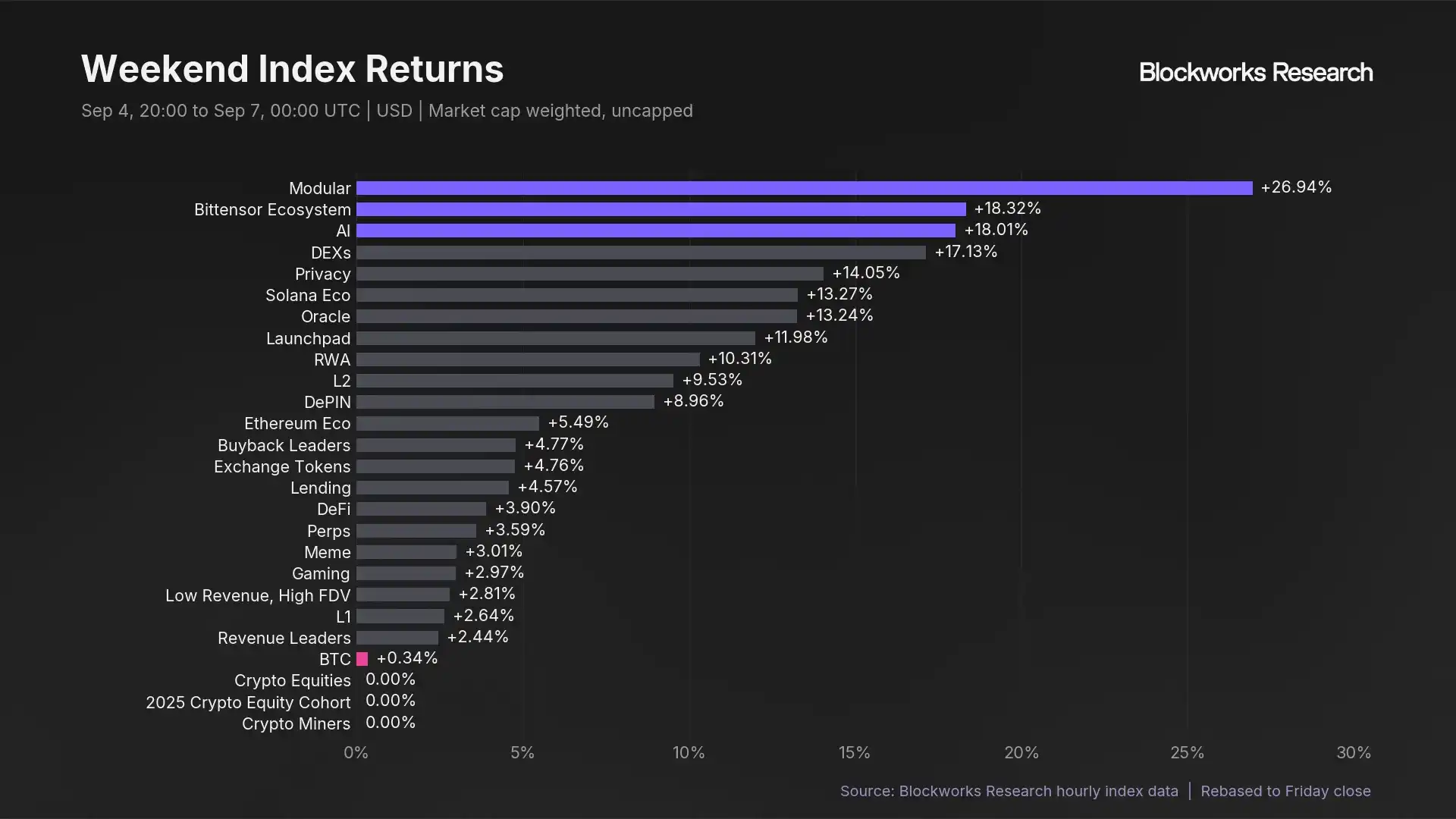
The report said the broader crypto market moved higher over the weekend, but gains were concentrated in altcoins. BTC was up only 0.3%, while Modular led with a 26.9% rise. AI and Bittensor-related assets gained about 18%. DEX and privacy sectors also outperformed, while Layer 1 tokens and memecoins lagged the leaders.
Part of that activity flowed through Solana trading venues.
Raydium rose about 58% after StonkFun said on Saturday that new token launches would go through Raydium’s LaunchLab. StonkFun allows users to create tokens paired with assets such as tokenized stocks, widening the set of markets that can flow into Solana exchanges.
Once an issuance reaches its graduation threshold, its liquidity moves into Raydium pools, and trading continues through Raydium and aggregators such as Jupiter. The article’s point was straightforward: the opportunity for Raydium does not stop at the initial launch. It extends into ongoing trading activity.
TAO also had a specific catalyst. On Sunday, StonkFun added support for token launches paired with TAO, with Buttensor (BUTT) listed as one of the first examples. Those markets require TAO liquidity, while the reward model uses transfer taxes to fund TAO distributions to holders.
That created a route from memecoin activity to TAO demand and put the token in front of Solana retail traders, the report said.
Sanctum, not Jupiter, Kamino, or Jito
The more surprising number in the article was tied to Solana’s TVL rankings. The network’s largest protocol by TVL is not Jupiter, Kamino, or Jito. It is Sanctum.
The report described Sanctum as one of the most important pieces of Solana infrastructure, even if it has stayed largely out of the spotlight.
Its core business is helping companies issue branded liquid staking tokens without spending millions of dollars to build liquidity from scratch. In the article’s framing, Sanctum is an LST factory connected to a shared liquidity network.
How the shared liquidity model works
The report used Backpack and bpSOL as an example. If Backpack wants to issue bpSOL, users deposit SOL, Backpack stakes it, and users receive bpSOL in return.
The harder part comes after issuance. Users need confidence that they can sell or redeem bpSOL at any time. Under a traditional setup, that usually means the issuer has to seed a deep bpSOL-SOL liquidity pool with millions of dollars.
Sanctum removes much of that burden by connecting bpSOL to the same liquidity network used by hundreds of other Solana LSTs. Instead of forcing each issuer to build liquidity independently, the protocol routes swaps across shared infrastructure.
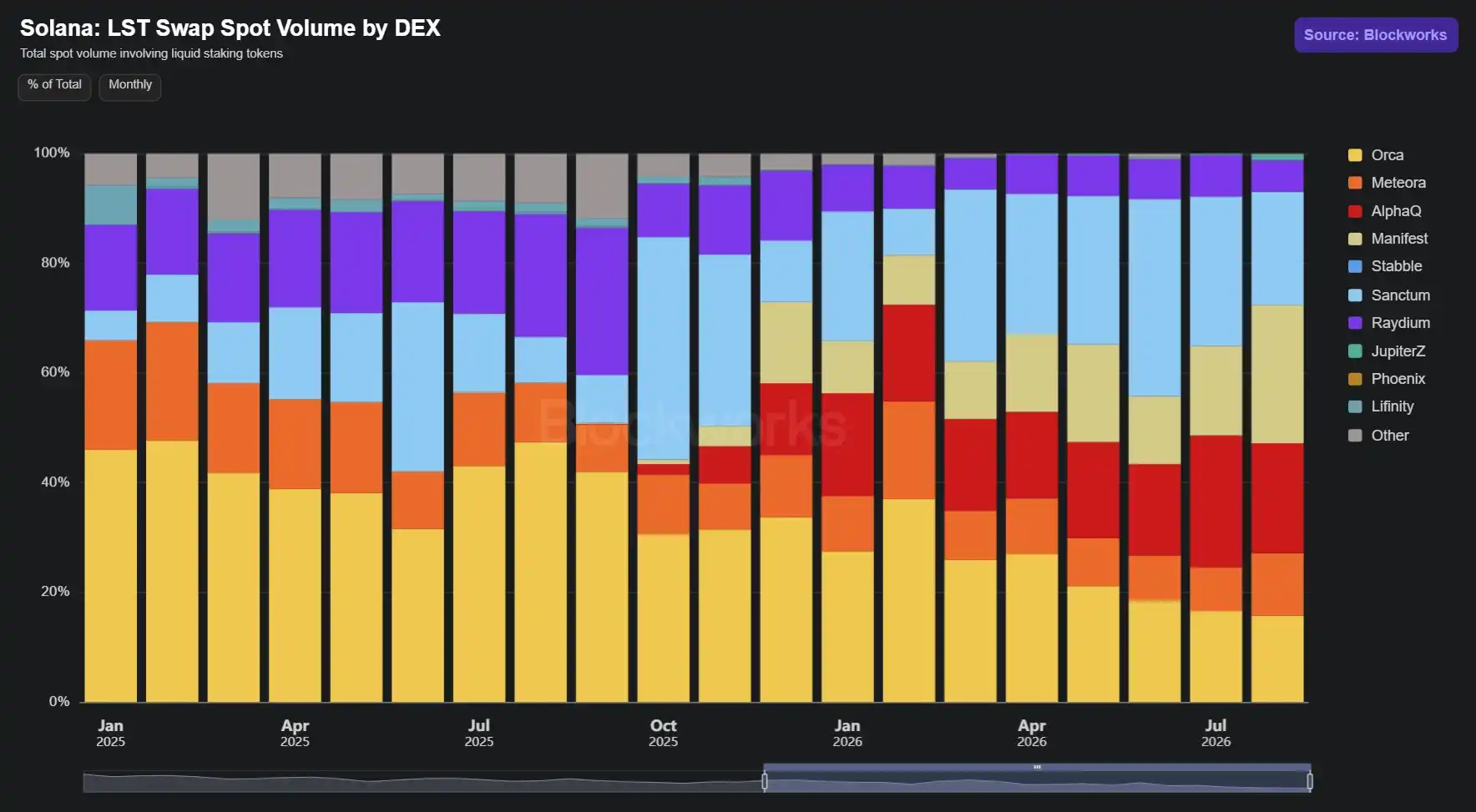
That means a newly launched LST can be liquid from day one, while the issuer can focus on distribution. The model has gained traction: Sanctum has handled 20% to 35% of Solana LST swap volume in most months, according to the report.
More than 200 LSTs and $1.77 billion in TVL
The article said the network has attracted more than 200 LSTs, including products tied to Backpack, Bybit, and Jupiter, as well as DATs associated with Forward Industries and DeFi Development Corp.
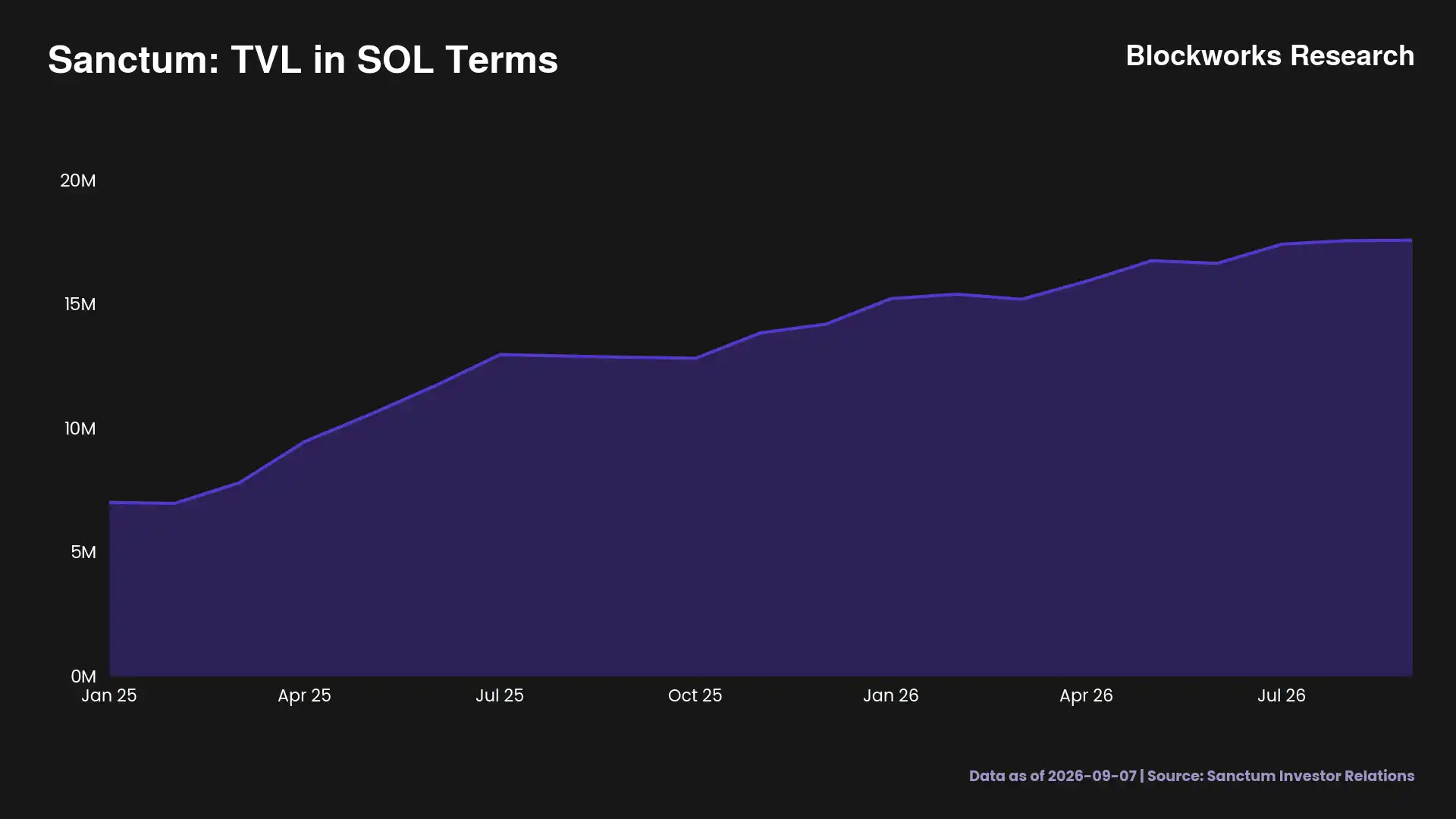
Measured in SOL, Sanctum’s TVL has grown 150% since the start of 2025 and now stands at $1.77 billion. That was enough to push it ahead of Jupiter and make it the largest protocol on Solana by TVL.
Sanctum also runs its own SOL LST called Infinity. The report described it as a liquidity pool made up of multiple Solana LSTs. Depositors receive INF, which earns staking rewards and MEV rewards from the underlying assets, plus trading fees generated when users swap between LSTs through the pool.
That structure allows INF to offer a higher yield than a standard LST while also supplying liquidity to the wider Sanctum network.
Revenue mix and treasury position
Sanctum’s business model is relatively simple in the report’s telling. The protocol takes 2.5% to 5% of staking yield generated by partner LSTs issued on its infrastructure. Those partner products account for about 80% of total revenue.
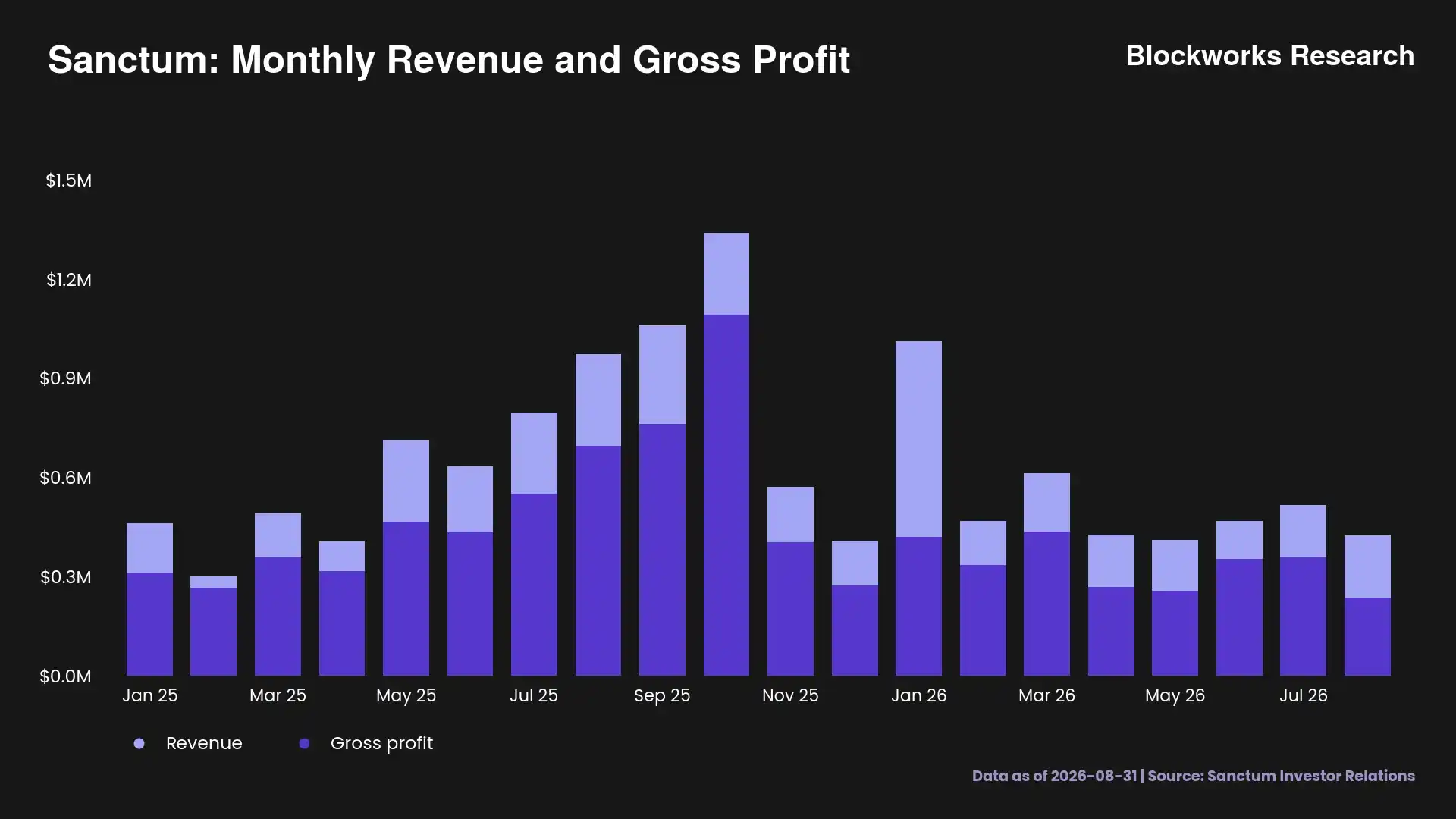
The remaining 20% comes mainly from a 5% fee on yield earned by INF.
Monthly revenue denominated in SOL has trended higher overall since the start of 2025, and gross margin reached 55% in August. The article also said Sanctum holds $6.53 million in its treasury, giving it a notable cash buffer relative to its $16 million circulating market cap.
Discounted valuation and token changes under discussion
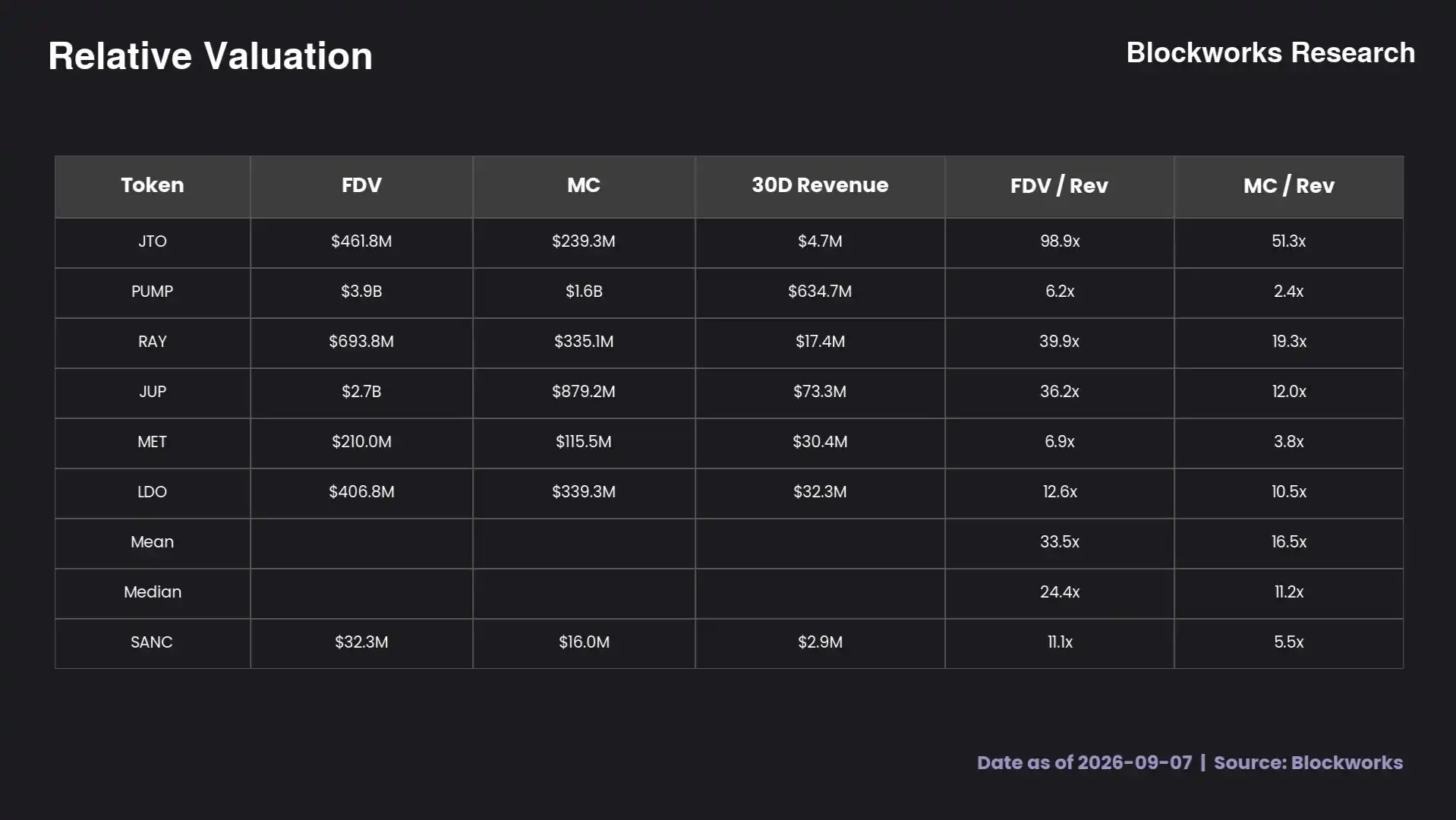
The report argued that SANC is trading at a discount relative to other revenue-generating Solana protocols and other LST protocols, especially when compared with JTO.
It also suggested reasons for that gap. Part of the discount may reflect limited token liquidity and weaker market expectations for growth in a pure-play LST business. That, the article said, may help explain why SANC trades on multiples closer to LDO.
The team said additional announcements are in the pipeline, built on top of Sanctum’s existing LST business and aimed at improving token economics. A recent proposal called for burning 25% of token supply from the community reserve and renaming the token to SANC.
Sanctum co-founder Jaye also hinted at an upcoming product called swSOL, short for Sanctum Wrapped SOL, which would allow protocols to monetize yield on idle wSOL deposits.
The article added that the token has quietly risen 50% over the past month. Taken together, the combination of TVL growth, rising revenue, treasury reserves, and token-level changes has put Sanctum in focus inside the Solana ecosystem.