
This article was originally published by Bit.Fan. For more cryptocurrency news and market insights, visit www.bit.fan.
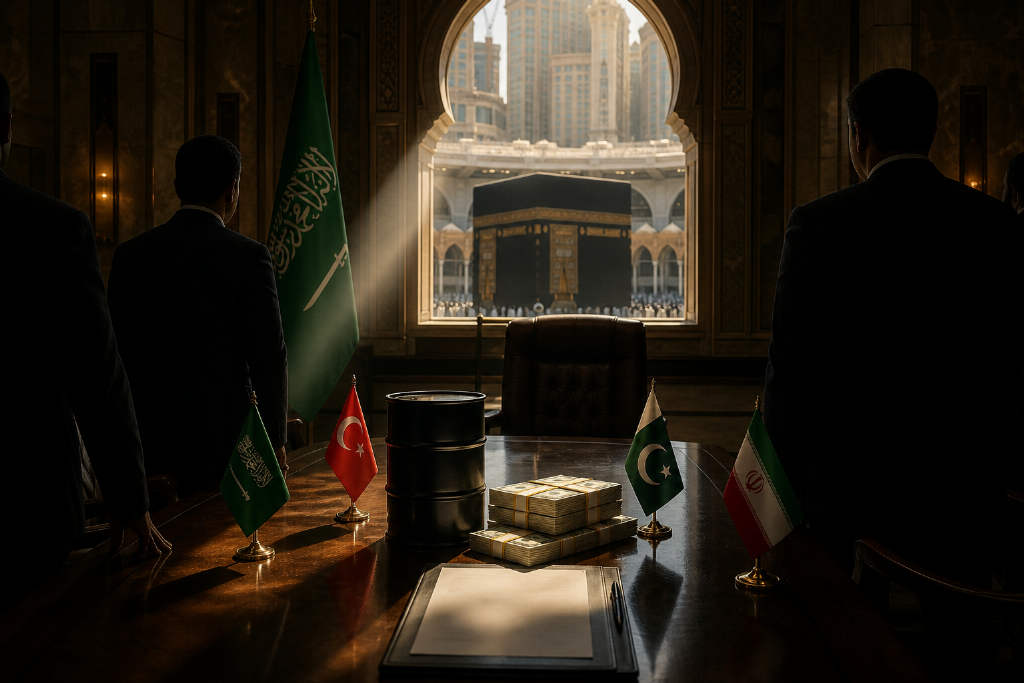
Saudi-led Mecca Pact Raises New Questions for the Petrodollar System
N
News EditorBlockBeats reported on August 26 that Saudi Arabia has been pushing the so-called Mecca Pact with Turkey and Pakistan, while also weighing an invitation for Iran. The proposal would create a collective security mechanism in which an attack on one member is treated as an attack on all, and it has prompted fresh debate over the Middle East security order and the future of the petrodollar system.
The arrangement matters not just as a regional military framework. It also reflects a wider effort by some Middle Eastern countries to reduce reliance on U.S. security guarantees. If Iran joins, Saudi Arabia, Turkey, Pakistan and Iran would sit inside a shared security structure that bridges Sunni and Shia states.
That shift has drawn attention because it touches the logic that has long tied Gulf oil sales, dollar pricing and dollar asset allocation to U.S. protection. The report says the dollar’s dominance is not about to disappear, and Treasuries are unlikely to suffer an immediate structural break. Still, if Washington can no longer provide security that matches the dollar’s global role, confidence in the dollar system could erode over time.
BlockBeats reported on August 26 that Saudi Arabia has recently been pushing the so-called Mecca Pact with Turkey and Pakistan, while also considering whether to invite Iran to join. The proposal has sparked discussion about the Middle East security order and the future of the petrodollar system.
The pact is described as a collective security mechanism: an armed attack on one member would be treated as an attack on all members. If Iran eventually joins, Saudi Arabia, Turkey, Pakistan and Iran would be brought under the same security framework, creating a regional cooperation network that spans Sunni and Shia states.
Analysts cited in the report say the bigger point may not be a simple push for stronger military cooperation. It may instead show that some Middle Eastern countries are looking to reduce their dependence on a single source of U.S. security protection.
That development also reaches the core logic of the petrodollar system. For years, the U.S. has tied military security guarantees for Saudi Arabia and other Gulf oil producers to a system built on dollar-priced oil and dollar asset allocation.
Under that setup, Middle Eastern countries sell oil for dollars and then place part of those dollars into U.S. assets such as Treasuries, while the U.S. sustains the cycle through security commitments. As regional security has worsened and U.S.-Iran tensions have continued, some countries have started to reassess Washington’s ability to provide security in the region.
If Gulf states gradually build more diversified security and financial partnerships, their willingness to keep settling oil in dollars and channeling large oil revenues into dollar assets could weaken.
In the short term, the report says, dollar dominance remains hard to replace, and the Treasury market is not likely to face an immediate structural reversal from a single regional pact. Over the longer run, however, if the U.S. cannot keep providing security that matches the dollar’s international standing, trust in the dollar system among Middle Eastern oil producers could slowly decline. That could become a risk worth watching for the dollar, Treasuries and the broader reserve-currency order.
10
Disclaimer:
The market information, project data, and third-party content displayed on this platform are for industry information sharing only and do not constitute any form of investment advice or return commitment.
Cryptocurrency trading carries high risks. Users should fully assess their risk tolerance and make independent decisions. All profits, losses, and legal responsibilities are borne by the users themselves.