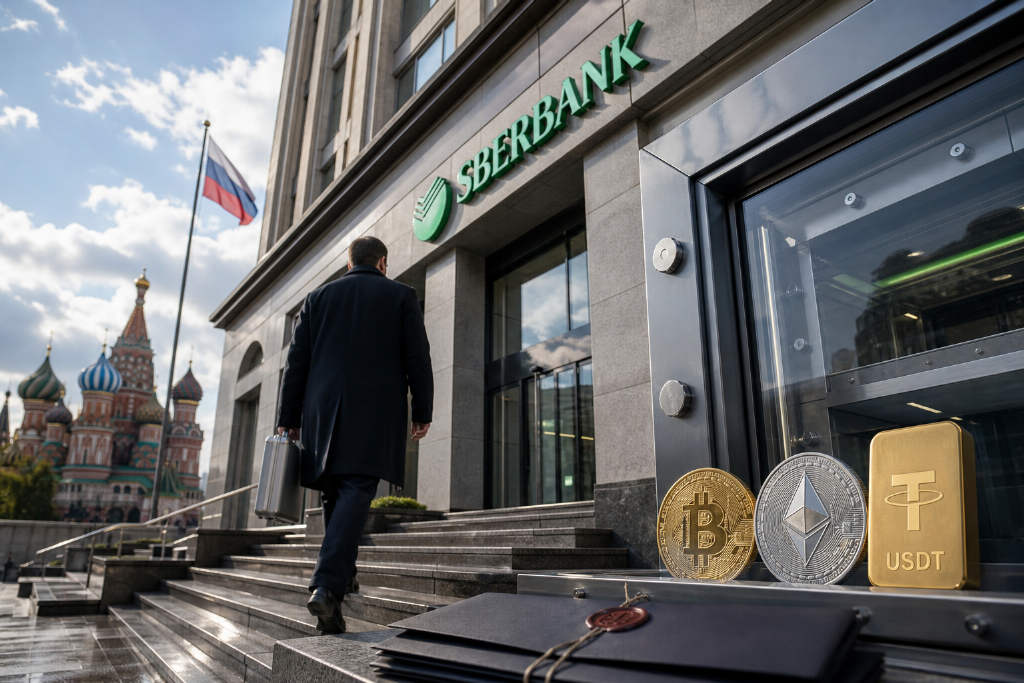
Sberbank is preparing to accept Bitcoin, Ether and USDT as collateral for loans, according to Techub News, citing CryptoBriefing. The plan was disclosed by deputy chairman Popov and is tied to Russia’s new legal framework for digital-asset pledges. President Vladimir Putin signed Law 282-FZ on Aug. 4, creating a regulatory basis for using digital assets as collateral.
The bank had previously run a pilot for Bitcoin-backed lending in December 2025. With the new law set to take effect on Sept. 1, Sberbank also plans to roll out regulated digital-asset custody services before Dec. 1. The report added that another Russian lending institution, Sovcombank, has already launched a similar product. The move places collateralized crypto lending and custody within a more formal compliance structure in Russia, based on the details provided in the source report.
Sberbank plans to accept Bitcoin, Ether and USDT as collateral for loans, Techub News reported, citing CryptoBriefing. The disclosure came from deputy chairman Popov.
The move follows Law 282-FZ, signed by Vladimir Putin on Aug. 4. The law establishes a regulatory framework for pledging digital assets as collateral.
Sberbank previously piloted Bitcoin-backed loans in December 2025. With the relevant law set to take effect on Sept. 1, the bank also plans to launch regulated digital-asset custody services before Dec. 1. Another Russian lending institution, Sovcombank, has already introduced a similar product.
This article was originally published by Bit.Fan. For more cryptocurrency news and market insights, visit www.bit.fan. Disclaimer:
The market information, project data, and third-party content displayed on this platform are for industry information sharing only and do not constitute any form of investment advice or return commitment.
Cryptocurrency trading carries high risks. Users should fully assess their risk tolerance and make independent decisions. All profits, losses, and legal responsibilities are borne by the users themselves.