

ScaleForce, a data infrastructure company focused on embodied AI, has disclosed its first financing details, saying on Aug. 12 that it completed two funding rounds in 40 days. Investors named in the announcement include leading domestic embodied AI industry players, Hengxu Capital, and Kailian Capital.
The company has been established for less than three months, but says it has already moved into operations. According to the disclosure, a multi-million-yuan data order from lighthouse customer TaShi Zhihang has been fully launched, and ScaleForce has also started working with multiple world model companies, leading embodied AI hardware manufacturers, and industry solution providers.
Founder Guo Jiangliang said competition in embodied AI has entered a stage centered on data and intelligence. In the company’s description, ScaleForce aims to let data run through the full lifecycle of physical AI and build a system in which intelligence grows from activity in the physical world.
The market is hot, but the data gap remains large
The article says domestic embodied AI financing reached 93.5 billion yuan in the first half of 2026, five times the level seen in the same period a year earlier. At the same time, the sector is facing a shortage of high-quality real-world interaction data.
By the account cited in the piece, an embodied foundation model capable of general autonomous ability would need at least tens of millions of hours of high-quality real interaction data. As of early 2026, the total amount of usable high-quality physical interaction data available globally was only about 500,000 hours, leaving a gap of more than 99%.
Unlike large language models, which can gather training material from the internet, embodied AI requires multimodal physical interaction data spanning vision, touch, joint trajectories, object mechanics, and temporally aligned environmental signals. The article says that kind of data cannot be obtained online and has to be collected in the real world.
ScaleForce describes three major problems in the sector. The first is data quality: spatiotemporal alignment across multimodal data is often imprecise, and anomalies cannot be monitored in real time. The second is scale: collection devices are hard to manage at large scale, while automation remains limited. The third is generalization: out-of-distribution, or OOD, issues are severe, and cross-embodiment reuse is close to impossible.
Guo argues that embodied AI competition is, at its core, competition over data, and that companies able to build defensible data infrastructure will hold the initiative.
MatrixOS is the centerpiece of the product stack
ScaleForce says it has built a physical AI operating system called MatrixOS. Within that system, its ADA, short for Action-Data Alignment, generalization engine is meant to address reuse of data across different embodiments. Based on multi-scenario evaluations on real machines, the company says success rates rose from 65% to 92%.
On the production side, ScaleForce says it developed a GDP data quality engine, with GDP standing for global, deep, and active. The company says the engine uses entropy analysis, posterior probability estimation, action semantic analysis, and Bayesian active learning to keep improving data collection strategy. It disclosed a usable data conversion rate of 80%.
For collection, ScaleForce says it has built a global physical AI data production network that supports unified management and scheduling for hundreds of thousands of data collection nodes worldwide, with process automation above 95%.
The company also says it follows a human-centric data collection approach and has built what it describes as the first sub-millisecond multi-sensor time-synchronized data collection kit on a global basis. That kit can synchronously capture vision, touch, force, behavior, and other full-modality data at scale.
In the article’s framing, MatrixOS functions as a production system built around embodied AI data. The front end connects to the real physical world and keeps obtaining data. The middle layer processes, cleans, generalizes, and manages the data. The back end then delivers that data to models, robots, and specific application scenarios.
ScaleForce says that if this chain works as intended, data will stop being a one-off project deliverable and instead feed into the next training cycle, generating new data in return and forming a data flywheel. The company says it is building what it describes as a high-quality production and distribution network with the largest capacity and lowest cost globally, and sees scale effects and cost advantages from that network as a future barrier to entry.
Commercial rollout has started, including a large order
As embodied AI moves toward scaling, data collection, cleaning, generalization, management, and distribution are gradually becoming a distinct industry segment. ScaleForce says this is the position it has chosen.
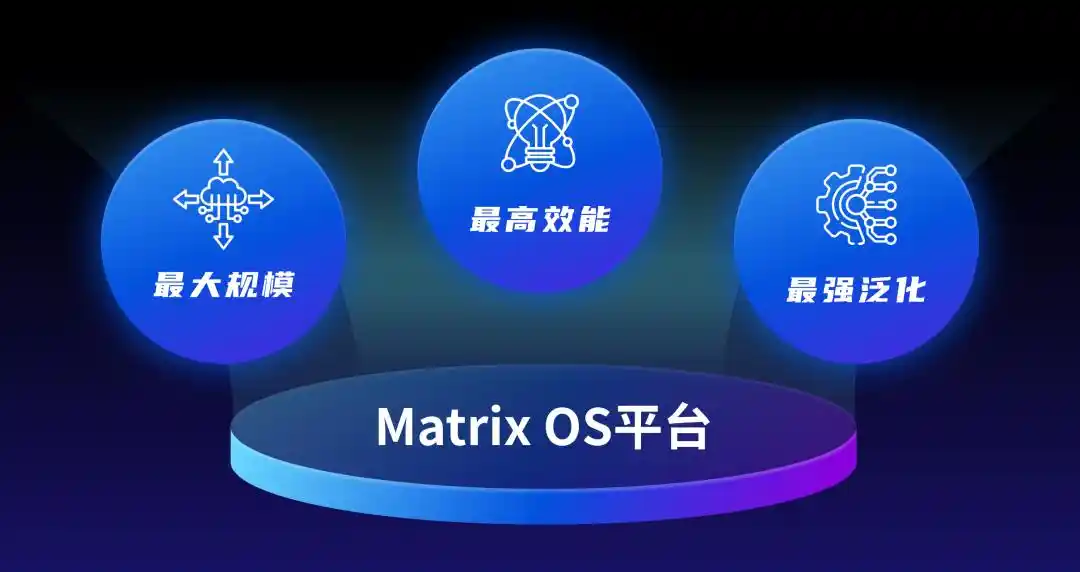
Built around MatrixOS, the company says it can provide targeted scenario data for robot body manufacturers, real physical interaction data for world model companies, and closed-loop data systems for industry customers around specific tasks.
ScaleForce says it has already secured a multi-million-yuan data order from TaShi Zhihang. According to the disclosure, the company is supporting TaShi Zhihang’s A-series robots through a combination of targeted scenario data collection and MatrixOS-based data processing, helping those robots enter multiple operating scenarios at an Aptiv factory.
Beyond TaShi Zhihang, ScaleForce says it has formed deep partnerships with several world model companies, leading embodied AI hardware manufacturers, and industry solution providers, including Zhi Zai Wu Jie.
On the ecosystem side, the company says it has joined the Huawei Ascend computing ecosystem and is among the first global contributors to open-source embodied AI and world model data and algorithm pipelines in the Ascend system. It also says it has established in-depth research cooperation with Peking University and Beihang University to explore the frontiers of next-generation embodied intelligence.
In response to overseas demand for high-quality real-scene data, ScaleForce says its international expansion has already begun in practical terms. The company says it has formed an overseas business team led by senior Southeast Asia operations and sales specialists to build a business loop and partner network in foreign markets.
The founding team comes from data and AI infrastructure work
The article also addresses why a company less than three months old has moved at this pace. It says Guo was a founding member of Baidu AI Cloud and incubated several core products from scratch, including Baidu Cloud MapReduce, a machine learning platform, an enterprise AI middle platform, and an industrial quality inspection cloud service. The article says he also led business breakthroughs across industrial, financial, and energy and power sectors, with cumulative revenue in the billions of yuan.
Guo later served as vice president of technology at AI-plus-manufacturing company Innovation Qizhi, where he built an industrial foundation model and industrial embodied intelligence technology system and went through the company’s path from startup to listing.
Chief scientist Alex is identified as a PhD from the Institute of Computational Linguistics at Peking University. The article says he served as a core member at Meta AI and Huawei Noah’s Ark Lab, led the design of China’s first trillion-parameter MoE-architecture LLM, and was involved across data recipes, code development, and low-level operator optimization.
Chief revenue officer Victor is said to have led nearly 1 billion yuan in sales, while chief product architect Angel led the design, development, and implementation of multiple enterprise-grade data platform products.
Guo said: 「The biggest trait of our team is that we have fought together before. We are industry operators and serial entrepreneurs who have worked hands-on with data and revenue.」
ScaleForce is betting on the embodied data window
The article says this year is widely seen in the industry as the first year of embodied data. Guo chose that point to start the company. It also says the industry broadly believes 2027 to 2029 could be an important window for large-scale commercial deployment of humanoid robots.
The report mentions that Unitree Technology is nearing a STAR Market IPO and that a longer queue of companies sits behind it. Against that backdrop, embodied data infrastructure is being cast as a segment entering a key window.
The original article was published by the WeChat account Touzijie, ID: pedaily2012, and written by Wu Qiong. MarsBit republished the piece.