
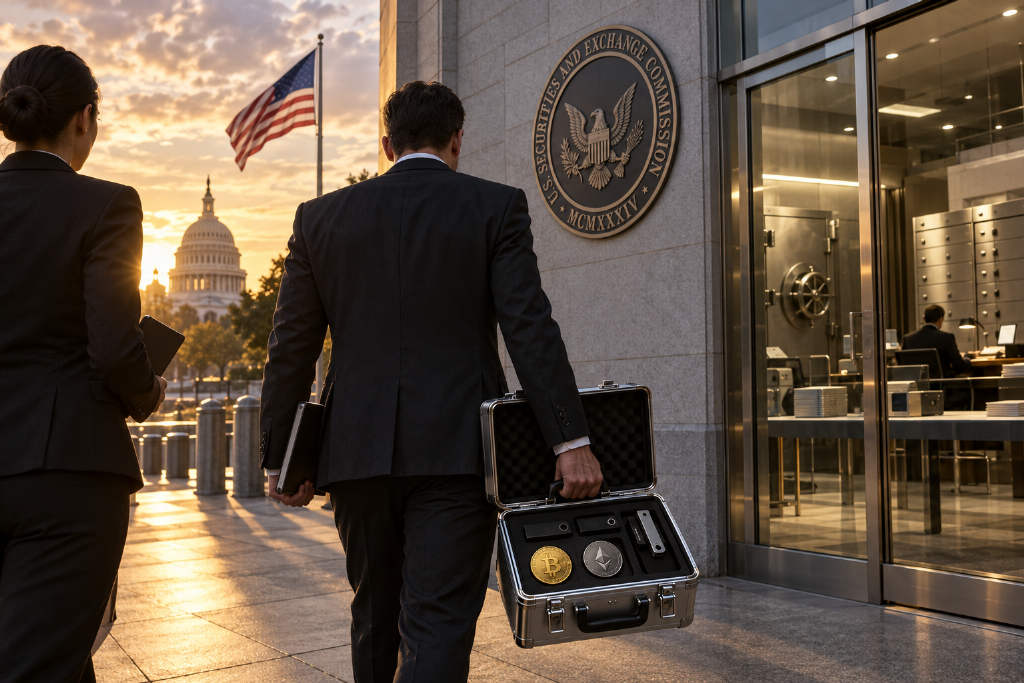
The U.S. Securities and Exchange Commission on Thursday proposed a rule that would let registered investment advisers and regulated funds hold client crypto themselves when no approved custodian can do so. The plan would also permit state trust companies to safeguard those assets.
SEC Chair Paul Atkins said in a statement that the proposal is designed to close a gap that has left advisers and funds unsure how to lawfully custody an asset class that clients increasingly want. Current rules generally require advisers to keep client assets with a qualified custodian, such as a bank or a registered broker-dealer. Atkins said custodial capabilities for newly developed crypto assets can trail an asset’s launch by many months.
How the self-custody mechanism would work
According to the SEC’s fact sheet, an adviser could hold a client’s crypto only after concluding that no permitted custodian is available. That determination would have to be reviewed every quarter.
The adviser would also need documented expertise for each asset. Its private-key controls would have to require approval from at least two people for any transaction. Each client’s assets would need to be kept at separate addresses, and the adviser would need outside accountant reports covering its controls.
Clients would receive account statements at least quarterly.
Commissioner Hester Peirce wrote in a statement that the proposal uses the term in a way that does not reflect true investor self-custody, because it covers advisers acting as custodians for clients.
State trust companies could also qualify
Before hiring a state trust company, and each year after that, an adviser or fund would need grounds to believe the firm has state authorization to custody crypto and written safeguarding policies. Client assets would also need to be kept separate from the company’s own assets.
Peirce said allowing eligible state trust companies to serve as permitted crypto custodians would increase competition and expand investor protection and investment options.
Public comment period and the earlier proposal
The 760-page release will be open for public comment for 60 days after publication in the Federal Register.
Commissioner Mark Uyeda said in a statement that the SEC’s earlier custody proposal, released in 2023, had created a no-win scenario for crypto. The agency withdrew that plan in June 2025.
Uyeda said, 「Rules that are unworkable in practice will not protect investors but merely provide the illusion of protection.」
Broader regulatory context
The proposal arrives two weeks after the SEC granted an exemption for onchain trading of tokenized stocks. It also follows a pledge by Atkins and Commodity Futures Trading Commission Chairman Michael Selig to write crypto rules under existing authority after the Clarity Act stalled in the Senate.
Peirce, who led the SEC’s Crypto Task Force, has set Friday as her last day at the agency.
Atkins said more regulatory proposals are still to come.